Vegetable · Brassicaceae
Cauliflower
Brassica oleracea Botrytis Group
Stay cool, well-fed, and reliably watered, and this crop pays you back with one dense, weighty curd.
Full sun
Every 3–7 days
45–75°F · 7–24°C
55–100 days
Overview
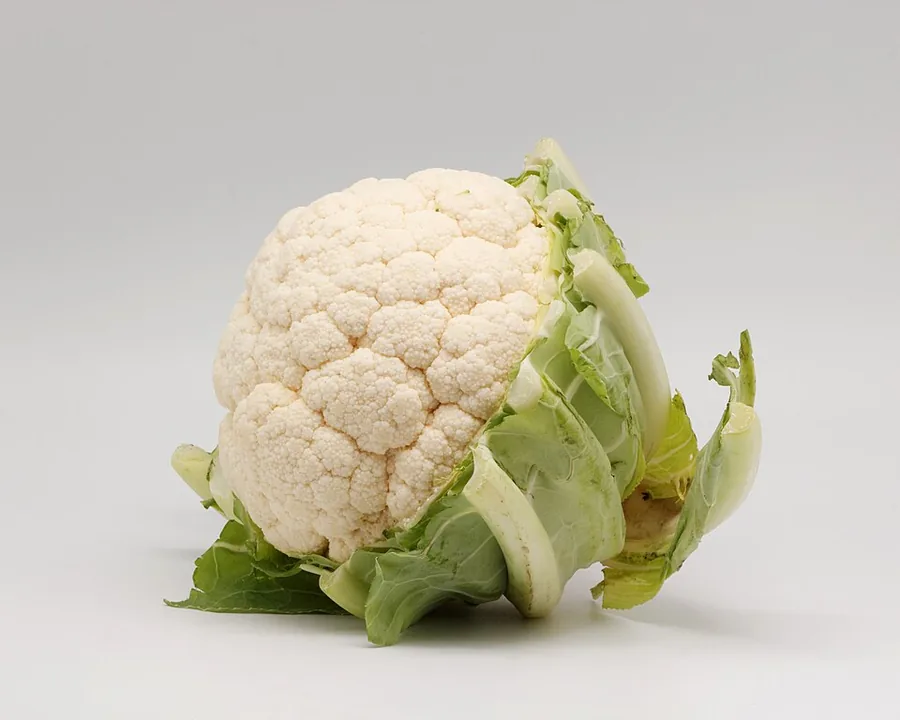
Cauliflower belongs to the cool-season side of the cabbage clan, grown for the packed white head, called the curd, that bulks up inside a circle of wide leaves. Its wild forebear also gave rise to kale, broccoli, and cabbage, yet breeders shaped this branch into a single tight bundle of flower buds that never open. Pick it on cue for a firm, gentle-flavored head; dawdle, and the thing loosens fast.
Few of its relatives test a grower this hard. The plant wants gentle, even temperatures all the way through, and it makes you pay for any misstep along the route. A sudden chill, a heat wave, or a short dry run can freeze its progress and leave a pebble of a curd where a full one belonged. Little wonder it ranks among the fussier cabbage relatives.
Color gives the crop fresh appeal. Past the standard white sit purple, orange, and lime-green Romanesco options, all of which build their pigment out under open sky rather than beneath tied-up leaves. Pair the right type with your growing window and your nerve, and a worthwhile harvest waits at the end.
Care
The short version: plant it in full sun and rich, evenly damp ground near pH 6.0 to 7.0, feed it heavily, and above all keep the growth cool and unbroken right through to picking day.
Light
Aim for full sun, six hours a day at the very least, though a touch of cover through the afternoon helps in regions where spring warms quickly. The tinted kinds in particular draw on bright light to develop their green, purple, or orange color.
Water
Even moisture decides the whole outcome. Supply around 1 inch (2.5 cm) of water a week and keep the bed from drying out, because one short bout of thirst can wreck a curd or set buttoning in motion. Sand drinks far quicker than clay does, so step up the frequency on lighter ground.
Soil
Give it deep, fertile loam that drains freely, dug through with plenty of rotted manure or compost so it cups moisture yet never sours. Hold the pH at 6.0 to 7.0 to keep nutrients available and to ward off hollow stem, a problem acidic ground brings on.
Temperature
Built for cool growing, it does its finest work in the 45°F and 75°F (7°C to 24°C) range. Run a string of daytimes past 86°F (30°C), or string together mild nights, and the curd may abort or come out misshapen, so plan the timing to duck the worst heat.
Humidity
Plain outdoor humidity in the 40% to 70% band suits it fine, no figure to fuss over. Airflow through the bed counts for more, because damp, packed leaves roll out the welcome mat for disease.
Feeding
Expect a hungry plant. Blend an even fertilizer like 5-10-10 through the soil before you set anything out, follow up with a nitrogen side-dressing roughly 3 to 4 weeks past transplanting, then keep boron at a steady level so browning never marks the curd.
Pruning
No trimming for form is needed, yet white sorts want blanching: as soon as the curd reaches 2 to 3 inches, fold and fasten the surrounding leaves across it to hold the white, unless the variety already wraps itself. Orange, purple, and Romanesco curds stay uncovered for sunlight, and any beat-up leaves can come off.
Repotting
Since this is no indoor plant, no repotting schedule applies. Raise the seed in flats or plug trays and make one move into the garden about 4 to 6 weeks from sowing, ahead of the point where the young plant stiffens and turns woody.
Size & spacing
A mature plant stands 12 to 24 inches (30 to 60 cm) high and spreads roughly the same across. Allow 18 to 24 inches (45 to 60 cm) between them, giving each rosette space to size up its curd while air moves freely along the bed.
When to plant
This crop runs on mild temperatures and refuses to settle in either deep cold or real warmth. Start your seed under cover, set hardy young plants out a couple of weeks before spring's final freeze, switch to mid- or late July for an autumn round, and harvest each head before the season warms.
Northern hemisphere
Southern hemisphere
Typical months for a temperate climate: start earlier in warm zones, later where spring frosts linger.
- Sow: Spring crop: start seed indoors about 4-6 weeks before the last frost (around April in cold climates). Fall crop: start seed in July, indoors or direct-seeded.
- Plant: Transplant 2-3 weeks before the average last spring frost, or mid- to late July for a fall crop; space plants 18-24 inches apart.
- Harvest: Harvest the curd when full-sized, firm, and still tight/white, before the florets begin to separate; cut with a few wrapper leaves attached.
Hardiness
USDA hardiness zones: 3–10
Temperature: down to -40°C
Troubleshooting
Almost every problem with this plant comes down to growth that stuttered somewhere along the line, and either the curd or the foliage will flag it for you. Train your eye on these early warnings and a quick response can save the planting before one small hiccup spreads. Find your symptom below, then deal with it while a fix still helps.
Yellow wedges biting into leaf edges or roots swollen out of shape
Two soilborne troubles share this appearance. Black rot scorches yellow wedges into each leaf edge and turns the veins black, whereas clubroot bloats the roots into knotted lumps that quit drawing water, leaving the plant to droop. After either one settles in, nothing reverses it. Tear out and burn every sick plant, work only from clean transplants, keep brassicas off the same ground for a four-year cycle, and pick resistant varieties.
Fix:
- Remove and destroy infected plants
- Use clean, disease-free transplants
Tiny heads the size of buttons appear way ahead of schedule
Meet buttoning, what shows up once a tender plant slams into a setback: cold, heat, a dry stretch, or a seedling left packed in its cell far too long. Instead of forming a real head, the plant quits early and throws up a tiny curd no bigger than a marble. Put out lively young starts right on time, keep them pressing ahead without a stumble, and pass over any that are pot-stuck or toughened too far.
Fix:
- Keep plants growing vigorously with steady water and nutrients
- Replace stressed plants; avoid root-bound or over-hardened transplants
Grainy, fuzzy curd whose florets start drifting apart
What you have is a ricey curd, with warmth almost certainly to blame. Hot weather prods those tight flower buds into stretching and parting before picking time. Schedule things so the head wraps up in cool air, cut it as soon as it reaches full size, and go light on the nitrogen.
Fix:
- Harvest promptly before florets separate
- Time the crop so the curd matures during cool weather
Tattered leaves riddled with holes and green worms underneath
Blame cabbageworms, cabbage loopers, and diamondback moth larvae, those soft green caterpillars that trail dark droppings and gnaw the foliage to shreds. Flea beetles pitch in with peppery little shot-holes, hardest on tender seedlings. Pluck the worms by hand, bring in Bt once they outpace you, and tuck young plants beneath a floating row cover.
Fix:
- Handpick caterpillars
- Apply Bt (Bacillus thuringiensis)
- Cover young plants with floating row cover
Brown blotches marking the head, plus a stem gone hollow and discolored
Nine times out of ten this points to boron deficiency, which discolors the florets and turns the core of the stem brown or leaves it hollowed. Sour soil and uneven watering both worsen it. Start with a soil test, add boron only when that test asks for it, hold the pH on target, and keep watering dependable.
Fix:
- Correct boron based on a soil test
- Maintain proper pH and even moisture
Toxicity
As a common kitchen vegetable, cauliflower holds no toxic compounds whatsoever, which means kids and pets can be around the planting and the harvest with zero worry. Its brassica nature does bring goitrogens plus fiber that can stir up gas, so a heaping raw serving may leave a pet briefly queasy, but poison never enters into it.
Safe for
People · Cats · Dogs · Horses · Rabbits · Livestock · Birds
Cats None
Cats meet nothing toxic here, so a curious nibble at the foliage or the head causes them no bother at all.
Dogs None
Dogs take cauliflower in stride. Pile on too much of it uncooked and a bit of gas may follow, yet nothing about that turns dangerous.
Horses None
Nothing in the plant poisons horses, though its cabbage-family heaviness can weigh on digestion, so keep any helping modest.
Rabbits None
Leaves and curd suit rabbits in measured amounts. A heap all at once can spark gas, so keep the servings light.
Livestock None
Grazing animals such as sheep, goats, and cattle face no poisoning from cauliflower, since not a single harmful compound sits in it.
Birds None
Backyard chickens and their feathered company may peck freely at both foliage and head and walk off perfectly fine.
People Safe
People rely on it daily, eating it cooked or raw without any hazard, and every part can be handled and picked without concern.
As a brassica it contains goitrogens and can cause gas/bloating; large quantities may cause mild, temporary digestive upset in pets, but the plant is not poisonous.
Varieties
There is far more here than the standard white head. A short roster handles most backyard gardens, running from quick, sure-footed hybrids all the way to the brightly tinted curds.
Snow Crown
A reliable early white hybrid that shrugs off a touch of warmth and matures in about 50 to 60 days, putting it near the top of any spring shortlist.
Amazing
A white type that folds its own leaves over the curd, sparing you most or all of the tying, and copes with a wide range of growing conditions.
Cheddar
A beta-carotene-rich orange curd that develops its color out in full sun, not hidden beneath tied leaves.
Graffiti
A bold purple head tinted by natural anthocyanins, one to leave open and never blanch.
Romanesco
A pale-green head whose florets coil into an eye-catching fractal cone, and it takes its color from the sun, never from tying.
Companions
Cauliflower's worst neighbors are its own relatives, the other cabbage-family crops that pass the same pests and soil diseases back and forth.
Keep apart
Other brassicas (cabbage, broccoli, Brussels sprouts, kale, turnip): Share the same pests and soilborne diseases (cabbageworms, clubroot, black rot); extension guidance is to rotate and avoid planting them together for several years.
How to propagate
Seed is where this crop begins, and success hinges on how you transplant: bring up rugged seedlings and get them into the bed before their momentum ever stalls.
SeedModerate
Start indoors about 4-6 weeks before transplanting; sow in early spring (around April) for a spring crop and in July for a fall crop. · Transplant-ready in about 4-6 weeks; curd harvest roughly 55-100 days after transplanting.
Almost no one direct-sows cauliflower in the bed; transplants win out because they keep the seedlings moving briskly and steer past the stalls in growth that touch off buttoning. Sow indoors roughly 4 to 6 weeks ahead, then reckon on something near 55 to 100 days between setting out and slicing a finished head.
Myths
You cannot get a white head without tying the leaves shut.
Loads of newer cultivars wrap themselves, curling their leaves over the curd on their own, which leaves hand-tying as a job for just a few white sorts these days. Never blanch the orange, purple, and Romanesco ones; bright sun is exactly what builds their color.
Broccoli and cauliflower are really one and the same.
One species, Brassica oleracea, underpins them both, but treating them as one and the same misses the point. Botrytis Group is where cauliflower sits, broccoli falls under Italica Group, a pair of distinct breeding lines.
Cauliflower grows itself, just another tough cool-weather vegetable.
Among the cabbage family, this one is the real handful. Warmth throws it off, so does any stall in its progress, and what it really wants is unbroken cool growing, precisely the slip-ups that spark buttoning and grainy curds.