Vegetable · Brassicaceae
Arugula
Eruca vesicaria subsp. sativa
Drop the seed in cool weather and peppery leaves are yours to cut in about a month.
Full sun
Every 2–3 days
41–77°F · 5–25°C
40–50 days
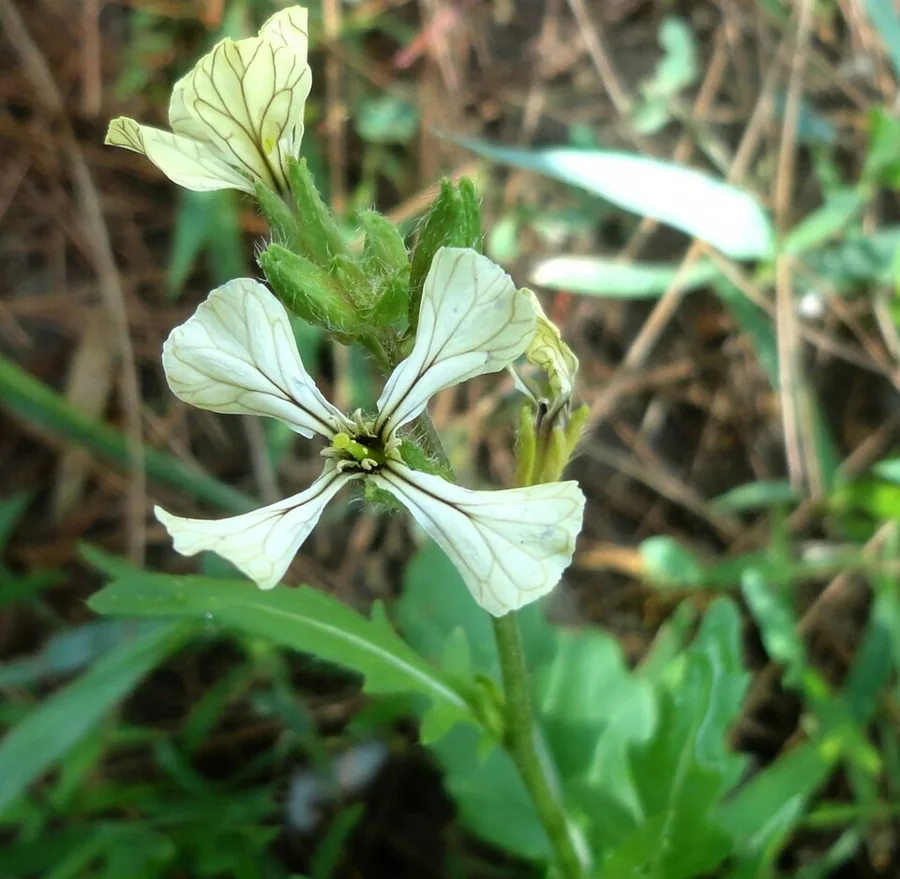
Overview
Arugula is the quick, peppery salad green that pays off for gardeners short on patience. It rides with the cabbage clan, kin to broccoli and mustard, and that bloodline is exactly where its keen, mustardy snap originates. Tuck in a short row and leaves come ready to pick about 4 to 6 weeks later.
At its core this plant runs cool-season. It hits full stride during the gentle windows of spring and fall, when leaves stay soft and nutty. Shove it into midsummer's swelter and it bolts, throwing up a flower stalk while the leaves go bitter and tough.
Hardly any green demands so little. Arugula thrives in a garden bed or a shallow windowsill pot just the same, breaks ground within days, and keeps producing as long as you snip the outer leaves and start a fresh row every week or two.
Care
The short version: full sun with maybe a touch of afternoon shade, soil held evenly moist, and cool weather to keep leaves mild. Sow shallowly, snip the outer leaves often, and kick off a new row every week or two.
Light
Arugula soaks up full sun through spring and fall, while the air stays cool enough to keep it content. The instant heat rolls in, a perch with afternoon shade reins in bolting and holds the leaves milder a while longer.
Water
Hold the soil evenly moist and pour every 2 to 3 days when things dry out. Let it parch and the plant strains, which nudges it to bolt ahead of schedule and drives the leaves bitter and tough.
Soil
Set it into rich, well-drained loam with a generous helping of organic matter mixed through. A pH spanning 6.0 and 7.0 fits it well, and ground that grips moisture yet never turns soggy keeps the leaves racing along soft and quick.
Temperature
Arugula flourishes in the cool, roughly between 41°F and 77°F (5°C to 25°C). It brushes off a light frost without a hitch, yet heat is its undoing, driving it to flower and turning the flavor sour.
Humidity
Plain outdoor air does the job, somewhere near 40% to 70% humidity, so no figure needs your attention. Steady moisture down in the soil counts for far more to arugula than whatever floats in the air.
Feeding
Mix a nitrogen-rich balanced fertilizer or compost into the bed as you plant, and a speedy crop like this rarely wants more. Solid soil from the outset carries the leaves clear through to harvest a few weeks on.
Pruning
Snip the outer leaves often to keep fresh ones pushing up from the heart of the plant. Once it begins to bolt and sends up a flower stalk, cut your losses and gather what remains before the taste sharpens.
Repotting
Arugula grows as an annual and gets resown each season rather than bumped up a pot size. Should you raise it in a container, reach for one at least 4 to 6 inches deep and drop in fresh seed every round instead of nursing along a spent plant.
Size & spacing
These plants keep it compact, stretching from 8 to 36 inches (20 to 91 cm) tall, with the flower stalk claiming the top of that range. Thin or set seedlings about 6 inches apart so each gets elbow room for a full rosette of leaves.
When to plant
Cool weather drives arugula, never the calendar's notion of summer. Get it in the ground in early spring the instant the soil works loose, then sow once more in late summer for an autumn round, and leaves come ready to cut about a month past each sowing. Steer clear of the scorching weeks, when it bolts nearly the second it emerges.
Northern hemisphere
Southern hemisphere
Typical months for a temperate climate: start earlier in warm zones, later where spring frosts linger.
- Sow: 4-6 weeks before the last spring frost (optional; direct sowing preferred)
- Plant: Direct sow in early spring as soon as soil can be worked, then again in late summer for a fall crop
- Harvest: Leaves harvestable about 4-6 weeks after sowing, mainly in cool spring and fall
Hardiness
USDA hardiness zones: 2–11
Temperature: down to -46°C
Troubleshooting
Trouble with arugula stays short and simple to spot. Heat-driven bolting tops the list, with a pair of familiar bugs filling out the rest. Match what's in front of you to the entries below and act fast, while the leaves still earn their place in the bowl.
Up shoots a flower stalk and the leaves go sharp
What you're watching is bolting, the moment the plant flips from growing leaves to setting seed, and warmth plus long summer light triggers it. From then on the fresh growth arrives slim and fiercely peppery. Cut every leaf still worth eating, yank the bolted plant, and start another batch in a cooler corner.
Fix:
- Harvest all usable leaves promptly before they turn bitter
- Pull bolted plants and start a fresh succession sowing
- Move new sowings to a cooler or partly shaded spot
Little round punctures dotting the foliage
Those pinpricks come from flea beetles, tiny dark bugs that spring off the instant your hand grazes a leaf. Tender seedlings suffer the most. Drape floating row cover over the bed right at sowing, and pull those quick leaves before the chewing adds up.
Fix:
- Cover plantings with floating row cover at sowing
- Harvest quickly-maturing leaves before damage accumulates
Gummy bunches of tiny bugs riding the new shoots
Green or gray colonies tucked under the leaves and along soft stems point to aphids, and they often leave a tacky coating in their wake. Blast them off with a sharp jet from the hose, and strip away any leaf that's truly overrun. A reliable crew of beneficial insects tends to handle the rest for you.
Fix:
- Rinse colonies off with a strong spray of water
- Remove and discard heavily infested leaves
Toxicity
Arugula is salad green through and through, safe for people and pets alike. Not a single part carries anything toxic, so grow it freely among cats, dogs, rabbits, and inquisitive children. All it asks is to land on a plate.
Safe for
People · Cats · Dogs · Horses · Rabbits · Livestock · Birds
Cats None
Cats are perfectly fine near it, since the leaves carry nothing harmful. One could get a touch of tummy upset from a nibble, just like any unfamiliar green, but the danger here is essentially zero.
Dogs None
There are no toxins at play, so a nosy dog can sniff and chew away without worry. Wolfing down a heap of any leafy green might soften the stool briefly, and that's as bad as it gets.
Horses Safe
Arugula holds nothing that would threaten a horse. Like every rich green, serve it as a small treat instead of a regular ration.
Rabbits Safe
The leaves are fair game for rabbits, and plenty relish the peppery kick. Hand it out sparingly next to their everyday greens.
Livestock Safe
Goats, sheep, and cattle can browse arugula safely. This is a healthy leafy green that slots neatly into mixed forage.
Birds Safe
Backyard hens and other birds can nibble the leaves with no trouble, and the greens bring welcome variety to their meals.
People Safe
People grow arugula precisely to eat it. Toss the leaves raw into a salad or fold them into a hot dish, and skip nothing, because no part of the plant needs avoiding.
Safe to grow around pets and children; the leaves are edible raw.
Varieties
Plain salad rocket fills most arugula packets, yet a handful of named picks earn a spot in your memory for taste and how they ride out the heat.
Astro
Quick to size up with a gentle flavor, it resists the urge to bolt longer than the pack, so it forgives you nicely through warmer stretches.
Roquette
Here's the classic heirloom salad rocket, all deeply cut leaves and the bold peppery punch that springs to mind whenever arugula comes up.
Wasabi
Bred to deliver a startlingly fierce, horseradish-style heat, this one outshines the rest of the rockets for sheer kick.
Companions
Plant near
Bush beans: Beans fix nitrogen and their canopy shades the bed, helping cool-loving arugula stay productive and delay bolting.
Lettuce: Shares arugula's preference for cool, moist conditions and interplants well in the same cool-season bed.
Root crops (beets and carrots): Listed as compatible interplanting partners that use different soil layers, allowing efficient use of cool-season bed space.
How to propagate
Seed gets arugula going and practically nothing else does, which is a big reason this crop stays so simple to keep rolling.
SeedEasy
Direct sow in early spring and again in late summer/fall · Germinates in about 5-7 days; seedlings established within 2-3 weeks
Seed is how arugula gets going, full stop. Sprinkle it just under the surface right where it'll grow in early spring, then once more in late summer for an autumn run, and shoots push up in about 5 to 7 days. Once they take hold over 2 to 3 weeks, thin them to about 6 inches apart, and keep tucking in a fresh short row every week or two for greens that never quit through the season.
Myths
Arugula is naturally bitter and unpleasant to grow.
That sharpness traces back to heat and bolting, never the plant on its own. Pick the leaves young while spring or fall stays cool and they come up mild and nutty, nothing like the rough greens folks recall from a summer planting that lingered too long.
Arugula is hard to grow from seed.
Few greens come easier or quicker. The seeds pop up within days and leaves stand ready to snip in roughly 40 to 50 days, so it makes a great opening crop for anyone just starting out.