Vegetable · Brassicaceae
Broccoli
Brassica oleracea Italica Group
Hit cool weather and steady moisture and broccoli delivers a main head plus weeks of side shoots.
Full sun
Every 3–5 days
32–77°F · 0–25°C
55–85 days
Overview
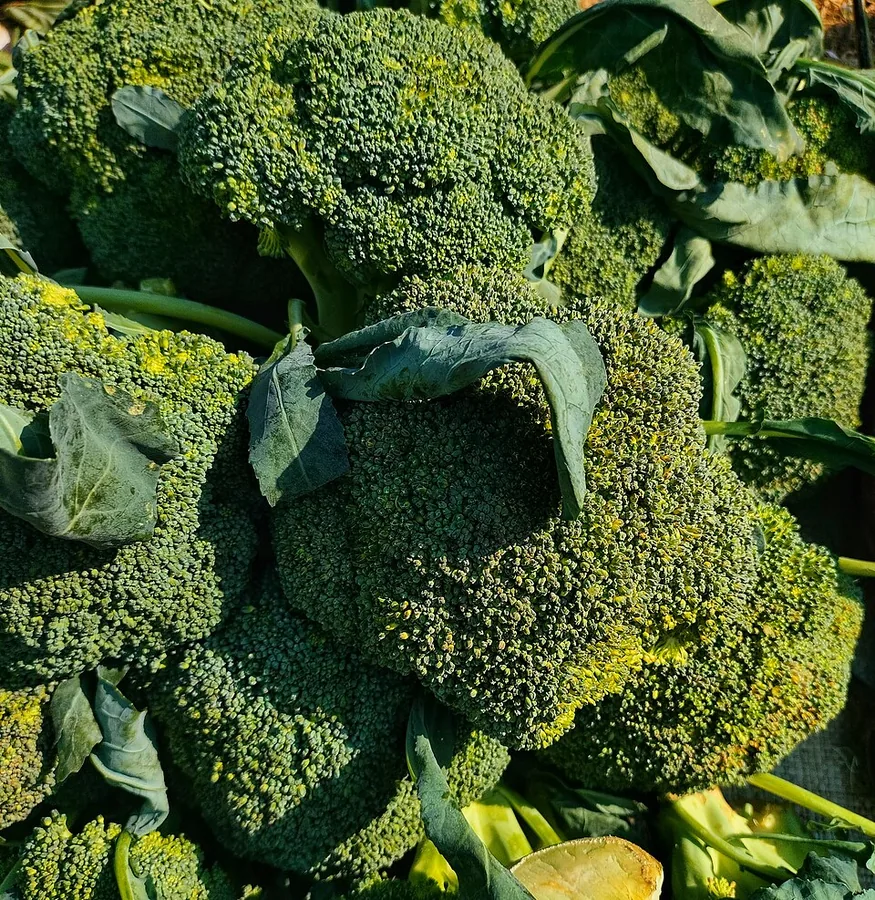
Broccoli is a cool-weather star of the cabbage family, grown for that tight cluster of flower buds you snatch before they pop open. It springs from wild cabbage and shares a species with cauliflower, kale, and Brussels sprouts. Run it as an annual and it powers through a spring crop, a fall crop, or both in the very same bed.
Timing drives the whole show, and that puts the win in your hands. Push plants out so the heads mature while the air stays cool, because heat blows the buds wide into yellow flowers and slams the harvest shut. Land the season and you cut one firm central head, then keep pulling side shoots from the leaf axils week after week.
Broccoli thrives on steady care, no hand-wringing required. It is a heavy feeder that craves rich soil, even moisture, and full sun, and the handful of pests it draws fold quickly under row cover. Nail those basics and it cranks out food like few other crops in the garden.
Care
The short version: full sun, rich soil loaded with compost, and even moisture of 1 to 1.5 inches of water a week. Aim the crop so the heads mature in cool weather, feed it big, and cut the head while the buds are still tight.
Light
Broccoli chases full sun, at least 6 to 8 hours a day, to pack a firm head. Where springs heat up fast it will take a little afternoon shade, and that shade can win you some time before the heat tips it into bolting.
Water
Keep the soil evenly moist, around 1 to 1.5 inches of water a week. One deep weekly soak beats a flurry of light sprinkles every time, and steady moisture really earns its keep while the head forms, since a dry stretch stalls it cold.
Soil
Drop it into rich, well drained loam charged with compost or well-rotted manure. A pH of 6.0 to 7.0 hits the mark, and leaning near neutral also shuts down clubroot, which runs wild in sour soil.
Temperature
Broccoli is a cool-season crop, firing on all cylinders from 32°F to 77°F (0°C to 25°C). It laughs off light frost, but sustained heat above about 80°F (27°C) sends the head bolting before you can cut it.
Humidity
Plain outdoor humidity covers it, so skip chasing a number. Airflow is where the action is, since crowded, damp foliage rolls out the welcome mat for the caterpillars and rots that hound brassicas.
Feeding
Broccoli eats big, a genuine heavy feeder. Drive a balanced fertilizer into the bed before planting, then side-dress with nitrogen about 3 to 4 weeks after transplanting to fuel strong leaves ahead of the head.
Pruning
Forget real pruning here. Cut the central head with about 6 inches of stem while the buds stay tight, leave the plant put for side shoots, and yank off any yellowing lower leaves.
Repotting
Broccoli is no houseplant, so repotting never enters the game. Run seedlings out to the garden at 5 to 8 weeks old, before they go rootbound, because cramped transplants love to button once you set them out.
Size & spacing
Plants shoot up 18 to 35 inches (45 to 90 cm) tall and spread to match. Hand each one 18 to 24 inches (45 to 60 cm) of room so air rips through and every plant gets fed.
When to plant
Broccoli charges hardest at the cool ends of the year. Fire up seeds indoors in late winter for a spring crop or in July for a fall one, push the hardened-off transplants out while it stays cool, and grab the main head before summer heat or a hard frost barges in.
Northern hemisphere
Southern hemisphere
Typical months for a temperate climate: start earlier in warm zones, later where spring frosts linger.
- Sow: 6-8 weeks before the last spring frost (early to mid-April in cold climates); sow again in early to late July for a fall crop
- Plant: Set hardened-off transplants out around 2-3 weeks before the last spring frost; transplant the fall crop in mid to late summer
- Harvest: Harvest the main head in late spring to early summer (spring crop) or in autumn (fall crop) when it is 3-6 inches across and buds are still tightly closed; side shoots follow for several weeks
Hardiness
USDA hardiness zones: 2–11
Temperature: down to -46°C
Troubleshooting
Broccoli trouble mostly strikes at the head or the roots, and it usually traces straight back to temperature or timing. Spot the early signs and you can still rescue this crop or sharpen the next planting. Match what you see below, then move while it counts.
Buds swelling apart and rushing into yellow flower
That loosening head is bolting, and heat lights the fuse once temperatures hang above about 80°F (27°C) while the head matures. A late harvest or a dry spell only pours on the gas. Cut the head the second the buds start to loosen, since quality nosedives, and aim future crops so the heads fill out in cool weather.
Fix:
- Harvest immediately at the first sign of loosening buds; quality declines fast
- Cut bolted heads off so side shoots may still form in cooler weather
Plants flag under the noon sun and go yellow no matter the watering
The roots are usually where it all goes wrong, so pull a wilting plant and dig in. White legless maggots and tunneled roots flag cabbage root maggot, while swollen, knotted galls flag clubroot, a soil disease that thrives in acidic ground. Destroy infected plants instead of composting them, shield the rest with row covers or stem collars, and chase brassicas out of that bed for three to four years.
Fix:
- Remove and destroy infested or infected plants (do not compost clubroot material)
- For root maggot, protect remaining plants with row covers or collars at the stem base
- For clubroot, lime soil toward pH 7 and rotate out of brassicas for several years
A stunted little head pops up far ahead of schedule
That little early head is buttoning, and it usually springs from a cold spell that nailed young transplants near or below 40°F (4°C). Oversized or rootbound seedlings and a rocky start drive it the same way. Eat the tiny head, since it almost never sizes up, then come back swinging with stocky transplants timed to the season.
Fix:
- Harvest and eat the small head; the plant rarely sizes up afterward
- Keep remaining plants evenly watered and side-dress with nitrogen
- Replant with fresh, properly sized transplants timed to the season
Leaves shredded with holes by hungry green caterpillars
Bet on the imported cabbageworm, the velvety green larva of the white cabbage butterfly, often running with cabbage loopers and diamondback moth larvae. Scan the leaf undersides and dive into the head for the caterpillars and their frass. Handpick what you spot, hit them with Bt or spinosad while the larvae are small, and throw row cover over the plants from the day you transplant.
Fix:
- Handpick caterpillars
- Apply Bacillus thuringiensis (Bt) or spinosad per label while larvae are small
- Soak harvested heads in cold salted water to drive out hidden caterpillars
Toxicity
Broccoli lands firmly in the safe column, a food crop with zero toxic baggage. No part of it threatens pets, livestock, or people, and the whole head and stem head straight to the plate. The only thing to watch is portion size, since a big load of raw brassica can leave an animal gassy.
Safe for
People · Cats · Dogs · Horses · Rabbits · Livestock · Birds
Cats None
Broccoli is not poisonous to cats. Most cats stroll right past it, and the worst a curious nibble brings is a little gas.
Dogs None
It is safe for dogs in small amounts, and plenty of them go for a crunchy piece. Keep servings modest, since a big helping of raw florets can leave a dog gassy or briefly off its food.
Horses Safe
There is nothing toxic here for a horse. Brassicas can run a bit gassy, so treat broccoli as an occasional snack rather than a regular feed.
Rabbits Safe
Rabbits can eat broccoli leaves and small bits of head safely. Introduce it slowly, since too much too fast may bring on gas.
Livestock Safe
Sheep, cattle, and goats happily clean up broccoli leftovers, stems, leaves, and all. Just keep raw brassicas an occasional bonus rather than a steady bulk feed.
Birds Safe
Chickens and other backyard birds peck at broccoli with no trouble, leaves and florets alike. It is a welcome green that costs you nothing once the heads are cut.
People Safe
Broccoli is a kitchen staple, great raw or cooked, with no part of the head or stem off limits. Just wash garden-cut heads well to clear out any hidden caterpillars and soil.
No special handling precautions; wash garden-harvested heads to remove insects and soil before eating.
Varieties
Dozens of broccoli varieties are out there, split mostly between quick spring types and tough heat-tolerant ones. These are the names you will chase down most.
De Cicco
De Cicco is an early Italian heirloom that hands you a modest central head and then keeps firing side shoots over a long stretch.
Calabrese
Calabrese is the classic open-pollinated Italian type, packing a medium green central head and a generous run of side shoots after.
Packman
Packman is an early hybrid that heads up in about 55 days from transplant, which makes it a go-to for spring crops.
Green Magic
Green Magic is a heat-tolerant hybrid that holds quality once warm weather rolls in, right where many others would bolt.
Companions
Broccoli grows best beside plants that use space it leaves open or pull its pests away, and worst beside its own brassica cousins, which share the same diseases and crowd it for food.
Plant near
onions: Alliums make efficient use of space among widely spaced broccoli and their strong scent is traditionally credited with deterring some brassica pests
aromatic herbs (e.g., dill, chamomile): Flowering aromatic herbs attract beneficial insects, including parasitoid wasps that attack cabbageworm and other caterpillar pests
beets: Low-growing, light-feeding root crop that does not compete strongly with heavy-feeding broccoli for nitrogen or space
Keep apart
strawberries: Traditionally listed as a poor companion for cole crops; strawberries compete in the bed and are commonly recommended to be kept separate from brassicas
other heavy-feeding brassicas (cabbage, cauliflower, Brussels sprouts) in the same bed: Closely related crops share the same pests and soilborne diseases (clubroot, root maggot) and compete for nutrients; extensions recommend 3-4 year rotation away from all brassicas
How to propagate
Broccoli takes off from seed, started indoors and pushed outside as a transplant for either a spring or a fall crop.
SeedEasy
Sow indoors 6-8 weeks before the last spring frost, or sow indoors or direct in early to late July for a fall crop · Germinates in about 4-7 days in warm soil; reaches transplant size in 5-6 weeks (fall crop) to 6-8 weeks (spring crop)
Just about every grower starts broccoli from seed, and it is a blast to watch take off. Sow indoors 6 to 8 weeks before your last spring frost, or kick off a fall crop indoors or direct in July, and the seeds punch through in 4 to 7 days in warm soil. Harden the seedlings off, set them a touch deeper than they grew in the cell, and space them 18 to 24 inches (45 to 60 cm) apart. Ditch any leggy or rootbound transplant, since those are the ones that button.
Myths
The harvest ends with the central head; after that cut, the plant is spent and ready to pull.
Leave the plant standing after you grab that central head and it just keeps cranking. Smaller side shoots burst from the leaf axils, and you can harvest them for weeks, especially through cool fall weather. Rip it out early and you toss the best part of the run.
Frost ruins a broccoli crop.
Broccoli is a cool-season crop that shrugs off a light frost without flinching. Fall plants keep growing and producing after the first frosts, and the cold often sweetens the heads. Only young transplants need a cover once it dives below 32°F (0°C).