Vegetable · Asteraceae
Lettuce
Lactuca sativa
Keep it cool, moist, and racing along, and lettuce delivers crisp salads in barely a month.
Full sun
Every 2–3 days
55–64°F · 13–18°C
45–75 days
Overview
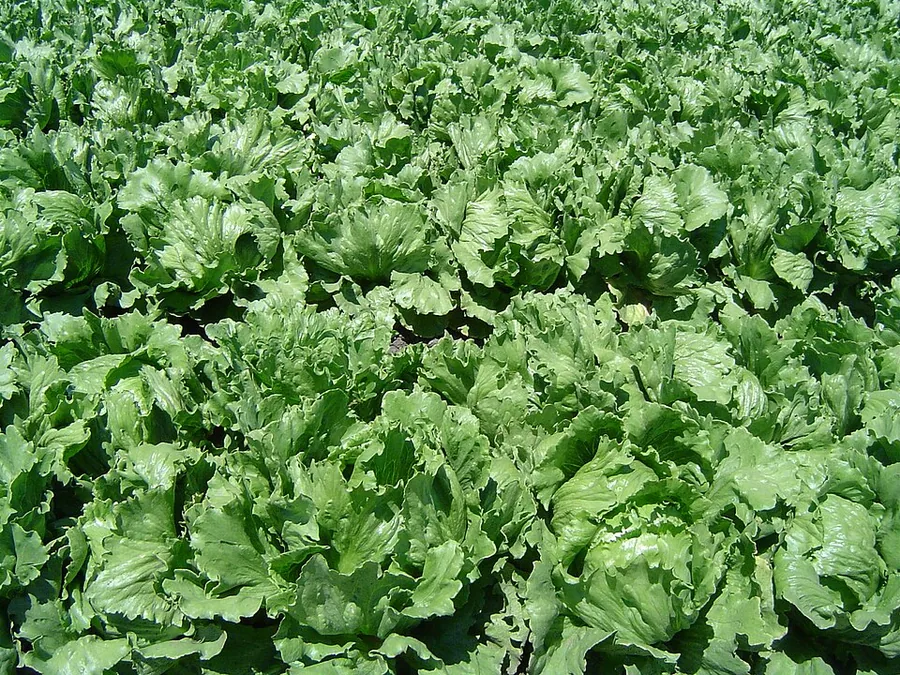
Lettuce is the fastest thrill in the vegetable garden, sprinting from seed to salad in as little as 45 days. It belongs to the daisy family and grows as a cool-season annual that hits its stride in the mild weeks of spring and fall. Drop it into a backyard bed, a raised box, or a pot on a bright sill, and it gets growing with hardly any coaxing.
The types cover serious ground, from open rosettes of loose leaves to tall upright romaines to soft, folded butterheads. Loose-leaf kinds let you snap off a few outer leaves and keep the plant cranking out more, while heading types bulk up for one big cut. Whichever you grab, the plant stays small and rarely clears 12 inches (30 cm), so a tiny plot punches well above its weight.
The one thing that trips lettuce up is heat. Shove it into a hot, dry summer and it launches a flower stalk and turns bitter overnight. Hand it cool weather, steady moisture, and good light, though, and the leaves stay sweet and crisp right up to the second you cut them.
Care
The short version: full sun with a little afternoon shade in the heat, soil kept evenly moist, rich well-drained ground around a pH of 6.0 to 6.7, and cool weather between 55°F and 64°F (13°C to 18°C) so the leaves never turn bitter.
Light
Lettuce thrives on full sun in cool weather, but it takes partial shade in stride and even leans into it once temperatures climb. Park it where it grabs morning sun and afternoon shade to keep the leaves tender and hold off the rush to bolt.
Water
Keep the soil evenly moist at all times, watering every 2 to 3 days and going deeper in the heat. The roots sit shallow, so a dry spell hammers the plant fast and turns the leaves bitter. Water deeply to about 6 inches and never let the bed dry out.
Soil
Set it into loamy, rich, well-drained ground loaded with organic matter. A pH between 6.0 and 6.7 hits the mark, and soil that grips moisture without going soggy keeps growth charging steadily.
Temperature
This cool-season crop rips along between 55°F and 64°F (13°C to 18°C). Push past about 75°F and it bolts, so aim your sowings squarely at the mild shoulders of the year.
Humidity
Everyday outdoor humidity is plenty, so skip chasing a number. Steady soil moisture counts for far more than the air, since dry roots are what turn the leaves bitter.
Feeding
Work in a 5-10-10 fertilizer before planting, then sidedress once with calcium nitrate as the plants take off. That second feed drives leafy growth and heads off the calcium shortfall behind tipburn.
Pruning
Skip the pruning routine entirely. Snap the outer leaves as you go and the plant keeps pumping them out, then yank it once it bolts, since the leaves only turn bitter from there.
Size & spacing
Lettuce keeps it compact at 6 to 12 inches (15 to 30 cm) tall and about as wide. Hand each plant 6 to 12 inches (15 to 30 cm) of room so the leaves can bulk out and air can rip freely between them.
When to plant
Lettuce is wired for the cool ends of the year, not the blaze of high summer. Get the first round in the ground in early spring the moment the soil works, sow again in late summer for a fall crop, and vault right over the hottest weeks between, when the plants only itch to bolt.
Northern hemisphere
Southern hemisphere
Typical months for a temperate climate: start earlier in warm zones, later where spring frosts linger.
- Sow: 4-6 weeks before the last spring frost
- Plant: 2-4 weeks before the last spring frost; sow again in late summer for a fall crop
- Harvest: Spring and fall harvest (cool season)
Hardiness
USDA hardiness zones: 2–11
Temperature: down to -46°C
Troubleshooting
Almost every lettuce snag lands on the leaves, and nearly all of it comes down to heat, uneven water, or a hungry pest. Spot the early signs and jump on them, and a quick fix usually rescues the crop. Match what you see below, then move before the whole planting turns.
A stalk rockets up the middle and the leaves turn bitter
Say hello to bolting, where the plant charges from leaf-making into seed-making the moment heat above 75°F (24°C) and longer days call the season done. The leaves start leaking a milky sap and give up their sweetness for good. Race to harvest the second the center climbs, throw down afternoon shade through a hot spell, and pick slow-to-bolt varieties to stay a step ahead next round.
Fix:
- Harvest promptly before the plant fully bolts
- Switch to heat-tolerant, bolt-resistant cultivars
- Provide afternoon shade during hot spells
Curled leaves and a sticky coating give it away
That sticky film means aphids, tiny soft-bodied insects that pile onto the undersides of leaves and trail a sticky honeydew as they go. They twist the fresh growth while they feed. Fire off a hard jet of water to knock them flying, chase any holdouts with insecticidal soap, and turn ladybugs and other predators loose to finish the job.
Fix:
- Dislodge with a strong spray of water
- Apply insecticidal soap
Scorched brown edges creep across the inner leaves
Meet tipburn, a calcium shortfall firing off in the fast-growing heart, and not a single pest is to blame. When warm weather and jumpy watering rush the plant forward, the inner leaves can't grab enough calcium and their edges give out. Hold the soil evenly moist and dial back the nitrogen, and growth stays locked in step with what the roots can deliver.
Fix:
- Maintain even soil moisture
- Avoid excessive nitrogen that pushes rapid growth
Ragged holes and glinting trails appear overnight
Those are slugs and snails at work, chewing away after dark and giving themselves up with glistening mucus trails that spike in damp weather. Scatter iron phosphate bait, hunt them down by torchlight, and strip out the moist mulch and debris where they hunker down. Water in the morning so the bed dries by nightfall, the one thing that sends them packing.
Fix:
- Apply iron phosphate bait
- Hand-pick at night
- Reduce damp mulch and debris near plants
Toxicity
Lettuce ranks among the safest plants you can throw into the ground. Every part is non-toxic to people and to cats, dogs, rabbits, horses, livestock, and birds alike, which is exactly why it fills so many bowls and hutches. The lone quirk is the milky sap, which can leave a mild rash on very sensitive skin and nothing worse.
Safe for
People · Cats · Dogs · Horses · Rabbits · Livestock · Birds
Cats None
Cats can dig into lettuce freely, since a nibbled leaf does zero harm. Most cats stroll right past it, but let a curious one chew away.
Dogs None
Dogs handle lettuce with no fuss at all. Pile it on too high and it can loosen the stool, so stick to small amounts of plain washed leaves.
Horses None
Horses gobble lettuce happily as an occasional treat. Tear it into pieces and keep the portion modest, the same as any fresh green.
Rabbits None
Rabbits dive for the crisp darker leaves, which beat the pale, watery hearts hands down. Wash it and pile it up next to their usual hay.
Livestock None
Goats, sheep, and the backyard crew graze lettuce safely and eagerly. Bolted plants heading to seed still work fine, though the bitter leaves win fewer takers.
Birds None
Chickens and pet birds peck away at fresh lettuce leaves with no risk in sight. The darker, leafier types hand them way more to relish than the watery crispheads.
People None
Lettuce is a salad powerhouse eaten raw or cooked and safe for everyone. The milky sap can leave a mild rash on very sensitive skin, and that is where the drama ends.
The milky sap may rarely cause mild contact dermatitis in sensitive individuals.
Varieties
Hundreds of lettuces crowd the leaf, romaine, and butterhead camps, but a select few keep earning their spot season after season. These are the ones worth chasing down by name.
Parris Island Cos
A go-to upright romaine that throws up tall, crisp green leaves and stands strong against disease.
Tom Thumb
A pint-sized butterhead that packs a tidy single-serving head in about 70 days.
Simpson Elite
A fast-charging green leaf type that fends off bolting longer than most of the pack.
Red Sails
A bronze-red loose-leaf star loved for its color and its slow, easy crawl toward bolting.
Defender
A romaine bred to power past downy mildew and the other common diseases.
How to propagate
Lettuce is about as easy as growing gets, and a single packet of seed keeps a salad bed cranking for months when you sow it in waves.
SeedEasy
Spring and late summer; sow in succession every 2-3 weeks for a continuous harvest · 7-14 days to germinate
Lettuce takes off from seed with next to no effort, whether you fling it straight into the bed or bring on transplants indoors. Sow it shallow, about a quarter inch deep, because the seed leans on light and cool soil to spring awake, and it breaks ground in 7 to 14 days. Toss out a fresh pinch every 2 to 3 weeks through spring and again in late summer, and you'll keep cutting salads for months instead of all in one go.
Myths
Bitter lettuce is spoiled or rotten.
Not a chance, since bitterness is just the plant firing back at heat as it bolts, nowhere near rot. The leaves stay perfectly safe, only harsh on the tongue. Grow it cool and grab it early and the sweetness sticks around.
Lettuce needs full hot sun all day to grow well.
Wrong turn, because this cool-season crop bolts fast under blazing all-day sun. A splash of afternoon shade in the heat keeps it tender, though it still soaks up plenty of light the rest of the day.