Vegetable · Asteraceae
Endive
Cichorium endivia
Grow it cool, steady, and well-spaced, and endive keeps crisp salad leaves coming spring and fall.
Full sun
Every 3–5 days
39–75°F · 4–24°C
85–100 days
Overview
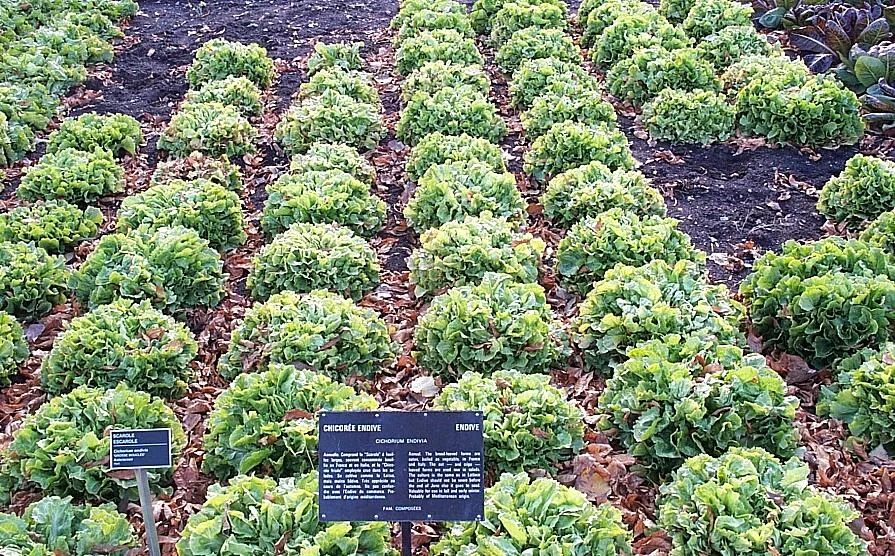
Endive is a leafy salad green in the daisy family, a close cousin of chicory that earns its keep for the leaves, not any flower. It charges in wearing two faces: the curly, finely cut frisee and the broad, flat escarole. Both pack a lively bitter edge that mellows the second the leaves hit the table, so the flavor only gets friendlier.
This one runs as a cool-season crop through and through. It hits full stride in spring and fall, when the days stay mild and the soil keeps its moisture, then sulks or bolts the moment summer heat barges in. Aim it at the cool stretches of the year and it grows into one of the most rewarding greens going.
The second half of the fun is blanching. Tie the outer leaves up over the heart, or throw a cover on for a couple of weeks, and shutting out the light turns the bitterness sweeter and pale. Skip the trick and you still pull a fine, if sharper, salad green, so there is no losing here.
Care
The short version: hand endive full sun to a touch of shade, water steadily so the leaves never dry out, plant it in rich soil through cool weather, feed it in balance, and give the plants room to keep bolting and tipburn off the table.
Light
Endive thrives in full sun, yet it rolls with partial shade no problem, and a slice of afternoon shade actually pays off in warmer spells. Starve it of light, though, and the leaves come in thin and loose.
Water
Keep the soil evenly moist around the clock, watering every 3 to 5 days and more often when dry heat kicks in. Let it dry out and the leaves turn bitter while tipburn and early bolting move in, so consistency is the whole game.
Soil
Plant into fertile, moisture-holding loam that still drains freely, loaded with organic matter. A pH of 5.5 to 7.0 suits it great, and soil that grips water keeps the leaves crisp and sweet.
Temperature
This cool-season green powers along between 39°F and 75°F (4°C to 24°C). It brushes off light frost, but push past that range and it bolts while the leaves turn sharp.
Humidity
Average humidity of 50% to 70% keeps endive happy, and outdoors you barely give it a thought. Steady soil moisture counts for far more to the plant than the air around it.
Feeding
Mix a balanced N-P-K into the bed at planting, then side-dress with nitrogen as the leaves bulk up. Go easy on the nitrogen, since piling it on invites tipburn and soft, aphid-baiting growth.
Pruning
No real pruning is needed beyond stripping off damaged outer leaves. The one move worth making is blanching: tie the outer leaves up over the heart or cover the plant for 2 to 3 weeks before harvest to knock down the bitterness.
Size & spacing
Plants shoot up 10 to 24 inches (25 to 61 cm) tall and spread 10 to 18 inches (25 to 46 cm) wide. Hand each one that full spread, because crowding fuels bolting, rot, and poor airflow.
When to plant
Endive runs on cool weather and bolts the instant it heats up, so timing drives the whole crop. Sow in early spring once hard frost clears out, then again in midsummer for a fall round, and harvest while the days still keep their chill. The fall planting often comes out sweetest of all, sweetened by that first light cold snap.
Northern hemisphere
Southern hemisphere
Typical months for a temperate climate: start earlier in warm zones, later where spring frosts linger.
- Sow: 4-6 weeks before the last spring frost, or in midsummer for a fall crop
- Plant: Early spring after hard-frost danger passes, or late summer for fall harvest
- Harvest: Harvest leaves/heads in cool weather before heat triggers bolting
Hardiness
USDA hardiness zones: 4–9
Temperature: down to -34°C
Troubleshooting
Most endive trouble pops up right on the leaves, whether a pest is chewing in or the weather is shoving the plant toward bolting. Jump on the signs early and you almost always save the crop. Match what you spot below, then move before it spreads.
A flower stalk rocketing up as the leaves turn fiercely bitter
A stalk shooting skyward and a fierce bite in the leaves mean the plant has hit bolting, charging toward flower under heat, long days, or a crammed bed, and once it flips the leaves quit filling and turn harsh. No coaxing pulls it back, so grab everything still good before it crosses into inedible. Set the next round in spring or fall, hand each plant real room, and dodge the summer heat to keep bolting off the table.
Fix:
- Harvest promptly once bolting begins
- Plant cool-season-timed successions instead
Scorched brown rims racing along the inner leaves
Brown, scorched rims on the inner leaves flag tipburn, a calcium pinch in the fast-charging heart that heat and a heavy nitrogen hand only crank up. The roots and outer leaves keep right on cruising while just the new growth scorches at the margins. Hold the soil evenly moist, throttle back the nitrogen, and harvest while the weather still runs cool to keep the heart filling clean.
Fix:
- Maintain even soil moisture
- Avoid over-fertilizing with nitrogen
- Harvest during cooler conditions
Curling leaves and a sticky shine packed with tiny insects
Spot a sticky shine and a rash of little soft-bodied dots and you have caught aphids early, with the gloss being the honeydew they drip. Knock them flying with a hard jet of water, then snap off the worst leaves to clear the rest. When a few sneak back, insecticidal soap shuts them down, and dialing back the nitrogen starves the lush new growth they pile onto.
Fix:
- Hose aphids off with a strong water spray
- Pinch out and discard heavily infested foliage
- Use insecticidal soap if populations persist
Chewed holes and glistening trails winding across the leaves
Ragged bites in the leaves with a glistening trail running off them give away slugs and snails, which raid the bed after dark and love it cool and damp. Sink a shallow dish of stale beer level with the soil to lure and trap them, then prowl the rows at night and pick off the stragglers. Sweep away mulch and debris too, since that strips out the cool, dark corners they bunk in by day.
Fix:
- Trap with a shallow saucer of stale beer set flush to the soil
- Hand-pick at night
- Remove mulch and debris that shelter slugs
Toxicity
Great news for a home full of pets or kids: endive is completely safe. It is a salad green bred to be eaten, and nothing in the plant can harm a person or an animal. Grow it freely wherever curious mouths might wander.
Safe for
People · Cats · Dogs · Horses · Rabbits · Livestock · Birds
Cats None
No worries with the cat at all. A leaf-grazer might catch a brief, mild stomach upset at most, the same as it would from any new green.
Dogs None
Dogs handle endive just fine, and a leaf or two makes a great little snack. Wolfing down a whole pile of any veggie can loosen the stomach, but the plant packs no toxin.
Horses Safe
Horses can graze the leaves freely with zero harm. The plant carries nothing that bothers them.
Rabbits Safe
Rabbits dig into endive happily alongside their other greens. Bring it in gradually, like any new forage, and they take to it without a hitch.
Livestock Safe
Cattle, goats, and sheep can chow down on the foliage safely, since not one part of the plant holds a toxin.
Birds Safe
Backyard chickens and pet birds love pecking at the leaves, and there is no risk in letting them go for it. It is a wholesome green for them.
People Safe
Endive is grown to be eaten, raw in salads or cooked, and it is safe for everyone at the table, kids included.
No special handling precautions; leaves are eaten raw or cooked by people.
Varieties
Endive splits into a handful of standout types, and the one you grab sets how sharp or mild your salad lands. These are the ones worth locking into memory.
Curly endive (frisee, var. crispum)
Its narrow, finely cut, curled dark-green outer leaves pack the boldest bitter punch in the bunch.
Escarole (Batavian, var. latifolium)
Broad, flat, smoother leaves swing this type toward a much milder, gentler flavor than curly endive.
'Clodia'
A compact, self-blanching escarole that powers up tender, pale, mild hearts all on its own.
How to propagate
Endive springs from seed and only seed, but it sprouts fast and races along, so a fresh sowing keeps the table close at hand.
SeedEasy
Sow in early spring or late summer for fall harvest, in cool soil · 7-14 days to germinate, with transplants set out 4-6 weeks after sowing
Endive launches from seed and seed alone, and it gets moving fast. Drop seeds right into cool soil in early spring or late summer, or fire them up indoors and shift the transplants out 4 to 6 weeks later. Sprouts break ground in 7 to 14 days, and thinning to roomy spacing early keeps crowding, bolting, and rot from ever taking hold.
Myths
Belgian endive and curly endive or escarole are the same plant.
Not a chance, they do not even share a species. Belgian endive, also known as witloof, is forced chicory, Cichorium intybus, while curly endive and escarole are Cichorium endivia. That shared name is what sends shoppers spinning at the market.
Blanching turns endive into a different, sweeter variety.
Nope, blanching swaps in no new variety whatsoever. Throwing a cover over the heart just blocks the light and slows the chlorophyll the plant pumps out, and that is what dials down the bitterness. Grow the exact same plant out in full light and it simply bites back sharper.