Vegetable · Asteraceae
Salsify
Tragopogon porrifolius
Dig a deep bed, sow early, and salsify runs down into a sweet, oyster-flavored root worth every day of the wait.
Full sun
Every 4–7 days
50–77°F · 10–25°C
110–150 days
Overview
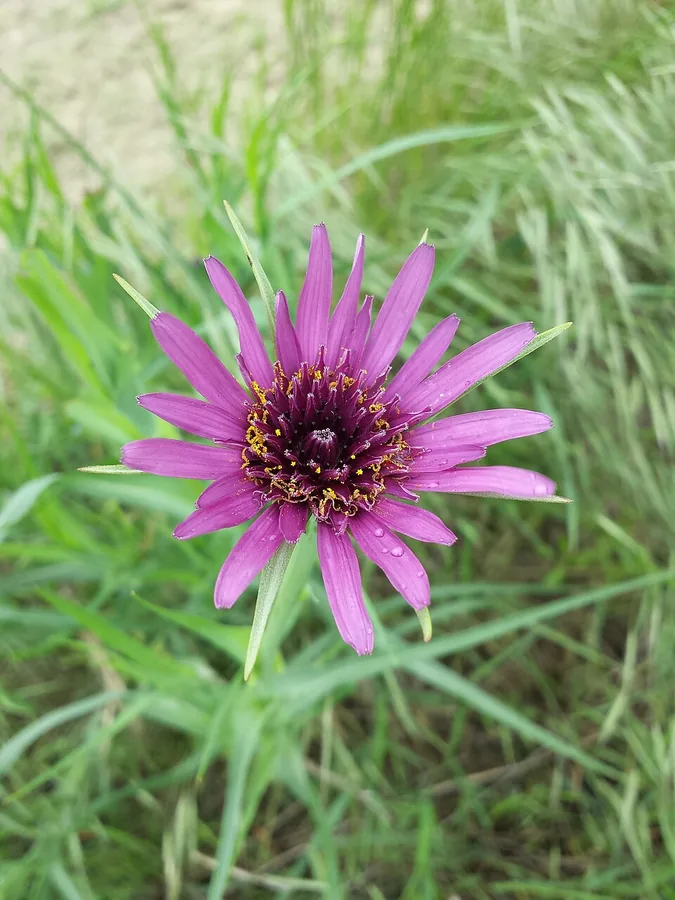
Salsify is a heritage root vegetable that deserves way more space in the garden. It grows a long, slender taproot with a gentle oyster-like flavor, the very trait that earned it the nickname oyster plant. It runs in the daisy family, a first cousin to the dandelion, and left to a second year it fires up the same starry purple flowers. Most growers dig the roots in year one, well before any of that, and get straight to the good part.
Growing it comes down to patience plus a well-dug bed. Salsify wants a long, cool season of four to five months, and the root only runs straight and smooth when the soil below is deep and loose. Get that bed right and the plant practically takes over from there, brushing off most pests and asking for barely a thing all season.
The real thrill lands late in the year. A few frosts sweeten the roots and turn them into something special, and they keep right in the ground through winter, so digging a fresh batch on a cold day becomes one of the season's small victories.
Care
The short version: hand salsify full sun and a deep, loose, stone-free bed dug over well before sowing. Water it around 1 to 2 inches a week to keep the roots running straight, sow early to grab a long cool season, and start digging once the first frosts have sweetened them up.
Light
Salsify runs best in full sun, though it will still crop in a little partial shade. Every hour of light the leaves grab gets pushed straight down into the root, so the sunnier the spot, the better the harvest.
Water
Keep salsify at about 1 to 2 inches of water a week and hold the soil evenly moist all season long. That steady moisture is what keeps the roots running straight instead of forking or cracking, so never let the bed swing from bone dry to soaked.
Soil
The soil is where the whole crop is won. Salsify craves deep, loose, stone-free loam packed with organic matter, dug down a full 12 to 24 inches so the taproot can drive straight without hitting a thing. Aim for a pH of 6.0 to 7.5 and it is right at home.
Temperature
This is a cool-season root through and through, growing best from about 50°F to 77°F (10°C to 25°C). Cold barely registers, and a late frost is a bonus, sharpening the sweetness in every root.
Humidity
Regular outdoor air of around 40% to 70% humidity keeps salsify perfectly happy, so this one takes care of itself. Airflow is the thing to watch, since damp, stagnant conditions are what let white rust get a grip on the leaves.
Feeding
Dig some compost or a balanced fertilizer into the bed before sowing, and that usually powers the crop for the whole season. Steer clear of fresh manure, though, because it sends the roots forking and pushes out hairy side roots.
Pruning
There is no pruning to keep on top of. In the first year, just snap off any flower stalk the second it shows, and the plant keeps driving its energy down into the root instead of bolting to seed.
Repotting
not_applicable
Size & spacing
Once the flower stalks shoot up, plants hit 1 to 4 feet (30 to 122 cm) tall on a slim 6 to 12 inches (15 to 30 cm) spread. Give each one a bit of room so the root can bulk up without jostling its neighbor.
When to plant
Salsify plays a long, satisfying game. Get the seed into the ground in early spring, the moment the soil crumbles loose, then watch the roots build over a cool season of four to five months. Digging kicks off in fall once a frost or two sweetens them, and because the roots keep in the ground, the harvest rolls on through winter.
Northern hemisphere
Southern hemisphere
Typical months for a temperate climate: start earlier in warm zones, later where spring frosts linger.
- Plant: Direct sow in early spring as soon as the soil can be worked (about 2-4 weeks before the last frost); salsify needs a long, cool growing season.
- Harvest: Harvest roots in fall after the first frosts, which sweetens them; roots can overwinter in the ground and be dug through winter or early spring while the soil is workable.
Hardiness
USDA hardiness zones: 5–9
Temperature: down to -29°C
Troubleshooting
Salsify keeps trouble to a minimum, and what does crop up almost always starts in the soil or with the weather. Forked roots and early bolting top the short list, and both come straight back to the bed and the timing. Match your symptom below, chase down the cause, and keep the crop on track.
An early flower stalk and a woody root
When salsify bolts, it throws up a flower stalk in year one and the root goes woody and tough to eat. Heat, drought, or seed dropped too late into warm soil are what kick it off. Sow early to lock in a long cool run, pinch off flower stalks the moment they rise, and dig the good roots before they toughen up.
Fix:
- Remove flower stalks as soon as they appear
- Harvest usable roots before they become woody
Gnawed roots and tunnels in winter beds
Leave roots in the ground over winter and mice and voles treat them like a buffet, cutting tunnels down the rows and hollowing the roots out. The surest move is to dig and store the roots before rodent numbers spike. To keep them out in the bed, stay on top of the mulch and set rodent controls around the edges.
Fix:
- Harvest and store roots before deep winter rodent pressure
- Manage mulch and use rodent controls around the bed
Forked, split, or hairy roots at the dig
Forked roots point straight back to the bed almost every time. Stones, heavy ground, or a shallow dig shove the taproot off course, and patchy watering or fresh manure only pile on. Dig the soil a full 12 to 24 inches deep, pull out every rock, keep the moisture steady, and the next batch runs long and smooth.
Fix:
- Work the soil deeply (12-24 inches) and remove rocks before sowing
- Maintain even moisture of 1-2 inches of water per week
- Amend with compost rather than fresh manure
White blisters or a powdery dusting on leaves
Damp, crowded leaves roll out the welcome mat for white rust and powdery mildew, showing up as white blister-like pustules or a dusty white coat. Strip off the marked leaves and bin them, open the planting so air pours through, and keep the foliage dry. Shift the crop to a fresh bed each year and the problem never settles in.
Fix:
- Remove and dispose of affected foliage
- Improve airflow and reduce overhead moisture
- Rotate the crop to a new bed
Soft clusters and sticky film on the leaves
Aphids pile onto the leaves and stems in soft little clusters and leave a sticky honeydew trail. A sharp blast of water knocks most of them flying, and insecticidal soap finishes off a colony that hangs on. Scout the plants often and let the natural predators pitch in.
Fix:
- Dislodge with a strong jet of water
- Apply insecticidal soap if needed
Toxicity
Here is a plant you can grow with zero worry, because salsify is grown to be eaten and every bit of it is safe. The roots, shoots, and young leaves all head to the kitchen, and it stays safe around pets, livestock, and children the whole way through. The only quirk is the milky white sap from cut roots, which can mark the hands but does no harm and rinses right off.
Safe for
People · Cats · Dogs · Horses · Rabbits · Livestock · Birds
Cats None
Salsify never shows up on the ASPCA toxic list, so a nosy cat that chews a leaf is fine. The milky sap might mark a paw, but it does no harm at all.
Dogs None
A dog can dig into the roots and chew away without any trouble, since none of the plant is poisonous. Pile any vegetable on too high and it can loosen the stomach, but salsify itself stays safe.
Horses Safe
Horses graze salsify with zero fallout, because it packs no toxin that would trouble them.
Rabbits Safe
Rabbits tuck into the tender leaves and roots safely, and plenty of them go straight for the fresh greens. Bring any new green in slowly to keep their digestion running smooth.
Livestock Safe
Cattle, goats, and sheep graze salsify in the field with no ill effect, which is exactly how it spreads across grazing land. There is no toxin here to slow anyone down.
Birds Safe
Birds peck at the seeds and leaves as much as they please, and the plant poses them no risk. Backyard hens dig into the trimmings without a worry.
People Safe
Salsify is grown for the plate, and the roots, shoots, and young leaves are all good eating. The one catch is the sticky white latex from cut roots, and that rinses clean off the hands.
Cut roots and stems exude a milky white latex (typical of the daisy family) that can stain hands; wash after handling.
Varieties
Salsify keeps the choice short and sweet, splitting into one polished kitchen cultivar and the wilder original species. These two are all a grower really needs to track down.
Mammoth Sandwich Island
The go-to white-rooted cultivar, grown far and wide for long, smooth, evenly tapered roots that pack the mild oyster flavor salsify fans chase.
Common (purple) salsify
The wild species form, which shoots up mauve-purple, dandelion-like flowers in its second year over roots of the very same white flesh.
How to propagate
There is one route into growing salsify, and it could not be simpler: sow the seed right where the plants will stand. That deep taproot flat-out refuses to be dug up and moved, so direct sowing is the whole game.
SeedEasy
Direct sow in early spring as soon as the soil can be worked · Germinates in about 8-10 days; roots reach harvest size in roughly 110-150 days
Sow salsify straight into its final bed in early spring the moment the soil crumbles loose, since the long taproot wants nothing to do with being moved. Seedlings break through in about 8 to 10 days, and the roots then bulk up over a long, cool run of roughly 110 to 150 days. Grab fresh seed every year, because salsify seed drops off in vigor fast from one season to the next.
Myths
Salsify and black salsify are the same plant.
They cook up looking similar, but they come from two different species. Salsify is Tragopogon porrifolius, with white-skinned roots and purple flowers, while black salsify is Scorzonera hispanica, sporting black-skinned roots and yellow flowers.
Salsify roots have to come up before frost or they spoil.
It works the other way around. Frost sweetens the roots, so leave them right in the ground and keep digging through winter or into early spring, for as long as the soil stays soft enough to work.