Vegetable · Asteraceae
Sunchoke
Helianthus tuberosus
Plant it once and it keeps giving for years, provided you rein in its wandering ways.
Full sun
Every 7–10 days
120–150 days
USDA 3–9
Overview
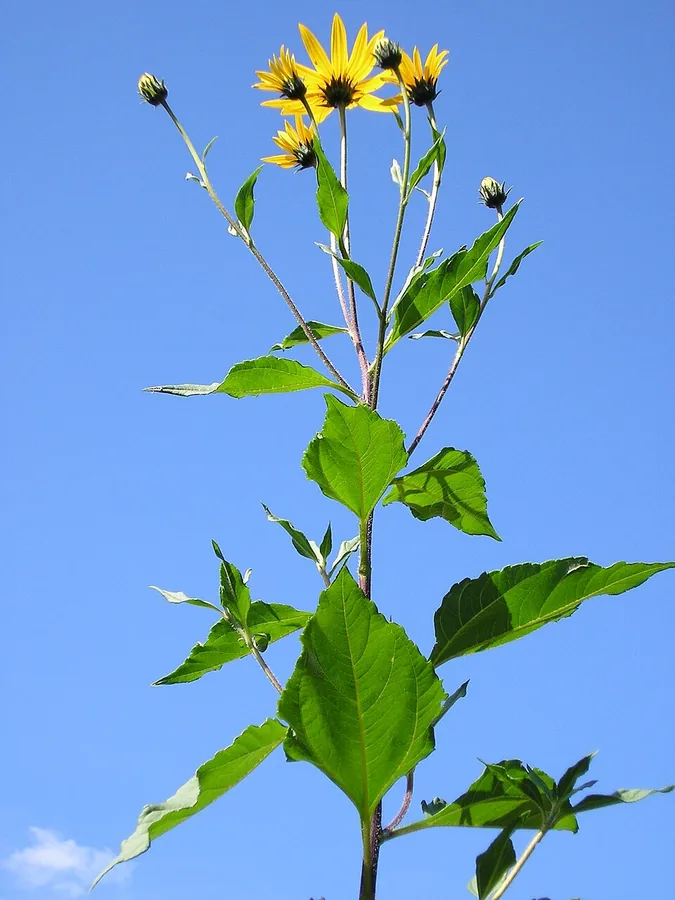
Start with the surprise: the sunchoke is a North American sunflower raised for its roots, not its blooms. Forget the Jerusalem artichoke name, because the plant has zero connection to artichokes or to Jerusalem. It is Helianthus tuberosus, a towering perennial that shoots up bright yellow, sunflower-like flowers in late summer over chunky roots with a nutty, faintly sweet bite.
The best part is how little they demand. They power through cold as brutal as -22°F (-30°C), make quick work of poor soil, and still crank out a crop with barely a nudge from you. All that drive comes with a flip side, since one tuber left in the ground will launch a whole new patch next spring, so plant them somewhere you are glad to see them take off.
Treat them as a permanent, hard-charging corner of the plot rather than a neat annual row. Pick a spot where they can stretch out, or corral them with a buried barrier or a big container, and they pay you back with a heavy harvest of tubers that hold in the ground straight through winter. Give them their lane and they run with it.
Care
The short version: hand them full sun, ordinary free-draining soil, and a deep soak through dry spells, then wrap a contained bed or buried barrier around them to keep all that spreading energy pointed the right way.
Light
Sunchokes thrive in full sun, which drives the tallest stalks and the heaviest tubers. They will still crop in partial sun or light shade, just with a lighter haul, so hand them your brightest patch.
Water
Give them a deep soak every 7 to 10 days through dry spells, and step it up in late summer and fall while the tubers are bulking up. Settled plants shrug off drought, but steady moisture is what really packs out the crop.
Soil
They grab hold in almost any ground, yet they hit their stride in loose, loamy soil that drains fast. Shoot for a pH of 5.8 to 6.8, and dodge soggy low spots, since wet roots trigger tuber rot.
Temperature
Toughness is where sunchokes flex. They blast through winters as cold as -22°F (-30°C) and keep charging through summer heat up to 86°F (30°C), which lets them take off across a huge sweep of the country.
Humidity
Everyday outdoor humidity in the 40% to 60% band suits them, and the number barely matters. Airflow is the thing to chase, since damp, crowded air late in the season is what sparks powdery mildew.
Feeding
These plants ask for next to no feeding. One balanced feed in spring does the job, and piling on more just pumps out leggy, top-heavy stalks that flop in the wind.
Pruning
Leave them alone and they are fine, but chopping the tall flower stalks in late summer curbs reseeding and keeps the stems standing. Clear the dead stalks after frost, and mow down any patch making a break for open ground.
Repotting
Pots are not their game. If you do run them in a contained bed or large container, lift and divide the tubers each season to freshen the planting and thin the crowd.
Size & spacing
Hand them serious room, because the stalks rocket to 6 to 10 feet (1.8 to 3 m) tall and each clump fans out 2 to 4 feet (60 to 120 cm). They throw heavy shade, so plant them where they will not swamp your shorter crops.
When to plant
Sunchokes run on a simple, punchy calendar, so the dates are easy to hit. Get tuber pieces into the ground in early to mid spring once the soil crumbles, cheer the tall stalks into bloom in late summer, then dig tubers after the first hard frost and keep pulling right through winter into early spring whenever the ground gives.
Northern hemisphere
Southern hemisphere
Typical months for a temperate climate: start earlier in warm zones, later where spring frosts linger.
- Plant: Early to mid spring, once soil can be worked, by planting tuber pieces 10-15 cm deep
- Harvest: Yellow sunflower-like blooms in late summer to fall; harvest tubers after the first hard frost and through winter into early spring
Hardiness
USDA hardiness zones: 3–9
Temperature: down to -40°C
Troubleshooting
Sunchokes seldom stumble, and most of what pops up is about channeling their vigor rather than nursing a sick plant. Track the tubers, the tall stalks, and wherever fresh shoots break ground, then match what you spot to the notes below and jump on it early. Catch these small things fast and they barely slow you down.
Fresh shoots blasting up far from the planting spot
That is the sunchoke's aggressive spread in action, powered by tuber bits left behind at harvest and by rhizomes racing out from settled clumps. Miss even one scrap and it will resprout next spring and fire off a fresh colony, so stay a step ahead. Dig out every fragment you can track down, pen the planting inside a bordered bed or buried barrier, and mow off any runaway shoots before they fatten into new tubers.
Fix:
- Dig and remove every tuber fragment repeatedly over several seasons
- Confine plantings to a bed bordered by buried barriers or grow in large containers
- Mow or cut emerging shoots before they store energy in new tubers
Mushy tubers cloaked in cottony white fuzz
This is sclerotinia soft rot, a fungus that moves into soggy, poorly drained ground and into any spot where a tuber got nicked at digging. It turns tubers watery and discolored, and it only gains ground where the soil stays saturated. Pitch anything affected, sharpen the drainage, and stash your healthy tubers somewhere cool and barely moist instead of wet.
Fix:
- Discard affected tubers
- Improve soil drainage and avoid waterlogging
- Cure and store harvested tubers cool and slightly moist, not wet
A dusty white film creeping over the upper leaves
Late in the season, crowded, humid stands often pick up powdery mildew. The pale patches race across the leaf surface and the foliage yellows and dries early, though by then the damage is mostly cosmetic. Thin the stems to open up the airflow and strip off any heavily coated leaves.
Fix:
- Improve air circulation by thinning stems
- Remove and dispose of heavily infected foliage
Tall stalks pitching over after a storm
Sunchokes rocket to 6 to 10 feet (1.8 to 3 m), and all that height leaves them open to lodging in exposed sites and rich soil. Top-heavy stems tip from the base or snap partway up once wind and rain roll in. Stake them or run them along a sheltered fence, and cutting the stalks back partway in midsummer keeps them from getting so top-heavy.
Fix:
- Provide staking or grow against a wind-sheltered fence
- Cut stalks back partway in midsummer to reduce height
Toxicity
Great news to lead with: every part of the sunchoke is safe for people and pets, with no toxic compounds in the leaves, stems, or tubers. The only footnote is that the tubers pack plenty of inulin, a fiber that can stir up gas when a person or animal eats a big helping, and that is a digestive quirk, never poisoning.
Safe for
People · Cats · Dogs · Horses · Rabbits · Livestock · Birds
Cats None
Safe around cats, since the leaves, stems, and tubers carry no toxic compounds. A cat that chomps a stalk might catch a mild, passing stomach upset, and nothing scarier than that.
Dogs None
No poisoning risk for dogs whatsoever. A digger that unearths and wolfs a tuber may pass some extra gas from the inulin, which clears on its own soon enough.
Horses Safe
Horses can graze the foliage without a hitch, and the tubers make a wholesome, starchy treat in sensible amounts.
Rabbits Safe
Rabbits get on great with the leaves and tubers. Bring in any new food slowly, as you would with any fresh green, to keep their gut steady.
Livestock Safe
Cattle, goats, sheep, and pigs all tuck into sunchoke tops and tubers, and the crop is sometimes grown flat-out as forage for them.
Birds Safe
Backyard poultry and wild birds peck away at the plant with no trouble, and the seed heads pull them in once the blooms fade.
People Safe
The tubers are a proven food, great raw or cooked. They are loaded with inulin, a fiber people do not fully digest, so a big serving can leave you gassy, but that is a harmless quirk rather than poisoning.
No special handling precautions for toxicity; tubers are high in inulin, which can cause gas and digestive upset if eaten in quantity by people, but this is a dietary effect and not poisoning.
Varieties
A handful of named sunchokes are well worth chasing down, most of them picked for smoother tubers that make cleanup a snap. These are the ones you will bump into most.
Stampede
An early charger that puts up large, white-fleshed tubers and crops well even where the season runs short.
Red Fuseau
Throws long, smooth, reddish-skinned tubers that wash up far quicker than the knobby types.
Mammoth French White
A tall, driving grower that piles on big, knobby white tubers by the armload.
Fuseau
Prized for smooth, stretched-out, nearly knob-free tubers that make scrubbing and prep a breeze.
How to propagate
Here is the payoff: sunchokes practically plant themselves, so kicking off your own patch is as easy as tucking a few tubers into the dirt.
Bulbs & cormsEasy
Early to mid spring · One growing season to a harvestable colony
Drive whole tubers or pieces, each packing at least one bud or eye, about 4 to 6 inches (10 to 15 cm) deep in early to mid spring, the same way you would set a bulb or corm. They grab hold fast and build into a harvestable colony inside a single season, then spread hard from there, so hand them a spot you are keen to keep them in.
Myths
Jerusalem artichokes are a kind of artichoke shipped in from Jerusalem.
The plant is no artichoke and has no tie to Jerusalem. It is a North American sunflower, Helianthus tuberosus, and the name most likely slid out of girasole, the Italian word for sunflower.
The tubers are fair game in any amount with zero aftereffect.
The tubers are stacked with inulin, a fiber the human gut cannot fully crack, so a big helping really can kick off gas and flatulence. That is a digestive effect and nothing to do with anything toxic.