Vegetable · Solanaceae
Eggplant
Solanum melongena
Pour on heat, full sun, and steady water, and eggplant keeps pumping out glossy fruit all season.
Full sun
Every 3–7 days
61–90°F · 16–32°C
65–80 days
Overview
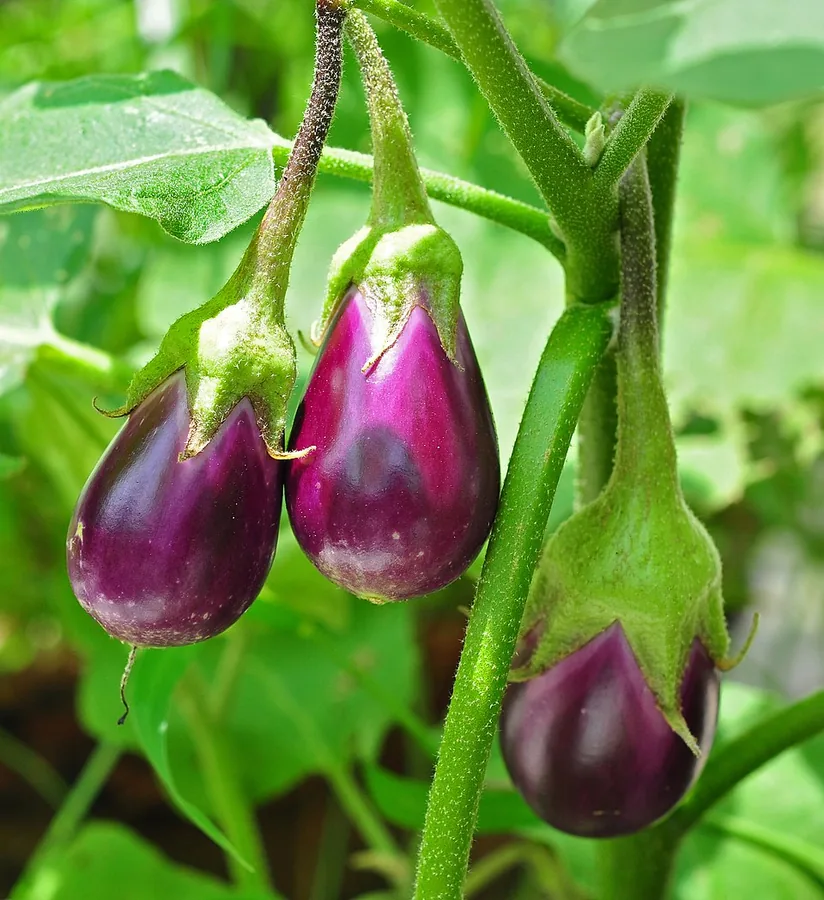
Eggplant is a heat-chasing nightshade that thrives for one payoff: glossy, meaty fruit worth growing. It came up through South and East Asia and has powered dishes worldwide for centuries, from Italian parmigiana to grilled Japanese nasu. Plenty of growers call it aubergine or brinjal, and it runs with the same crew as tomatoes, peppers, and potatoes.
Eggplant tests a grower's patience more than any other warm-season pick, and that wait pays off. It demands a long, warm run to crop well, so smart growers fire it up indoors and turn it loose outside only once the nights hold steady. Feed it that warmth and it keeps cranking out fruit right up until the cold shuts things down.
The fruit breaks way past the one shape stores stock, which is half the fun. Hunt down the big purple-black ovals, the slim Asian types, and even white-skinned varieties that turn heads. Snap them up young, while the skin still gleams, and the flavor stays sweet instead of sliding bitter.
Care
The short version: load it with full sun and warm soil, hold steady moisture at about an inch of water a week, plant it in rich, well drained ground, keep the nitrogen in check, and grab the fruit while the skin still gleams.
Light
Eggplant chases full sun, and every extra direct hour pushes it harder. Shade drags it down, and a plant stuck in dim light shoots up leggy and barely sets fruit.
Water
Hold steady, even moisture, which lands at about an inch of water a week, instead of swinging from bone-dry to soaked. Those swings turn the fruit bitter and gut your yield, so keep it consistent. Water at the base and keep the leaves dry to shut disease out.
Soil
Drop it into fertile, well drained loam packed with organic matter. Eggplant shrugs off pH worries and takes anything from 5.5 to 7.5, so most decent garden soil gets it going.
Temperature
This crop runs warm-season all the way, firing best between 61°F and 90°F (16°C to 32°C). Cold slams the brakes on growth, and nights below 50°F (10°C) knock the flowers off before fruit ever sets.
Humidity
Plain outdoor humidity covers it, so skip chasing a number. Airflow does the heavy lifting, since crowded, damp foliage hands fungal trouble an opening.
Feeding
Side-dress with a nitrogen source such as calcium nitrate three to four weeks after planting, then hit it again later in the season. Keep the nitrogen in check, since too much builds a leafy plant that stalls fruiting.
Pruning
Eggplant barely needs pruning, which frees you up. Strip off any damaged or diseased leaves, and stake or cage the tall, heavily fruiting plants to lift the fruit off the ground.
Size & spacing
Plants shoot up 2 to 4 feet (60 to 120 cm) tall and bush out 18 to 30 inches (45 to 75 cm) wide. Give each one room so air rips through and the fruit hangs clear of the soil.
When to plant
Eggplant runs hot and bails on cold, so timing makes the whole season. Fire the seeds up indoors about 8 weeks before your last frost, turn the plants loose outside only once nights hold above 50°F (10°C), and start grabbing fruit from midsummer, roughly 65 to 80 days after transplanting.
Northern hemisphere
Southern hemisphere
Typical months for a temperate climate: start earlier in warm zones, later where spring frosts linger.
- Sow: About 8 weeks before the last spring frost
- Plant: After all danger of frost, when nighttime temperatures stay consistently above 50°F (10°C)
- Harvest: Harvest 65 to 80 days after transplanting, when fruit is large, glossy, and uniformly colored
Hardiness
USDA hardiness zones: 4–12
Temperature: down to -34°C
Troubleshooting
Eggplant flashes its problems right on the leaves and the fruit, and the warm, humid weather that fuels it fuels pests and disease just as hard. Jump on the early signs and you can shut a small problem down before it spreads. Match what you spot below, then move while it still counts.
Whole plant sagging and yellowing, brown streaks running through the stem
This one is verticillium wilt, a soilborne fungus that jams the plant from the inside and bites harder as fruit forms. Slice a stem near the base and the brown streaking through the tissue nails the diagnosis. No cure exists, so yank and destroy the badly hit plants, keep them out of the compost, and rotate eggplant clear of tomato, pepper, and potato for several years.
Fix:
- Remove and destroy severely affected plants
- Do not compost infected material
Tiny round holes peppering young leaves
Those pinholes scream flea beetles, tiny dark insects that spring away the second you brush the plant and mob tender transplants. Slap floating row covers over young plants before the beetles zero in, and knock back nearby weeds that shelter the pest. Keep the plant charging along and well fed, and it usually powers right past the early damage.
Fix:
- Use floating row covers on young plants
- Apply labeled insecticides if infestations are heavy
- Keep plants vigorous so they outgrow early damage
Flowers popping open only to drop with no fruit behind them
Eggplant gets touchy about temperature, and blossom drop kicks in after nights below 60°F (16°C), blasts of extreme heat, or too much nitrogen driving leafy growth over fruit. Watch for cold or hot snaps around flowering and for a lush plant flashing few blossoms. Push transplants out only once nights stay warm, and feed by soil-test rates instead of guessing.
Fix:
- Transplant only after nights stay warm
- Avoid over-fertilizing with nitrogen
Fruit turning bitter on the plate
Bitter fruit springs from uneven soil moisture or from leaving the eggplant hanging too long. Grab it while the skin still gleams, and lock the moisture in with mulch and regular watering. Once fruit goes dull and seedy past its prime, it rarely tastes good no matter how you cook it.
Fix:
- Maintain even soil moisture
- Harvest fruit while skin is still glossy
Toxicity
The ripe, cooked fruit is a winner on the plate, but the rest of the plant stays off-limits. Its leaves, stems, and unripe green parts pack a natural compound called solanine that upsets the stomach, and it runs mildly toxic to cats, dogs, horses, and other animals if they eat the foliage. Keep those green parts well clear of pets and curious kids.
Toxic to
Cats · Dogs · Horses · Rabbits · Livestock · Birds
Safe for
People
Cats Mild
A cat that grabs a few bites of leaf or stem may drool, vomit, or hit loose stools from the solanine inside. The fruit poses no threat here, the foliage does.
Dogs Mild
Chewing the green parts can leave a dog drooling with an upset stomach for a stretch. Most cases stay mild, though a big mouthful earns a vet call.
Horses Mild
Horses that graze the foliage can land in colic-style stomach upset with a dull, sluggish mood. Keep them clear of the plants and any trimmings.
Rabbits Mild
The leaves and stems carry solanine and have no business in a rabbit's diet. Even a small taste of foliage can trigger soft stools and a poor appetite.
Livestock Mild
Grazing the green tops can knock cattle, sheep, and goats off their feed with a bout of gut upset, so run a fence that keeps the herd clear of the rows and every pile of clippings.
Birds Mild
Pecking at the leaves or green parts can unsettle a bird's gut. Backyard hens usually skip the bitter foliage, but never toss them trimmings.
People Ripe fruit safe
Ripe, cooked eggplant is a kitchen powerhouse and safe to eat. Skip the raw leaves and stems, which carry the same solanine that troubles animals.
Keep pets and children from chewing leaves, stems, or green/unripe fruit; the cooked ripe fruit is edible.
Helpline numbers

United States
ASPCA Animal Poison Control: (888) 426-4435 (fee applies)
Poison Control: (800) 222-1222



Canada
Poison Centres: 1-844-764-7669
Varieties
Eggplant blows past the one shape stores carry, and the range is worth digging into. Here are the types to know by name.
Black Beauty / Italian types (e.g., Dusky, Epic)
These are the classic eggplants, hauling the large, glossy purple-black oval fruit most people picture first.
Ichiban (Asian type)
An Asian type that pumps out long, slender fruit with thin skin and tender flesh that cooks quickly.
Casper
A specialty variety prized for its smooth white skin, a striking break from the usual purple.
Hansel
A compact plant that loads up clusters of small, slender fruit, which makes it a winner for pots and tight beds.
Companions
Eggplant grows best beside beans and marigolds, and worst beside its nightshade cousins like potatoes, which trade the same pests and diseases back and forth.
Plant near
Beans: Listed as a beneficial companion for eggplant in extension companion-planting guidance
Marigolds: Listed as a beneficial companion; marigolds are associated with pest/nematode suppression
Keep apart
Potatoes: Listed as incompatible with eggplant; both are nightshades sharing pests and diseases
How to propagate
Eggplant takes off from seed, and the whole game is loading it with warmth and a solid head start indoors before the season flips.
SeedModerate
Start indoors about 8 weeks before the last frost · 6 to 8 weeks to transplant size indoors
Eggplant takes off from seed started indoors about 8 weeks before your last frost. The seed craves warmth to break dormancy, so park the tray on a heat mat and hold the soil around 75°F to 85°F (24°C to 29°C). Give the seedlings 6 to 8 weeks to hit transplant size, then turn them loose outside only once nights run reliably warm.
Myths
Not one bit of an eggplant can be eaten safely, since the entire plant is poisonous.
The solanine-type glycoalkaloids pile up in the leaves, stems, and unripe green parts, not in the fruit you cook. Ripe eggplant is a safe, everyday food, devoured around the world for centuries.