Ornamental · Solanaceae
Calibrachoa
Calibrachoa × hybrida
Hand it full sun, steady water, and acidic soil, and calibrachoa pours out bloom from spring to frost.
Full sun
Every 1–3 days
USDA 9–11
3–12 in · 8–30 cm
Overview
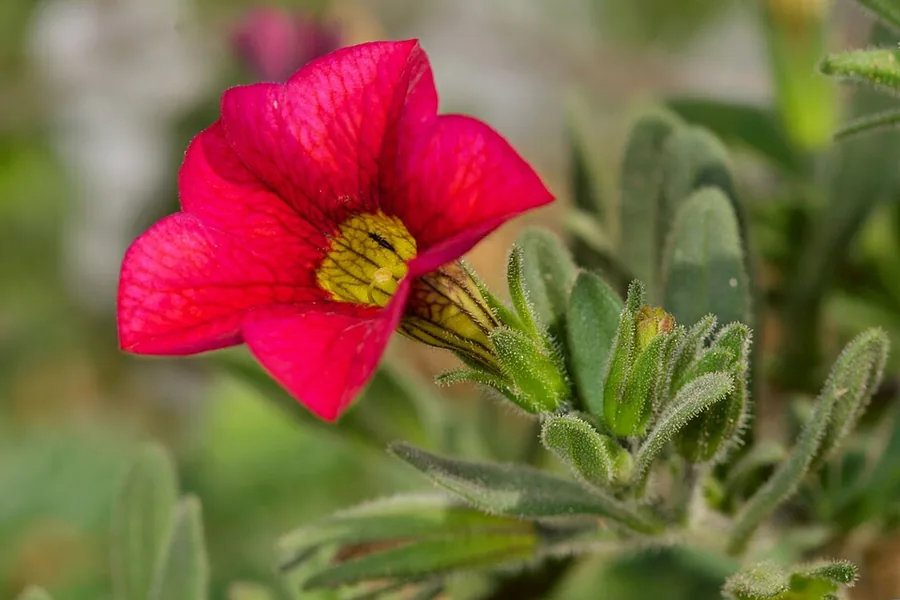
Calibrachoa goes by Million Bells to most growers, a trailing flower that spills small petunia-like blooms over the rim of a pot or basket the whole season long. It sits in the nightshade family and counts the petunia as a close cousin, yet it claims its own name with good cause. The flowers run smaller, the habit leans more mounding and trailing, and the palette dives into richer tones.
Across most of the country gardeners run it as a warm-season annual, since this tender perennial only winters over in the mildest zones. It thrives on heat and sun, brushes off any need for deadheading, and keeps the flowers coming without a break. That blend of grit and nonstop color is what packs it into so many summer containers.
It does want a few things back. This is a hungry, thirsty feeder that calls for slightly acidic soil and steady moisture, and it sulks the moment shade moves in. Nail the sun, the feeding, and the soil pH, and the plant carries itself from there.
Care
The short version: give it full sun, steady moisture in a fast-draining pot, and a slightly acidic mix fed every couple of weeks. Pinch the tips here and there to keep it bushy, and forget the deadheading completely.
Light
Calibrachoa craves full sun, 8 or more hours a day. Bloom drops off quickly as shade creeps in, so a spot that soaks up afternoon light rewards you with the fullest, most colorful plant.
Water
Hold the mix evenly moist but never soggy. Through summer heat, baskets and pots can call for water every day, sometimes twice, while the surface dries within a day or two. Always plant in a pot with drainage holes, since standing wet is exactly what invites root rot.
Soil
Plant it in a well-draining, organically rich potting mix that leans acidic, somewhere around pH 5.0 to 6.5. A peat-based mix fits it nicely. Steer clear of heavy clay in beds, which holds far too much water for these roots.
Temperature
It rides out a broad swing, from about 41°F to 95°F (5°C to 35°C), and takes summer heat in stride. Frost draws the hard line, which is why most gardeners run it as an annual.
Humidity
Average humidity of 40% to 60% keeps it content, so it's not a plant to fuss over there. Good airflow around packed baskets earns more than any number on a gauge.
Feeding
This one's a heavy feeder. Blend a slow-release balanced fertilizer in at planting, then chase it with a dilute water-soluble balanced feed every other week. Should the new growth turn yellow, work in chelated iron or iron sulfate to set it right.
Pruning
There's no deadheading on the to-do list, since the spent flowers drop on their own. Pinch the stem tips back about 2 in (5 cm) at planting or midseason to hold the plant compact and drive fresh branching and bloom.
Repotting
Calibrachoa isn't really repotted. It grows as a single-season container plant and gets swapped out each spring, so once it settles into its pot or basket it stays put for the year.
Size & spacing
Plants keep low and spreading, roughly 3 to 12 inches (8 to 30 cm) tall with a trailing reach of 12 to 24 inches (30 to 60 cm). That mounding, cascading shape is what sends them tumbling so freely over a basket's edge.
When to plant
Calibrachoa runs on warmth and won't take frost at all. Plant it out in spring once the chill clears and the soil climbs past 55°F (13°C), and it blooms from late spring all the way to the first frost that closes the season.
Northern hemisphere
Southern hemisphere
Typical months for a temperate climate: start earlier in warm zones, later where spring frosts linger.
- Plant: spring, after the last frost once soil temperatures exceed 55°F (13°C)
- Harvest: late spring continuously until first frost
Hardiness
USDA hardiness zones: 9–11
Temperature: down to -7°C
Troubleshooting
Nearly every calibrachoa setback comes back to soil pH, watering, or light, and it surfaces in the leaves and the flowering. Catch the early clues and you can steer a plant back before it slides. Match what you spot below, then move while it still counts.
Plant flops in soggy mix and rots at the base
A plant that wilts while the mix stays drenched points straight to root or stem rot driven by Pythium or Phytophthora. Tip it out and inspect the roots; firm white roots mean health, while brown, mushy, sparse ones spell trouble. A badly hit plant won't bounce back, so toss it and move any survivors into fresh, fast-draining mix in a pot that drains properly.
Fix:
- Stop watering until the top of the mix dries
- Remove and discard badly affected plants
- Replant survivors in fresh, fast-draining mix in a container with working drainage holes
Fresh leaves yellow out but the veins stay green
Blame iron deficiency, which strikes the youngest growth first because calibrachoa craves more iron than nearly every other bedding flower. The trigger is almost always a potting mix that has crept above pH 6.5, locking iron away from the roots. Test the mix, pull the pH back toward 5.5 to 6.0 with iron sulfate, then drench with chelated iron and watch the new leaves green up.
Fix:
- Lower the media pH toward 5.5 to 6.0 using iron sulfate per label directions
- Drench with chelated iron to green up new growth
- Resume feeding every other week with a balanced water-soluble fertilizer
Sticky film, speckled foliage, or warped new shoots
Those signs flag aphids, thrips, or spider mites, the trio that troubles calibrachoa most. Scout the shoot tips and leaf undersides for clusters of aphids, threads of fine webbing, or skinny thrips that scatter when you rap a stem over a sheet of white paper. Blast the bulk of them off with a sharp jet of water, then finish up with insecticidal soap or horticultural oil.
Fix:
- Knock pests off with a strong spray of water
- Treat infestations with insecticidal soap or horticultural oil per label
- Discard heavily infested stems
Thin bloom and long, reaching stems
Too little sun drives most legginess and stalls flowering, since blooms taper off as shade builds. Skimpy feeding piles on, because this heavy feeder fizzles without steady meals. Shift the pot into full sun, snip the stretched tips back about 2 in (5 cm) to spark new branching, and feed every other week to bring the color flooding back.
Fix:
- Move containers to a spot with full sun
- Trim back leggy stem tips by about 2 in (5 cm) to force branching
- Feed every other week with a balanced water-soluble fertilizer
Toxicity
Great news for pet owners and parents: calibrachoa is safe to grow around the whole household. It stays off the ASPCA toxic plant lists, and its close cousin the petunia is listed as non-toxic. The most a curious nibble might bring is a mild, passing stomach upset, the kind any plant can stir up.
Safe for
People · Cats · Dogs · Horses · Rabbits · Livestock · Birds
Cats None
Grow it freely around cats. It never lands on the ASPCA toxic list, and a curious bite leads to nothing worse than the occasional mild stomach upset that any plant might trigger.
Dogs None
Dogs are in the clear too. One that gnaws a trailing stem might get a quick tummy grumble from the roughage, but no toxin is in play here.
Horses Safe
Horses can browse nearby with no harm. Nothing in the plant is known to poison them.
Rabbits Safe
Rabbits run no risk from the leaves or flowers, and a few stems do nothing more than fill them up.
Livestock Safe
Cattle, goats, and sheep can graze around it safely, since the plant holds no compounds that bother grazing animals.
Birds Safe
Pet and backyard birds stay fine near the blooms. No need to wall the baskets off from them.
People Safe
Harmless to people, though it's an ornamental and not raised for the table. Kids playing close by face no danger from it.
No special handling precautions are needed
Varieties
Calibrachoa lands in gardens through a handful of named series rather than stand-alone varieties. These are the ones worth knowing by name.
Million Bells
The first trademarked series, it brought calibrachoa to the US market back in the 1990s and handed the plant the common name everyone still uses.
Superbells
A spirited trailing series running solid, double, and patterned colors that performs strongly through university trials.
MiniFamous
A series prized for its double-flowered picks like Uno Yellow and Uno Pink Star that extension horticulturists call out.
Cabaret
A tidy, even series built for hanging baskets and mixed containers, and it racks up strong scores in extension trials.
Callie
A semi-trailing series that lends the plant its extension nickname callie and pours out bloom in baskets all season.
How to propagate
Calibrachoa multiplies from cuttings rather than seed, though patents draw real limits on doing it yourself.
Stem cuttingsModerate
Spring to summer
Cuttings are the go-to route for making more calibrachoa, since the plants set so little seed. Snip them in spring or summer from sturdy, growing stems. Keep one thing in mind: most named cultivars carry patents, so propagating them at home crosses a legal line.
Myths
You have to deadhead calibrachoa like a petunia to keep the flowers coming.
The blooms clean themselves, so spent flowers fall away on their own. Pinching them off never enters the picture. It flowers from spring right through to frost without a single deadhead.
Calibrachoa is just a tiny petunia you can raise from saved seed.
It stands as its own genus, not a shrunken petunia, and it sets barely any seed. Almost every garden hybrid grows from cuttings instead. Most cultivars carry patents, which puts home propagation off the table.
Yellow leaves on calibrachoa always point to overwatering.
When the yellowing strikes new growth while the veins stay green, the real culprit is usually iron deficiency from a media pH that has climbed too high. This plant hungers for more iron than most bedding flowers and thrives in a slightly acidic mix around pH 6.0.