Shrub · Solanaceae
Goji Berry
Lycium barbarum
Give it full sun, lean alkaline soil, and room to sprawl, and this tough nightshade pays you back in superfood berries.
Full sun
Every 7–14 days
USDA 4–7
3–12 ft · 0.9–3.7 m
Overview
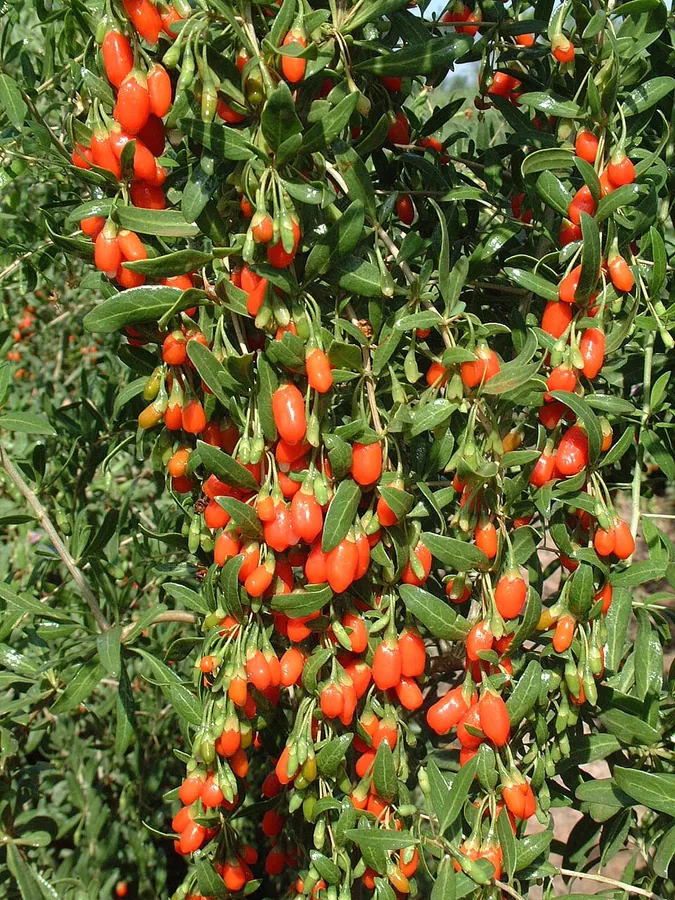
Goji berry earns a spot in the garden for those bright red superfood berries you know from the health-food shelf, and it delivers with far more grit than its dainty name lets on. It traces back to China, grown there for centuries, and it just keeps producing. The plant powers through cold down to -20°F (-29°C) and brushes off summer heat, drought, and rough ground.
Give it space and it runs with it. Long arching canes stretch 3 to 12 feet (91 cm to 3.7 m) and love to lean, root, and sucker wherever they touch down. Purple flowers pop in late spring, and the berries follow about 35 days later, cranking out fruit from midsummer clear into late fall.
This one grows easily and spreads with real gusto. It fruits with almost no fuss once it settles, but it suckers freely and self-seeds, which is exactly why it has gone weedy in some regions. Hand it a spot where its spread won't become a problem, and it rewards you with berries year after year.
Care
The short version: load it with full sun, set it in lean, alkaline-leaning soil that drains fast, hand it water totaling an inch each week, and prune yearly so the thorny suckering canes stay under control.
Light
Goji craves full sun, and the more it soaks up the better it fruits and fends off disease in hot, bright spots. It will handle a bit of partial shade, but light shade trades away berries and lets mildew creep onto crowded leaves.
Water
Pour on about 1 inch of water a week and let the top half of the soil dry between drinks. New transplants want steady watering to settle in, while established plants shrug off drought. The one thing it won't stand for is waterlogged ground or wild swings from soaked to bone dry.
Soil
Set it in well-drained light loam, though goji takes a wide range of ground in stride. It leans alkaline, a pH of 6.8 to 8.2, the flip side of most berries and exactly why it struggles in acidic soil.
Temperature
This is one seriously tough shrub, hardy from -20°F to 100°F (-29°C to 38°C). It powers through hard winters and brutal summers alike, part of why it naturalizes so readily once it lands in the ground.
Humidity
Goji thrives on the dry side, around 20% to 50% humidity, right in line with its hot, arid homeland. Damp, still air is what triggers powdery mildew, so airflow does far more good here than any push to add moisture.
Feeding
Feed a balanced 16-16-16 fertilizer through spring and summer, timed to budbreak, flowering, and fruit ripening. Roughly 4 to 5 tablespoons per 10 square feet a year, split into three feedings, keeps this undemanding plant firing.
Pruning
Let it run untouched its first year. After that, prune during dormancy to clear weak or damaged branches and shorten the laterals 6 to 18 inches, then pinch the terminals back 2 to 3 inches in early summer to spark branching and keep the thorny, sprawling canes under control.
Repotting
Goji is a ground plant, not a container one, so repotting rarely comes up. If you do run it in a pot, bump it up when you catch roots circling, water running straight through, or top growth that has stalled.
Size & spacing
Brace for a big, arching shrub from 3 to 12 feet (91 cm to 3.7 m) tall with an even wider sprawl of 4 to 8 feet (120 to 244 cm). Hand it that much room from the start, because the canes lean, sucker, and fill space fast.
When to plant
Goji is a cold-hardy perennial shrub that thrives in zones 4 to 7. Start seeds indoors in late winter, or set out plants after the last spring frost once the soil has warmed, then watch for purple flowers in late spring and a run of ripe berries from midsummer into late fall.
Northern hemisphere
Southern hemisphere
Typical months for a temperate climate: start earlier in warm zones, later where spring frosts linger.
- Sow: 8 to 10 weeks before last frost (seed); or propagate from cuttings or suckers
- Plant: after last spring frost once soil has warmed
- Harvest: purple flowers in late spring; berries ripen mid-summer to late fall, about 35 days after full bloom
Hardiness
USDA hardiness zones: 4–7
Temperature: down to -34°C
Troubleshooting
Goji is a rugged grower that hands you few real troubles, and nearly all of them land on the leaves, where you can catch them quick. Learn the small handful of pests and the one common disease below, and you can jump in early. Match what you spot, then move before it spreads through the bush.
Gall-studded leaves twisting out of shape
Those warty bumps and twisted leaves come straight from the goji gall mite, a pest far too small to spot that burrows into the leaf and pushes up green to yellow galls, leaving the foliage thick and misshapen. Get ahead of it fast: prune out the worst growth and burn it, then hit the buds with horticultural oil or sulfur as they break in spring. Stay on it and the shrub powers right back.
Fix:
- Prune out and destroy heavily galled growth
- Apply horticultural oil or sulfur per label as buds break
- Remove and dispose of fallen infested leaves
Floury white patches creeping over the foliage
A dusty white film that rubs off under a finger is powdery mildew, and it moves in when the weather turns cool and humid. Here is the upside: goji throws it off the moment hot, dry sun comes back, so the win is all about airflow. Open things up by thinning crowded stems, water down at the base, and reach for a labeled fungicide only if it really starts to run.
Fix:
- Improve air circulation by thinning crowded stems
- Avoid overhead watering
- Apply a labeled fungicide or sulfur if severe
Tiny bugs massing on sticky, curled shoot tips
Sticky leaves and curled tips almost always mean aphids are piling onto the soft new shoots, though spider mites and potato leafhoppers can leave the same telltale mess. Flip the leaves and hunt for soft-bodied insects, honeydew, or fine webbing. Then knock them off with a strong jet of water, follow through with insecticidal soap, and let the ladybugs charge in to clean up the rest.
Fix:
- Dislodge with a strong jet of water
- Apply insecticidal soap or horticultural oil to affected growth
- Encourage natural predators such as ladybugs
Toxicity
The ripe berries are a famous superfood, safe to eat fresh, cooked, or dried, so dig in with no worry. The catch is the foliage: as a nightshade, the leaves and unripe parts pack trace alkaloids that make them a mild caution for cats, dogs, horses, and other grazers. And mind the sharp thorns riding the stems too.
Toxic to
Cats · Dogs · Horses · Rabbits · Livestock · Birds
Safe for
People
Cats Mild
The ripe berries do a cat no harm, but the foliage carries trace nightshade alkaloids. Chew the leaves and a cat may drool a bit or get a mild upset stomach, so steer them off the plant and everyone stays happy.
Dogs Mild
A dog that grabs a fallen berry comes to no harm, yet crunching the leaves or green stems can leave it with mild drooling or a touch of digestive upset. Keep that grazing to a minimum and move on.
Horses Mild
Horses face only a low risk from the leaves, where the trace alkaloids might spark some mild stomach discomfort if they browse the bush. The berries, on the other hand, are no concern at all.
Rabbits Mild
Hand a rabbit ripe berries freely, but the leaves and unripe parts pack the same trace alkaloids and can unsettle a sensitive gut. Treat the foliage as a rare nibble at most and keep things easy.
Livestock Mild
Cattle, goats, and sheep can browse near goji without much bother, though really digging into the leaves may bring on mild digestive upset from the nightshade alkaloids packed inside them.
Birds Mild
Birds dive into the ripe fruit with zero harm and help fling the seed far and wide. The leaves carry trace alkaloids, so the foliage is the only thing to watch, never the berries.
People Ripe fruit safe
Ripe goji berries are that celebrated superfood, so tuck in fresh, cooked, or dried with no worry. Just skip the leaves and unripe parts, which pack trace alkaloids, and watch the sharp thorns riding the stems.
Stems carry sharp thorns that can scratch people and pets, and the leaves and unripe parts contain only trace solanaceous alkaloids, so discourage pets from grazing foliage.
Helpline numbers

United States
ASPCA Animal Poison Control: (888) 426-4435 (fee applies)
Poison Control: (800) 222-1222



Canada
Poison Centres: 1-844-764-7669
Varieties
Goji shows up under a handful of named cultivars, and grabbing a known name locks in predictable fruit that seed-grown plants just can't promise. These are the ones you will run across most.
Crimson Star (Ningxia #1)
A widely grown crowd-pleaser that fires up its first fruit 1 to 2 years after planting and hits full production in 3 to 5 years.
Phoenix Tears
A productive standout that growers chase for the heavy crop of fruit it pumps out.
Wolfberry Agrodevco
A named cultivar sold with home gardens and small-scale plantings in its sights.
How to propagate
Goji multiplies plenty of ways, from slow seed to free suckers, and the route you pick sets how fast you start picking berries and whether the plant comes true to its parent.
SeedEasy
Start indoors in late winter to spring · 2 years to first fruit, full production in 3 to 5 years
Goji leaps out of seed started indoors in late winter or spring, so germination is a breeze, but the seedlings come up variable and you wait about 2 years for that first fruit and 3 to 5 years for a full crop. Chasing a known cultivar and berries you can bank on? Kick off with a named plant instead.
Stem cuttingsModerate
Softwood cuttings in early summer or hardwood cuttings during dormancy · Several weeks to root, fruiting within a couple of years
Grab softwood cuttings in early summer or hardwood cuttings during dormancy and watch them root over several weeks, then fruit within a couple of years. Cuttings come true to type, so this is the move for locking in a cultivar's traits.
DivisionEasy
Dig and transplant suckers in dormancy · Establishes quickly once moved
A mature plant fires off suckers freely after about 3 years, and the easiest new plants come from lifting those rooted suckers during dormancy. Dig and move them then and they settle in fast, ready to go.
Myths
Goji's nightshade heritage means its fruit carries poison.
Not a chance, at least not the fruit. Growers around the world eat the ripe berries as a superfood, fresh, cooked, or dried. Only the leaves and unripe parts pack trace solanaceous alkaloids, and even those rate a mild caution, not a real danger. The fruit is safe to eat.
Goji needs rich, acidic soil to thrive.
Flip that on its head, because goji hails from slightly alkaline ground and hits its stride at a pH of 7 to 8. Acidic soil actually holds it back, so leave the blueberry acidifier in the shed.