Vegetable · Fabaceae
Lentil
Lens culinaris
Sow it early into cool, well-drained ground and watch this hardy legume feed itself and pay off big at harvest.
Full sun
Every 7–14 days
39–81°F · 4–27°C
80–110 days
Overview
Lentils charge through the cool season as a legume grown for small, protein-rich seeds, a crop that has fed people for thousands of years across the Middle East, the Mediterranean, and South Asia. The plant keeps things compact, standing just 12 to 20 inches (30 to 50 cm) tall, and races its pods to ripeness within a single season as an annual. Once it takes off, it barely asks a thing of you.
Here is the trick that lifts a lentil above most garden vegetables: a partnership with soil bacteria working hard underground. Like its fellow legumes, it builds nodules on its roots where Rhizobium bacteria grab nitrogen straight from the air, so the plant feeds itself and even hands the soil back richer than it found it. That is why growers love folding lentils into a rotation, since they break disease cycles and slash the fertilizer the next crop demands.
This crop pays back early planting and sharp drainage more than anything else. It shrugs off light frost, drought, and lean soil, but it truly cannot stand wet feet or a crowded, weedy bed. Get it in while the soil still runs cool, hand it full sun and room to breathe, and the harvest practically drives itself home.
Care
The short version: lentils crave full sun, lean well-drained soil, and a cool launch in early spring. Keep the ground evenly moist through flowering and pod fill but never let the roots sit wet, and drop the nitrogen entirely, since the plant makes its own.
Light
Lentils chase full sun and crop hardest under all-day light, though they will take a little partial sun. They stay short and slender and compete poorly, so keep taller plants and weeds from stealing their light.
Water
Keep the ground evenly moist through germination, flowering, and early pod fill, then ease right off, since the plant powers through drought once established. A drink about every 7 to 14 days suits most soils. Watch the wet end harder than the dry, because waterlogged ground triggers root rot and seedling disease.
Soil
Plant into well-drained sandy loam to loam first and foremost, since drainage counts for far more than fertility here. A pH between 6.0 and 7.5 keeps the plant and its nitrogen-fixing bacteria firing. Heavy, soggy ground is the one thing to dodge.
Temperature
This cool-season crop handles a big swing, from about 39°F to 81°F (4°C to 27°C). The seedlings take light frost in stride, but a hot, dry spell at flowering knocks back pod set, so an early start lets you outrun the summer heat.
Humidity
Lentils thrive on the dry side, around 30% to 50% humidity, which is why they flourish in open, breezy fields. Damp, still air invites blight and white mold, so hand the plants room and keep the canopy from staying wet.
Feeding
Drop the nitrogen, since as a legume the lentil brews its own through Rhizobium nodules. Inoculate the seed with the right Rhizobium instead of feeding N, and toss in only a low-nitrogen starter or a little phosphorus and sulfur if a soil test calls for it.
Pruning
Skip the pruning entirely, because lentils simply do not need it. Just stay ahead of weeds early, since the short plants compete poorly, and clear diseased debris at season's end to knock down the inoculum that would overwinter.
Size & spacing
Each plant holds a compact frame at 12 to 20 inches (30 to 50 cm) tall and 8 to 12 inches (20 to 30 cm) across. Give the stand elbow room, since crowding fuels lodging and disease in the damp, still air down low.
When to plant
Lentils are a cool-season crop that fires off early and finishes in late summer. Sow straight into the ground in early spring the moment you can work the soil, around 4°C (40°F), since the seedlings brush off light frost. Harvest 80 to 110 days later, once the lower pods turn brown and dry and the plant starts to yellow.
Northern hemisphere
Southern hemisphere
Typical months for a temperate climate: start earlier in warm zones, later where spring frosts linger.
- Plant: Direct-sow in early spring as soon as the soil can be worked and soil temperatures reach about 4°C (40°F); seedlings tolerate light frost.
- Harvest: Harvest when the lower pods turn brown and dry and the plant begins to yellow.
Hardiness
USDA hardiness zones: 3–8
Temperature: down to -40°C
Troubleshooting
Most lentil trouble kicks off in cool, wet weather or in soil that will not drain. Keep scanning the leaves, stems, and roots all season, and match what you spot to the list below before one small problem tears through the whole stand.
Plants flagging, stalling, and dying off from decayed roots or mold-coated stems
Wet ground throws open the door to a root rot complex of Fusarium, Aphanomyces, and Rhizoctonia, which chews through the roots and drops the plant from below. Pack the canopy dense and humid and you may instead run into white mold, the Sclerotinia fungus that wraps stems in fluffy growth and scatters hard black sclerotia. Nothing brings a plant back once this hits, so pull and destroy the sick ones, sharpen the drainage, quit overwatering, and swing to long rotations away from susceptible broadleaf and pulse crops.
Fix:
- Improve drainage and avoid overwatering
- Remove and destroy affected plants
- Rotate away from susceptible broadleaf and pulse crops
Tan patches fringed with dark borders creeping across leaflets and stems
Spot tan lesions ringed with dark edges and you have caught ascochyta blight early, a fungus that jumps into action during cool, wet weather and rides in on infected seed or last year's crop residue. Peer into a lesion and you will pick out the tiny dark fruiting bodies packed inside. Stay a step ahead by sowing certified disease-free seed, holding pulses out of the rotation for 3 to 4 years, and clearing infected debris the moment harvest wraps.
Fix:
- Use certified disease-free, fungicide-treated seed
- Apply a registered foliar fungicide when conditions favor disease
- Remove and destroy infected residue after harvest
Curling, tacky shoot tips swarming with tiny soft bugs
Catch clusters gathering on the fresh tips and you have found pea aphids, soft-bodied insects that tap the sap and leave a sticky film behind. Rally the lady beetles and lacewings first, because those hungry allies usually knock the numbers right back. Bring in a registered insecticide only when populations push past economic thresholds, and dial back the nitrogen, since the soft new growth it drives is exactly the feast aphids chase.
Fix:
- Encourage natural enemies such as lady beetles and lacewings
- Treat with a registered insecticide if populations exceed economic thresholds
Stands keeling over and knitting into a mat near harvest
See the plants topple and mat down before harvest and you are watching lodging, where weak stems buckle under a thick stand, soft growth, or a burst of wind and rain. The canopy caves, pods land on damp soil and rot, and the cutter wrestles to lift them. Move fast and harvest the moment the crop matures, then next season sow thinner, rein in the nitrogen, and grab more upright cultivars.
Fix:
- Harvest promptly once mature to limit losses
- Reduce seeding rate and avoid excess nitrogen in future plantings
Blooms dropping and scant pods forming once the heat arrives
When a hot, dry spell crashes in at bloom, heat and moisture stress knocks the flowers off before they can set pods. Timing turns it around fast. Sow early so flowering wraps before summer peaks, keep even moisture flowing through flowering and early pod fill wherever you can, and pick heat-tolerant cultivars in warm regions.
Fix:
- Provide even moisture through flowering and early pod fill where possible
- Plant early so flowering precedes peak summer heat
Toxicity
Great news for households with pets: the lentil plant is safe straight across the board. It never lands on the ASPCA's toxic list, and cooked lentils make a wholesome food for people and animals alike. The one thing to keep in mind is that dry, raw lentils need cooking before people eat them, a quick kitchen step rather than any poisoning risk.
Safe for
People · Cats · Dogs · Horses · Rabbits · Livestock · Birds
Cats Safe
Let a curious cat explore the lentil plant freely, since it never appears on the ASPCA's toxic list and a nibble does no harm.
Dogs Safe
Dogs can chomp the foliage worry-free, and cooked lentils already turn up as an ingredient in loads of dog foods.
Horses Safe
Nothing toxic lurks here, so a horse grazing right beside the plants stays perfectly fine.
Rabbits Safe
Rabbits can graze the leaves safely, though the plant works best as one snack in a varied diet rather than the whole spread.
Livestock Safe
Cattle, sheep, and goats power through lentil forage and crop residue with no poisoning, and many systems feed the plant as a pulse.
Birds Safe
Backyard hens and wild birds both gobble lentil seed without harm, and the cooked grain is safe too.
People Safe
Lentils fuel kitchens the world over. Just cook the dry seeds first, since raw, dry lentils carry lectins and other antinutrients.
Raw, dry lentils contain lectins and other antinutrients and are cooked before human consumption; this is a food-preparation matter, not a pet-poisoning hazard.
Varieties
Lentils burst out in a whole spread of seed colors and sizes, and a handful of types keep showing up in gardens and kitchens. These are the ones worth knowing by name.
Laird
Laird races ahead as a widely grown large green seeded type, prized for broad, flat seeds that cook up plump.
Eston
Eston, a small green seeded cultivar, wins fans with strong yields and an early finish to the season.
Pardina
Pardina, a small Spanish brown lentil, shines in the kitchen because it grips its shape after cooking.
Crimson / red cotyledon types
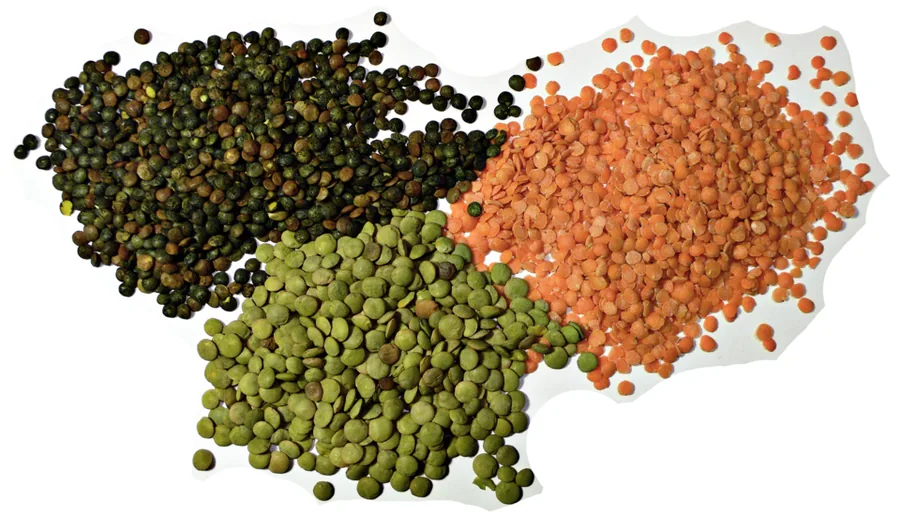
The crimson or red cotyledon types flash a salmon interior, often sell split, and melt down fast into soups and dals.
Beluga
Beluga struts as a tiny, glossy black lentil that mimics caviar and holds a firm texture on the plate.
How to propagate
Lentils grow from seed and nothing else, which keeps getting started wonderfully simple. Sow straight into the garden and let the cool spring soil do the heavy lifting.
SeedEasy
Direct-sow in early spring once soil can be worked, about 4°C (40°F) soil temperature. · Seedlings emerge in roughly 7-14 days under cool moist conditions.
Lentils spring up from seed sown straight into the ground, so starting them is a breeze. Sow in early spring the moment the soil can be worked and warms to about 4°C (40°F), dropping seed 2 to 4 cm (about 1 inch) deep into a firm, well-drained seedbed. Dust the seed with the right Rhizobium first to lock in strong nodulation, and the seedlings punch through in 7 to 14 days under cool, moist conditions.
Myths
Lentils crave heavy nitrogen feeding the same as any other vegetable.
Not a chance, because as a legume the lentil brews its own nitrogen through Rhizobium nodules on its roots and barely wants a nitrogen feed. Pour on fertilizer and you drive lush foliage while the pods fall behind, the same trap too much nitrogen springs on any crop. Inoculating the seed with the right Rhizobium delivers far more than any dose of N.
Lentils want constant watering to pump out a good crop.
Once they settle in, lentils breeze through drought and stall in soaked ground, where root rot moves right in. Well-timed moisture beats constant irrigation every time. Water through germination, flowering, and early pod fill, then back off and let them run.