Vegetable · Fabaceae
Peanut
Arachis hypogaea
Give it full sun, loose sandy soil, and a long warm season, and the peanut cranks out a whole crop underground.
Full sun
Every 5–10 days
64–95°F · 18–35°C
120–150 days
Overview
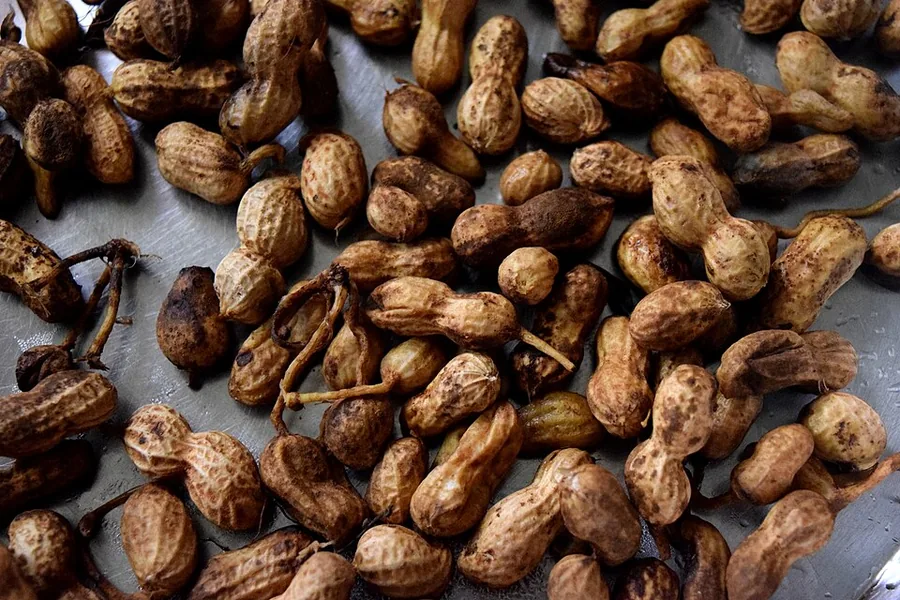
Grow a peanut and you get one of the most surprising crops in the whole garden. It flowers up top like any plant, then flips the script: once the bloom is pollinated, a stalk called the peg dives down and buries the young pod, so the nuts finish ripening hidden in the soil. And here is the kicker, it is no tree nut at all, it lands squarely in the bean and pea family.
The peanut traveled up from South America chasing heat, and it charges ahead in zones 7 through 11 and clear across the South wherever a long, warm season delivers. The plant stays low, 8 to 20 inches tall, and either builds a tidy bunch or runs along the ground depending on the type. Feed it heat, sun, and a little patience, and it rewards the effort.
Nail the soil and the peanut really takes off. It craves loose, sandy ground rich in calcium so the pegs can drive in and the pods can pack out, and as a legume it fixes loads of its own nitrogen. Set that up, keep the water coming while it flowers, and come fall you dig up a heavy, satisfying haul of nuts.
Care
The short version: peanuts crave full sun, loose sandy soil packed with calcium, and about an inch of water a week while the plant flowers and sets pods. Keep the nitrogen low, since the plant makes its own, and back off the water as the pods mature.
Light
Peanuts chase full sun, ideally 8 or more hours a day, and they run hard on it. A little partial sun is workable, but pile on too much shade and you end up with weak, leggy plants and a thin crop of pods.
Water
Pour on about 1 inch of water a week and keep the soil evenly moist while the plant is flowering and driving pegs into the ground, because that window makes or breaks pod fill. Once the pods start maturing, back off the water so the crop cures and lifts clean.
Soil
Set them in loose, sandy, well-drained loam packed with calcium, which lets the pegs punch in and the shells fill out. A slightly acidic pH of 5.8 to 6.5 hits the mark, and working gypsum in at bloom keeps the calcium right where the pods grab it.
Temperature
Peanuts are heat chasers that fire best between 64°F and 95°F (18°C to 35°C). They have zero tolerance for frost at either end of the season, so that long warm middle is the stretch that fills the pods.
Humidity
Average humidity between 40% and 70% covers it, no need to sweat the number. Steady airflow counts for more, since long spells of wet foliage roll out the welcome mat for leaf spot.
Feeding
Because peanuts fix their own nitrogen as legumes, go low on nitrogen and load up instead on phosphorus, potassium, and calcium. Work gypsum in at early bloom and pegging, right when the pods start forming and the plant reaches hardest for calcium.
Pruning
Here is a job you get to skip, since peanuts want no pruning at all. Cultivate shallowly to knock down weeds early, then leave the ground alone once the pegs start entering the soil so the developing pods stay safe.
Repotting
not applicable; grown as a field/garden annual from seed each year
Size & spacing
Plants stay low, 8 to 20 inches (20 to 50 cm) tall, and stretch out to 12 to 35 inches (30 to 90 cm) as the vines run. Hand each plant that much room so the pegs have open soil to punch into.
When to plant
Peanuts want a long, frost-free run of warmth to ripen underground, so hold your fire until conditions line up. Wait for the last frost to clear and the soil to warm to about 65°F, usually late spring, then settle in for a full season of growth before the fall dig.
Northern hemisphere
Southern hemisphere
Typical months for a temperate climate: start earlier in warm zones, later where spring frosts linger.
- Plant: After last frost when soil reaches about 65°F, typically late spring (May)
- Harvest: Yellow flowers appear ~6-8 weeks after planting; harvest pods in fall before frost when inner shells show veining and darkened color
Hardiness
USDA hardiness zones: 7–11
Temperature: down to -18°C
Troubleshooting
Most peanut trouble brews out of sight, down among the pods, or creeps up from the lower leaves. Learn what thriving vines should be doing and you catch a problem before harvest slips away. Match what turns up below, then move before the season runs out.
Moldy or off-color kernels after the dig
Off-color kernels, fuzzy mold, or a musty whiff throw up a red flag for Aspergillus and the aflatoxin it makes, which grabs hold when the crop bakes under drought stress or goes into storage damp. Pitch any nut that looks or smells wrong, and never eat it or feed it. Cure the pods fast after the dig and stash them cool and dry to slam the door on it.
Fix:
- Discard moldy peanuts; do not eat or feed them
- Dry pods promptly and thoroughly after harvest
- Store cured peanuts cool and dry
Great looking vines, but the pods came up empty
When the vines thrive yet the pods turn up blank, chase down the usual culprit: calcium starved or compacted soil in the pegging zone. The pegs have to punch into loose ground and pull calcium up to pack the shells, so blend gypsum in at early bloom and hold the moisture steady straight through pod fill. Skip hilling heavy soil over the crown, because that shuts the pegs down before they ever hit the dirt.
Fix:
- Apply gypsum (calcium sulfate) at early bloom/pegging
- Grow in loose sandy soil and avoid hilling heavy soil over the crown
- Maintain even moisture during pegging and pod fill
Dark spots marching up from the lower leaves
Round brown to black spots, plenty of them ringed with a yellow halo, flag early or late leaf spot, a fungus that launches from the oldest leaves and climbs in warm, humid weather. Jump on it fast, because unchecked it strips the plant and drags the yield down with it. Water early so the leaves dry, plant off old peanut ground, and hit it with a labeled fungicide before it gains ground.
Fix:
- Apply a labeled fungicide on a preventive schedule
- Remove or rotate away from previous peanut residue
- Improve air movement and avoid prolonged leaf wetness
Toxicity
Great news for a household: peanuts are a safe, wholesome food for people and pets alike, with no toxin in the plant or the plain nuts. The real cautions ride on how they are served, so keep them plain and unsalted, never feed moldy nuts, and steer clear of peanut butter that carries xylitol, which is dangerous to dogs.
Safe for
People · Cats · Dogs · Horses · Rabbits · Livestock · Birds
Cats None
A plain peanut packs nothing that poisons a cat, so relax on that front. The shells still pose a choking hazard, and salty or rich ones can rattle the stomach, so keep any treat plain and small.
Dogs None
A few plain, unsalted peanuts go down fine for most dogs. The one real trap hides in some peanut butters, where xylitol can spark vomiting, weakness, and collapse, so scan the label before sharing.
Horses Safe
The plant and plain nuts throw no poison at horses. Peanut hay even doubles as forage in some regions, though those fatty kernels are best doled out in small amounts.
Rabbits Safe
Nothing in the peanut plant harms a rabbit, but the nuts run way too fatty and starchy for them. Lean on hay and greens and leave the peanuts out entirely.
Livestock Safe
Cattle, goats, and sheep chow down on peanut foliage and hay without a hitch. The only watch-out is moldy nuts and vines, since aflatoxin can pile up in spoiled feed.
Birds Safe
Plain, unsalted peanuts pull wild and pet birds straight to the feeder. Just keep them dry, because damp nuts grow the molds that make aflatoxin.
People Safe
Peanuts fuel people worldwide as a wholesome, protein-rich food. The main caution is a peanut allergy, which can turn serious in sensitive people, plus pitching any nuts that smell musty or look moldy.
Salted or heavily seasoned peanuts add excess sodium and fat that are not ideal for pets and can cause stomach upset or pancreatitis with rich/fatty intake. MOLDY peanuts can carry aflatoxin and should never be fed. Critically, some commercial PEANUT BUTTER contains XYLITOL, an additive that is highly toxic to dogs even in small amounts and can cause hypoglycemia and liver failure; always check labels.
Varieties
Peanuts break into four main market types, and the one you plant drives the size, flavor, and use of the nuts. These are the names worth chasing down.
Runner
A low, spreading powerhouse with medium kernels that grabs most U.S. acreage and rolls into most peanut butter.
Virginia
The big-kerneled type that headlines gourmet in-shell snacks and cocktail peanuts.
Spanish
A small, round, red-skinned peanut loaded with more oil, which sends it straight into candy and pressed oil.
Valencia
A sweet type that stuffs three or more kernels into a pod and really shines boiled or roasted in the shell.
Companions
Plant near
Corn: Tall companion that does not compete heavily and benefits from the nitrogen peanuts fix.
Squash: Sprawling vines provide ground cover while peanuts enrich soil nitrogen.
Keep apart
Cabbage and other brassicas: Heavy feeders that compete and prefer firmer, less sandy soil management than peanuts.
How to propagate
Peanuts sprout straight from their own kernels, so a single packet of raw seed peanuts kicks off a whole patch.
SeedModerate
Plant raw, viable seed (kernels) outdoors after last frost when soil is about 65°F · Germinates in about 7-14 days; full maturity in 120-150 days
Peanuts spring right from their own raw kernels, so grab fresh, untreated seed peanuts and skip the roasted ones. Drop them 1 to 2 inches deep in loose sandy soil once the frost clears and the ground warms, and dust the seed with a Rhizobium inoculant to push the plant into fixing even more of its own nitrogen. Seedlings punch up in 7 to 14 days, and the crop keeps working through a full 120 to 150 days to finish underground.
Myths
Peanuts are tree nuts.
Here is the twist that surprises everyone: peanuts are not nuts. They are legumes in the family Fabaceae, right alongside beans and peas, and their pods ripen underground after the flower stalk dives down into the soil. A peanut allergy does not automatically hand you a tree nut allergy, and the reverse runs just as true.
Peanuts grow on bushes or trees like other nuts.
The peanut pulls off a move almost no other crop can match. Once the flower pollinates itself, a stalk called the peg drives straight down from the plant and buries the young pod, and that is where the nuts swell and ripen, hidden below the surface.