Ornamental · Poaceae
Little Bluestem
Schizachyrium scoparium
Hand it full sun and lean, dry soil and this native grass rockets upright and holds tall from summer straight through winter.
Full sun
Every 10–21 days
USDA 3–9
2–4 ft · 0.6–1.2 m
Overview
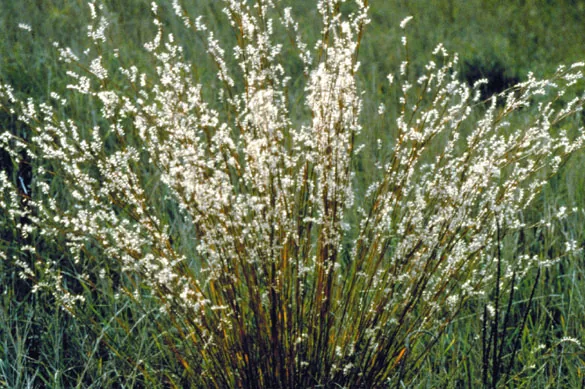
Little bluestem stands among the backbone grasses of the North American prairie, a clump-forming warm-season native that runs from Canada clear down into the South. It shoots up into a tidy upright tuft, usually 2 to 4 feet (60 to 120 cm) tall, with fine blades that glow blue-gray all summer. Where plenty of ornamental grasses sulk in poor ground, this one takes off and thrives on it.
The best act comes late in the year. As the nights cool, the foliage catches fire in copper, mahogany, and burgundy, and fluffy silvery seed heads blaze in the low autumn light. Those seed heads and standing stems hang on to their shape right through winter, feeding hungry birds and packing structure into a garden right when everything else has quit.
It's about as easygoing as a plant gets, but it lays down one hard rule: keep it lean and sunny. Rich soil, shade, or too much water push soft growth that flops open at the center. Grow it tough and it stands tall and proud.
Care
The short version: full sun, lean well-drained soil, and barely any water once it's established. Ditch the fertilizer completely, and shear the old growth to the ground in late winter before the new shoots break.
Light
Hand little bluestem full sun and pile on as much as you can. It puts up with a little light shade, but push past that and the stems go weak and start leaning, dragging the fall color right down with them.
Water
Once it's dug in, this is a drought-tough grass that runs on rain alone. Water only to get it going, then back way off. Plants in dry, lean ground stand a whole lot straighter, and roughly every 10 to 21 days covers it even through a scorcher.
Soil
Lean is the magic word. Average, dry to medium, well-drained soil suits it, and it's just as thrilled in sandy, rocky, or clay ground. Keep it clear of wet or overly rich spots, where it goes soft and flops. Any pH from 5.5 to 7.5 works great.
Temperature
Barely any grass is this tough. It laughs off winter lows down to -40°F (-40°C) and summer heat past 109°F (43°C), which is exactly why it grows across most of the continent.
Humidity
Skip the worry about outdoor humidity with a prairie grass. What it really craves is good air movement around the clump, which keeps the odd bout of rust from ever taking hold.
Feeding
Don't feed it, full stop. Fertilizer is the quickest way to wreck this plant, pumping out soft, lush growth that flops and loses its color. Lean soil is exactly the fuel it wants.
Pruning
One cut is all it takes, so this part is a breeze. Shear the old growth right to the ground in late winter or early spring before the new shoots break, and the fresh clump fills itself back in.
Repotting
Established clumps hardly ever need dividing. The signal to jump in comes when the center dies out or the clump opens up and loses steam, and then you lift and split it in spring.
Size & spacing
Count on a clump 2 to 4 feet (60 to 120 cm) tall with a spread around 18 to 24 inches (46 to 61 cm). Space plants at those distances so each one holds its tight upright shape with air ripping between them.
When to plant
Little bluestem is a warm-season grass, so it holds off until real heat rolls in before it charges into growth. Start seed in early spring, plant young ones out after the last frost, and watch it color up and throw seed heads from late summer into winter.
Northern hemisphere
Southern hemisphere
Typical months for a temperate climate: start earlier in warm zones, later where spring frosts linger.
- Sow: Late winter to early spring, about 8-10 weeks before last frost
- Plant: Spring after last frost into early summer
- Harvest: August to February; reddish-brown flowers followed by fluffy silvery-white seed heads persisting through winter
Hardiness
USDA hardiness zones: 3–9
Temperature: down to -40°C
Troubleshooting
This grass barely runs into trouble, and when it does, it almost always traces back to a spot that's treating it a bit too well. Catch the early signs below and the fix usually comes down to sun, soil, and a little tough love rather than any spray.
Stems flop wide open by late season
That sprawl where the clump cracks open and tips outward is lodging, and it means the grass has been living a little too soft. Shade, rich soil, and extra water all pump out weak growth that can't carry its own weight. Get it into blazing full sun, drop the fertilizer for good, and where the ground stays lush, reach for a rock-solid upright cultivar like Standing Ovation or Blue Heaven that keeps standing tall.
Fix:
- Site in full sun
- Grow in lean, dry, well-drained soil with no added fertilizer
- Reduce supplemental watering once established
- Choose sturdy upright cultivars such as Standing Ovation or Blue Heaven
Volunteer seedlings springing up nearby
Fresh seedlings popping up around the clump are a sign this native is thriving and pumping out viable seed, which is exactly what a happy little bluestem does. Want it to hold its ground? Yank the volunteers by hand while they're still small and they lift right out. Snip the seed heads off before they ripen and you shut the whole spread down at the source.
Fix:
- Remove unwanted seedlings by hand
- Cut back seed heads before they mature if spread is unwanted
Orange powdery flecks dusting the blades
Orange powder that smudges onto your fingers is rust, a fungus that turns up on the blades every now and then. Relax though, because it stays cosmetic and shrugs off on its own. Throw the plant into full sun, open up the airflow around it, aim your water at the base, and clip out any blades that got hit hard.
Fix:
- Improve air circulation
- Avoid overhead watering
- Remove severely affected foliage
Toxicity
Great news for anyone with pets: little bluestem is non-toxic to cats, dogs, horses, and the whole household. It's a native forage grass that grazing livestock chow down on and seed-eating birds absolutely love, so there's zero here to stress over. The one tiny catch is that grass pollen can set off folks with hay fever.
Safe for
People · Cats · Dogs · Horses · Rabbits · Livestock · Birds
Cats Safe
Totally safe to keep around cats. Chew through a bunch of blades and a cat might cough one back up, but that's just the everyday, harmless thing any grass pulls.
Dogs Safe
Nothing toxic in here at all, so let a curious dog dive right in and snuffle around. Down a big mouthful of blades and it might get a little sick, but that's the whole story.
Horses Safe
Horses graze this one happily, no worries at all. It's a prized prairie forage grass, so it's a win in the pasture, not a hazard.
Rabbits Safe
Rabbits can chomp the foliage all they like with zero risk.
Livestock Safe
Cattle, goats, and sheep tuck into this grass out on the range. It's pulled duty as native pasture and hay for generations.
Birds Safe
Songbirds pile onto the seed heads all winter and dive into the standing clumps for cover, and every bit of it is safe for them.
People Safe
Grow it and handle it with total confidence. Just keep in mind that grass pollen can set off anyone with hay fever.
Pets that nibble grass blades may occasionally vomit or have mild stomach upset, as with any grass; grass pollen can affect allergy-sensitive people.
Varieties
Breeders have hunted down forms of little bluestem for stiffer posture and punchier color. These are the named cultivars you're most likely to track down.
Standing Ovation
It powers through even richer soil bolt upright, flashing blue blades tipped in red that fire up to a clean red-maroon in fall without browning out.
Blue Heaven (MinnBlueA)
Bred at the University of Minnesota into a tall, narrow, upright clump, it flips its blue-gray summer foliage to burgundy-red with pink and purple tones the moment the weather cools.
The Blues
It draws every eye with standout blue-tinted foliage and burgundy-red fall color, though it can splay open late in the season.
Twilight Zone
A patented pick that turns heads with its unusual silvery-mauve foliage washed with purple.
Carousel
A compact, smaller cultivar that packs the same multicolor foliage into a tighter, tidier clump.
Companions
Little bluestem looks most at home with other sun-loving prairie plants that share its taste for lean, dry, well-drained ground.
Plant near
Switchgrass (Panicum virgatum): Native warm-season prairie grass with the same lean, dry, full-sun requirements for naturalistic plantings
Purple coneflower (Echinacea purpurea): Drought-tolerant prairie perennial that pairs in full sun and well-drained soil
Black-eyed Susan (Rudbeckia): Sun-loving prairie companion thriving in the same dry, lean conditions
How to propagate
Grow little bluestem from seed to blanket a big space on the cheap, or split existing clumps whenever you want to lock in a particular cultivar's color.
SeedEasy
Sow into a firm seedbed in early spring; can also start indoors 8-10 weeks before last frost · One to two growing seasons
Seed is the cheapest, most rewarding way to blanket a big stretch of ground. Press it into a firm seedbed in early spring, or kick it off indoors 8 to 10 weeks before your last frost and let the warm spring soil fire up germination. Hand it one to two growing seasons to dig in, and once it's happy it starts seeding itself around.
DivisionEasy
Spring as new growth begins · One growing season
Chasing a named cultivar's exact color? Division nails it, because those shades won't bounce back true from seed. Lift and split an established clump in spring as the new growth charges up, and the divisions grab hold within a single growing season. Bonus: it's also the fix for a tired old clump that's hollowing out in the middle.
Myths
Little bluestem needs rich, watered, and fertilized soil to grow well.
Flip that on its head. This is a prairie grass through and through, so lean, dry ground and full sun are exactly where it rockets up tallest and colors up best. Spoil it with rich soil, extra water, or fertilizer and it goes soft, caves in, and flops open at the center.