Vegetable · Basellaceae
Malabar Spinach
Basella alba
Turn it loose in the heat with a trellis to climb, and this vine races upward while it keeps the leaves coming.
Full sun
Every 2–4 days
59–95°F · 15–35°C
50–70 days
Overview
Once summer heat sends true spinach into retreat, Malabar spinach charges in to fill the gap. Forget the name, because it shares no family ties with true spinach. It is a twining vine in the family Basellaceae, a tropical grower that hits its stride in the very heat and mugginess that stops other greens cold.
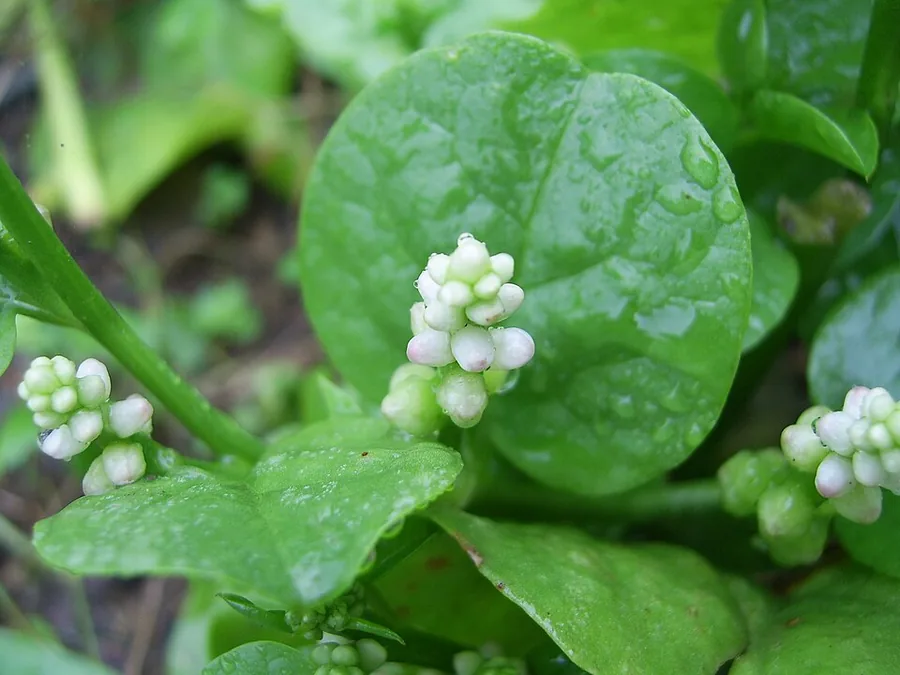
This vine climbs, and it climbs fast, shooting up 6 to 10 feet (1.8 to 3 m) a trellis in one warm season. The thick, glossy leaves taste mild with a hint of citrus and shine both ways, crisp and raw in a salad or cooked down like spinach, where they add a satisfying thickening to soups and stir-fries.
Best of all, it delivers a lot for almost no effort. Hand it sun, steady moisture, and something to scramble up, then keep pinching the tips to drive fresh leaves. The one job that keeps you coming back is snapping off flower spikes, because the second the vine sets seed the leaves shrink and toughen.
Care
The short version: full sun and real warmth, with a sturdy trellis for the vine to race up. Keep the soil evenly moist, feed it through the season for leafy growth, and keep pinching the tips to hold off flowering.
Light
This vine chases full sun for the heaviest growth, though it shrugs off a little afternoon shade in the hottest gardens. Pile on the sun and you get more leaves, faster, which is exactly what you grow it for.
Water
Keep the soil evenly moist, watering roughly every 2 to 4 days and stepping it up in a heat wave. Let it go dry and the vine bolts into flower, which shrinks and toughens the leaves you were after, so keep that water steady.
Soil
Plant it in rich, well-drained loam packed with organic matter. A pH of 6.0 to 6.8, just on the acidic side, keeps the vine cranking out tender leaves.
Temperature
Heat is what fires this plant up. It powers along between 59°F and 95°F (15°C to 35°C) and stalls in the cold, so hold off until the soil warms and let it run.
Humidity
Where most greens wilt in humid air, this one revels in it, hitting its best at 60% to 90% relative humidity. That tropical love of moisture is exactly why it thrives through muggy summers that flatten true spinach.
Feeding
Feed it monthly through the growing season with a balanced, nitrogen-forward fertilizer. That nitrogen boost drives the leafy growth that makes this vine such a rewarding grower.
Pruning
Pinch the growing tips often to spark bushy branching and keep tender leaves pouring out. Just as key, snap off flower spikes the moment they form, since flowering turns the leaves small and tough.
Repotting
Grown as an annual, it rarely needs repotting, but a container plant should get potted up once its roots fill the pot. Watch for roots circling the container, fast wilting between waterings, and new growth grinding to a halt.
Size & spacing
On a trellis this vine climbs 6 to 10 feet (1.8 to 3 m) tall and spreads 12 to 35 inches (30 to 90 cm) wide. Give it strong vertical support and enough room for air to move through the leaves.
When to plant
This vine runs on heat and simply will not launch until the soil warms up. Start seed indoors in late winter to get a jump, move the plants out once the frost clears and the ground warms, and then pick leaves nonstop right through the warm season.
Northern hemisphere
Southern hemisphere
Typical months for a temperate climate: start earlier in warm zones, later where spring frosts linger.
- Sow: 6-8 weeks before the last expected spring frost
- Plant: after all danger of frost has passed and soil is warm (above ~18°C / 65°F), trained onto a trellis or other vertical support
- Harvest: harvest leaves continually once vines are established through the warm season
Hardiness
USDA hardiness zones: 7–12
Temperature: down to -18°C
Troubleshooting
Almost every hitch with this vine turns up on the leaves or in a stall in fresh growth. Catch the early signs and you keep tender leaves rolling in for months. Match what you spot below, then jump on it while it still counts.
Vines stunted and wilting while the roots carry knobby galls
Knobby swellings on the roots flag root-knot nematodes, tiny soil pests that choke off water and feeding. A badly hit plant is beyond saving, so pull it and destroy it, then rotate the bed to a crop the nematodes cannot feed on. Pile on organic matter and the soil fights back over time.
Fix:
- Remove and destroy heavily infested plants
- Rotate to non-host crops
- Amend soil with organic matter to support beneficial organisms
Flower stalks shooting up as the leaf crop turns tiny and tough
When the vine throws up spikes of small flowers and dark berries, it has flipped into seed production, and the leaves start to shrink and toughen. Shorter days, heat, and dry spells all push it there. Pinch those flower spikes off the instant you see them, keep the soil evenly moist, and harvest the tips often to drive the vine back into leaf.
Fix:
- Pinch out flower spikes promptly
- Keep soil evenly moist
- Harvest tips frequently
Foliage breaking out in little brown dots edged with darker rings
Those spots are Cercospora leaf spot, a fungus that gets going in warm, wet, humid weather. Strip off the marked leaves, spread the vine wider on its trellis to get air moving, and water at the soil line so the foliage stays dry, and you will shut it down.
Fix:
- Remove and dispose of affected leaves
- Improve air circulation and trellis spacing
- Water at the soil line to keep foliage dry
Shoots trailing flat across the ground in a tangled heap
Malabar spinach is a twining climber on the hunt for something to grab, and with nothing to grip the stems run flat and knot up. Set a sturdy trellis, fence, or stake at planting and steer the young shoots onto it, since this vine can rocket past 6 to 10 feet (1.8 to 3 m).
Fix:
- Install a sturdy trellis, fence, or stake
- Gently train young shoots onto the support
Toxicity
Here is the great part: this plant is a vegetable, not a poison. Grow it freely around cats, dogs, livestock, and children, and send the leaves straight to the kitchen. The one thing to file away is that the leaves run high in oxalates, the same as true spinach, which matters for people prone to kidney stones.
Safe for
People · Cats · Dogs · Horses · Rabbits · Livestock · Birds
Cats None
Nothing to fret over with cats. A cat that nibbles a leaf might get a mild, brief stomach upset at most, no worse than with any unfamiliar green.
Dogs None
Safe around dogs. The leaves and stems pack no toxin, so a curious dog can chew the vine without harm.
Horses Safe
No danger to horses. This is a leafy vegetable, not a poisonous plant, so grazing on it causes no trouble.
Rabbits Safe
Rabbits can tuck into the fresh leaves with no risk. As with any leafy green, work it in gradually so it stays a small part of a balanced diet.
Livestock Safe
Cattle, goats, and sheep are all fine around this vine. The foliage holds nothing toxic and is sometimes grown as fodder.
Birds Safe
Feathered visitors get a free pass here. Not a single harmful compound hides in the vine, so a bird that grabs a beakful flies off perfectly fine.
People Safe
This is a kitchen vegetable, eaten raw or cooked. The only catch is the leaves run high in oxalates, worth knowing if you are prone to kidney stones.
Leaves are high in oxalates (as with true spinach), a dietary consideration for people prone to kidney stones, not a pet-poisoning concern.
Varieties
Just a couple of forms show up in gardens, split mainly by stem color. Both grow the same way and taste much alike, so grab whichever catches your eye.
Basella alba (green)
This is the go-to green form, marked out by green stems and thick, succulent green leaves.
Basella alba 'Rubra'
Its red-to-purple stems and leaf veins give it enough flair to grow as an ornamental as well as for greens.
How to propagate
Multiplying this vine is a breeze, whether you fire up a tray of seed or snip cuttings off a plant already climbing.
SeedEasy
Start indoors 6-8 weeks before last frost or direct sow after soil warms · Germination in roughly 10-21 days; soaking or scarifying the hard seed coat speeds emergence
Kick off seed indoors 6 to 8 weeks before your last frost, or sow it straight into warm soil once the cold clears. The seed coat is hard, so soak it overnight to speed things up, and the seedlings punch through in roughly 10 to 21 days.
Stem cuttingsEasy
During the warm growing season · Roots form in about 1-3 weeks in warm, moist conditions
Taking cuttings through the warm growing season is the fastest track to more plants. Stand a healthy stem in water or moist media and it roots in about 1 to 3 weeks, handing you a fresh vine ready to climb.
Myths
Malabar spinach is just ordinary spinach grown in a hot climate.
They share a name and a job, nothing else. Malabar spinach is a twining vine in the family Basellaceae, unrelated to true spinach (Spinacia oleracea, in the Amaranthaceae), and it storms in as a warm-season stand-in when real spinach bolts in the heat.
Because it tastes like spinach, it skips spinach's concerns.
It hangs onto one of the big ones. The leaves run high in oxalates, just like true spinach, which is worth filing away if you are prone to kidney stones.