Shrub · Rosaceae
Raspberry
Rubus idaeus
Plant it in full sun and rich soil, prune once a year, and this fast, generous berry piles your bowl high.
Full sun
Every 3–7 days
59–77°F · 15–25°C
USDA 3–8
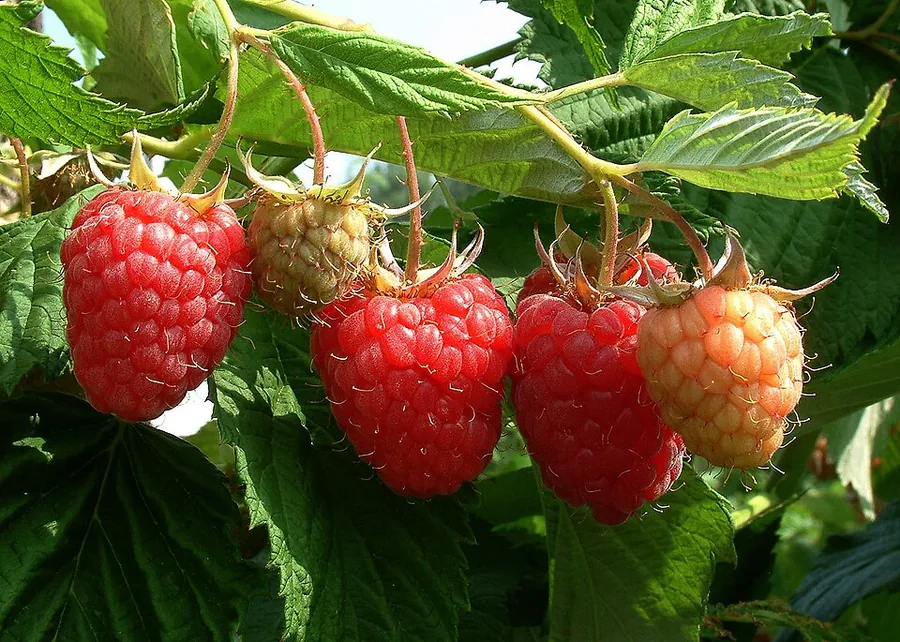
Overview
Little in the garden is as satisfying as a raspberry pulled warm off the cane. This rose-family shrub grows wild through the cooler stretches of the world, so it powers through winters that finish off softer crops. Plant it and it sends up a stand of tall, upright canes, hardy from zone 3 through zone 8, and it starts spreading on its own the moment it settles in.
The fun starts with picking a type. Summer-bearing canes deliver one big flush, early to midsummer, on wood that grew the year before. Everbearing canes go the other way, fruiting on this year's growth from late summer into fall, and once you know your type, pruning clicks into place fast.
Give raspberries sun, steady water, and air moving through the row, and they crop hard for years on end. Those roots love to roam, so expect to chase the patch back now and then, all part of the sport. Watch the canes though, since they come armed with sharp prickles, so gloves and covered arms keep harvest happy.
Care
The short version: full sun, deep and lightly acidic soil packed with compost, and roughly an inch of water a week. Prune to your cane type every year, then either turn the roots loose or rein them in with a barrier, and you are off.
Light
Raspberries chase the sun, so hand them full sun and six hours or more of direct light a day. A little shade will not kill them, but where the light fades the canes stretch thin and the crop drops right off.
Water
Keep them drinking steadily, right around an inch of water a week, and pour on a bit more once the berries start to swell. Damp is the target, never soggy, because waterlogged roots rot fast and the fruit turns to mush.
Soil
Plant into deep, well-drained loam packed with organic matter and they take off. They want it slightly acidic, a pH of 5.6 to 6.5, and if the new leaves flash yellow, the ground has swung too alkaline.
Temperature
Cool to mild is where raspberries hit their stride, about 59°F to 77°F (15°C to 25°C). The canes shrug off brutal winters down to zone 3, but crank the summer heat too high and the plants stall and the fruit scorches.
Humidity
Forget fussing over humidity, since 40% to 70% keeps raspberries happy. Air movement is the real prize, because dead, damp air packed around the canes hands gray mold an open door.
Feeding
One feed powers the whole year. As growth fires up in early spring, spread a balanced fertilizer such as 10-10-10 or a heap of aged compost or manure, and that one seasonal boost drives a full crop.
Pruning
Match the prune to the type and it is a breeze. On summer-bearing plants, clear the spent floricanes the moment harvest ends and thin the new primocanes; everbearing types you just mow right down in late winter for one punchy fall crop.
Repotting
Raspberries live in the ground, not in pots, so repotting almost never comes into play. Stuck growing one in a container? Bump it up when the roots start circling and the mix dries out in a flash.
Size & spacing
Canes rocket to 3 to 6 feet (90 to 180 cm) and clump out 2 to 4 feet (60 to 120 cm) across. Space the rows and rig a trellis so air rips through and the prickly canes keep clear of your arms.
When to plant
Get raspberries in the ground early, right while the canes still sleep and the soil is barely stirring. Plant them in early spring, and the payoff rolls in from early summer clear into fall, depending on the type you chose.
Northern hemisphere
Southern hemisphere
Typical months for a temperate climate: start earlier in warm zones, later where spring frosts linger.
- Plant: Early spring while plants are still dormant
- Harvest: Summer-bearing types ripen early to midsummer; everbearing types crop late summer into fall
Hardiness
USDA hardiness zones: 3–8
Temperature: down to -40°C
Troubleshooting
Raspberry troubles gather in three spots: the fruit, the canes, and the freshest leaves. Jump on them early and one clean cut or a watering tweak usually knocks the problem out. Match your symptom below and move fast, before it runs down the row.
Soft berries buried in gray fuzz
That fuzzy gray coat is gray mold, the fungus Botrytis cinerea, and it pounces when wet air settles over crowded canes. Pick fast and dump any soft berry, because the spores blast through a basket once it is stored. Thin the canes to get air ripping through, and aim the water at the base instead of over the top.
Fix:
- Remove and discard infected berries promptly
- Harvest frequently and keep fruit dry
- Improve air circulation by thinning canes
Wilting tips wearing two rings
Two rings circling a cane under a drooping tip nail it as the raspberry cane borer, while dark, sunken nodes flag a cane disease like spur blight. Cut the cane well below the damage and destroy it, then rip out any wild brambles nearby that keep the pests coming. Clear old and infected canes every year and hold the rows narrow, and both stay beaten back.
Fix:
- Cut and destroy affected canes below the damage
- Remove all wild brambles nearby
- Maintain open, thinned plantings
New leaves flashing yellow on green veins
New leaves going yellow while the veins hold green shout iron chlorosis, kicked off by soil that has drifted too alkaline. Run a soil test to catch the high pH, then hit it with chelated iron for fast relief while you fix the ground. Dig in organic matter, drive the soil toward a pH of 5.6 to 6.5, and back off the lime.
Fix:
- Test soil and acidify toward pH 5.6 to 6.5
- Apply chelated iron as a short-term correction
- Incorporate organic matter
Toxicity
Here is a load off your mind: the whole raspberry is safe to be around. Nothing in the fruit or leaves is toxic to pets, livestock, or people, so a swiped berry or a chewed leaf does zero harm. The one catch is physical, the sharp prickles on the canes that can nick bare skin.
Safe for
People · Cats · Dogs · Horses · Rabbits · Livestock · Birds
Cats None
Nothing on a raspberry can poison a cat, so a nibbled leaf or a swiped berry means nothing. Only the prickles are worth a thought, and they might scratch a nosy nose.
Dogs None
Dogs can chow down on ripe berries with zero fallout, and the leaves and canes ride along just as safely. Keep tabs on the sharp prickles, the one true hazard on the plant.
Horses None
A horse can tuck into the leaves and fruit safely, since not a bit of it is toxic. Fence off the thorny canes so a muzzle skips the scratches.
Rabbits None
Rabbits munch happily on leaves and berries with no risk, and plenty go straight for the foliage. Just steer them clear of the prickly stems, the lone thing to dodge.
Livestock None
Cattle, goats, and sheep can graze raspberry without a hitch, since the plant packs no toxin. The prickles are the only thing to keep tabs on.
Birds None
Birds tear into ripe raspberries and fling the seeds far and wide. Nothing on the plant can touch them.
People None
People love raspberries fresh and can eat them with total confidence, leaves included. The one heads-up is the prickles on the canes, so pull on gloves before you prune or pick.
Most raspberry canes are armed with sharp prickles/thorns that can scratch or puncture skin; wear gloves and long sleeves when pruning or harvesting.
Varieties
Hundreds of raspberries are out there, but a handful of tough reds do the real work in home gardens. These are the standouts to plant.
Heritage
An everbearing red that pumps out fruit on its first-year canes for a rock-solid fall crop.
Latham
A hardy summer-bearing red heirloom that has anchored cold-climate gardens for ages.
Boyne
A summer-bearing red so cold-hardy it powers through the harshest northern zones.
Caroline
A vigorous everbearing type that keeps firing off big, full-flavored berries into fall.
Companions
Raspberries do best beside aromatic plants that push pests away, and worst near their nightshade neighbors, which trade soilborne wilt back and forth.
Plant near
Garlic: Aromatic alliums may help deter some pests around the planting.
Marigold: Often interplanted to discourage nematodes and some insect pests.
How to propagate
Raspberries practically multiply for you, and every type brings its own trick, from the suckers reds fire up to the arching tips the blacks and purples love to root down.
DivisionEasy
Early spring or fall while dormant · One growing season
The fastest way to bulk up your raspberries is to yank the rooted suckers shooting up around the crown. Do it in early spring or fall while the plant sleeps, drop the offsets into fresh spots, and watch them take hold across one growing season.
LayeringModerate
Late summer · One season to root
Black and purple raspberries love tip-layering. Late in summer, haul an arching cane down and sink its tip in the soil. Leave it put, and by season's end that tip has rooted into a brand-new plant you can cut loose and shift.
Stem cuttingsModerate
Spring to early summer · Several weeks to root
Root cuttings and softwood cuttings both fire up when taken from spring into early summer, striking in several weeks. Most growers skip the hassle, since suckers churn out new plants with way less work.
Myths
Raspberries poison dogs and cats.
Not a chance. Berries, leaves, and canes are all safe for cats and dogs, and a ripe raspberry is a treat they will happily grab. The prickles are the only real threat, and they just leave a scratch on a nose or paw.
Every raspberry cane needs cutting to the ground each winter.
That move works for everbearing types, which fruit on first-year canes and take a full mow with ease. Summer-bearing types fruit on second-year canes, though, so mowing them all kills next year's crop.