Tree · Betulaceae
River Birch
Betula nigra
Fast-growing and tough, river birch flashes peeling salmon-and-cinnamon bark in any garden that keeps it moist and acidic.
Full sun
Every 3–7 days
USDA 4–9
40–70 ft · 12.2–21.3 m
Overview
River birch is the tree that thrives on a challenge. Springing from the stream banks and floodplains of the eastern United States, it powers through wet feet, dense clay, and the odd flood like they are nothing. While pickier birches wilt in heat and swampy ground, this one just digs in and races upward.
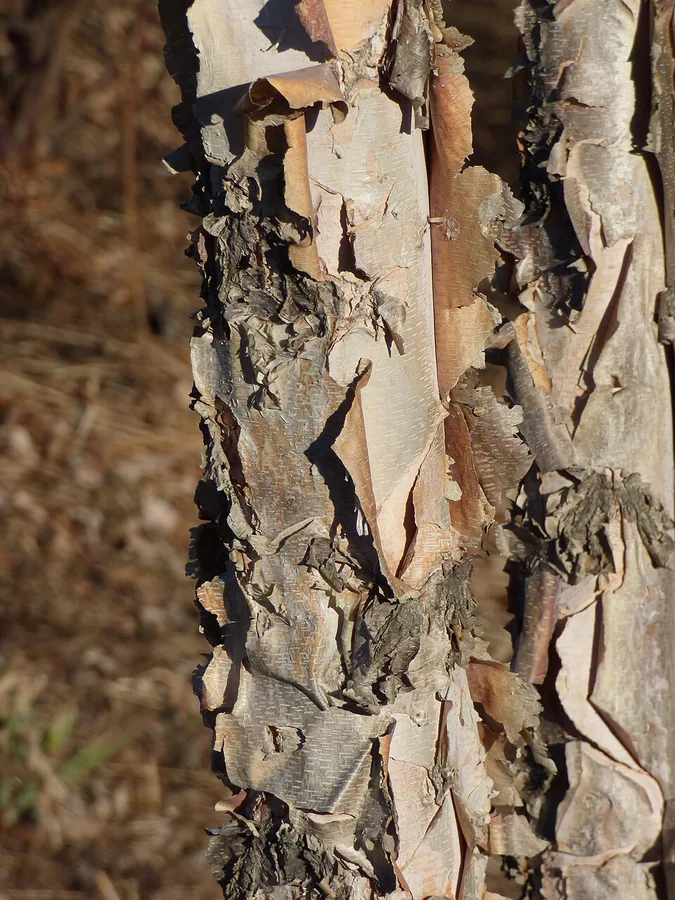
Then the bark steals the show. Young trunks peel into papery ribbons of salmon, cinnamon, and cream, and the display keeps getting better as the tree ages and the plates turn dark and rugged. It rockets past 40 feet, often trained as a multi-stemmed clump, so hand it a wide, open spot and watch it fill in.
The rewards run deeper than good looks. River birch is the most disease-free birch going and outmuscles the bronze birch borer that flattens the white-barked kinds, making it a champion pick for quick shade. Plant it in acidic ground, keep the roots cool and moist, and it just keeps delivering.
Care
The short version: full sun, moist to wet acidic soil, and steady water to launch it. Pile mulch on the roots, save pruning for summer or fall, and turn it loose with room to spread.
Light
River birch thrives in full sun and still soldiers on in partial shade. Pour on the sunlight and you get a fuller crown and punchier bark color, so plant it out in the open and let it shine.
Water
This tree drinks up moist to wet, acidic soil and even powers through a flood, though a dry summer makes it shed some interior leaves. Run soaker hoses and heap on bark mulch to keep the roots cool and damp, and it hums along happily.
Soil
Almost any moist to wet, acidic ground fires it up, loam, sand, or clay, since poor drainage barely slows it. Hold the pH at 5.0 to 6.5, because tip into alkaline territory and the leaves go yellow fast.
Temperature
River birch shrugs off cold and heat alike, thriving anywhere from -29°F to 100°F (-34°C to 38°C). That stretch spans zones 4 through 9, so it will take off across most of the country.
Humidity
Forget chasing a humidity number; plain outdoor air is all it wants. What truly powers this tree is moisture at the roots, not anything in the air.
Feeding
Give it a spring boost of balanced fertilizer or compost, though rich soil often needs none. Ease off the nitrogen, though, because a burst of soft growth rolls out the welcome mat for aphids.
Pruning
River birch hardly needs pruning, and nailing the timing is the whole game. Make your cuts in summer or fall and steer clear of late winter or spring, when rising sap sends the wounds bleeding.
Repotting
This is a landscape heavyweight, not a pot dweller, so it rarely lingers in a container. The moment a nursery tree circles its roots or stalls out, plant it and let it run.
Size & spacing
River birch takes off fast, climbing 40 to 70 feet (12 to 21 m) tall and spreading 40 to 60 feet (12 to 18 m) wide. Give it real distance from foundations and pavement, and let it claim every inch of that width.
When to plant
River birch charges ahead across zones 4 to 9, and spring or fall, while the weather stays mild, is prime planting time. Watch for the yellow-brown catkins bursting open in April and May, well before the leaves arrive.
Northern hemisphere
Southern hemisphere
Typical months for a temperate climate: start earlier in warm zones, later where spring frosts linger.
- Plant: Spring or fall
- Harvest: April to May (catkins)
Hardiness
USDA hardiness zones: 4–9
Temperature: down to -34°C
Troubleshooting
Even a powerhouse like river birch throws the occasional curveball, and it nearly always comes down to soil pH or pruning at the wrong moment. Catch the early clues and you can jump on a problem before it builds. Spot your symptom below and take action.
Yellow leaves, veins still green
Leaves going yellow while the veins glow green signal iron chlorosis, and it strikes when the soil turns too alkaline for the roots to grab iron. Attack it from the soil: work in elemental sulfur to drive the pH down, feed in chelated iron, and keep the root zone mulched, moist, and acidic. River birch only powers through in acid soil, so keep it far from limed or chalky ground.
Fix:
- Acidify soil with elemental sulfur to lower pH
- Apply chelated iron to soil or as foliar spray
- Mulch and keep soil moist and acidic
Curled leaves turning sticky
Curled, sticky leaves mean aphids have moved onto the undersides, and that honeydew gives them away. Blast them off with a hard jet of water, then bring in insecticidal soap or horticultural oil for any stubborn ones. Lady beetles will clean up the stragglers, so dial back the nitrogen and keep the tree watered to shut down the next wave.
Fix:
- Spray plants with a strong jet of water
- Apply insecticidal soap or horticultural oil
- Encourage beneficial predators such as lady beetles
Dark spots peppering the leaves
A soggy spell can spark fungal leaf spot, which drops leaves early but rarely lands a lasting blow. Rake up and toss the fallen infected leaves, open the canopy to get air moving, and keep water off the foliage. Since river birch ranks among the most disease-free birches, a resistant cultivar and a quick cleanup usually carry the day.
Fix:
- Rake and remove fallen infected leaves
- Improve air circulation
- Avoid overhead watering
Sap gushing from fresh cuts
Prune in late winter or early spring and the cut will keep gushing clear sap, because the tree is bleeding sap as it powers back to life. It looks dramatic but does zero harm, and no sealant will cork it. Down tools until the tree leafs out, let the wounds close on their own, and from then on prune only in summer or fall.
Fix:
- Stop pruning until summer or fall
- Allow cuts to seal naturally without sealant
Toxicity
Here is more good news: river birch is completely safe to grow around. Not a trace of toxin lives in the leaves, bark, twigs, or seeds, so pets, livestock, and kids are all in the clear. Let them explore; a stray nibble means nothing.
Safe for
People · Cats · Dogs · Horses · Rabbits · Livestock · Birds
Cats None
River birch is not toxic to cats, so a curious swat or nibble at a low leaf or twig will not poison one.
Dogs None
Dogs can chomp the bark or a fallen twig with zero harm, since nothing in the tree is poisonous to them.
Horses Safe
Horses grazing near a river birch are perfectly safe, because the leaves and bark carry no toxins.
Rabbits Safe
Rabbits that gnaw the bark or fresh shoots come away fine, as the tree holds nothing that could hurt them.
Livestock Safe
Cattle, goats, and sheep can browse the foliage safely, since river birch is not poisonous to grazing animals.
Birds Safe
Birds swoop in for the small seeds in the catkins with no risk at all, and the tree never bothers them.
People Safe
People are in the clear too, kids included, even when they are handling the bark or leaves.
No special handling required for toxicity; this is a large landscape tree, not a houseplant.
Varieties
Breeders have turned out several standout cultivars with better bark, a trimmer size, or extra heat tolerance. These are the ones worth hunting down at the nursery.
Heritage ('Cully')
A vigorous, borer-resistant standout that peels its salmon-cream to brown bark back to flash the creamy white inner bark.
Dura-Heat ('BNMTF')
A trimmer cultivar at 30 to 40 feet with creamy white bark, and it powers through summer heat and disease better than most.
Summer Cascade
The weeping form, its branches spilling and tumbling toward the ground.
How to propagate
Eager to grow more river birch? Seed and softwood cuttings both do the job, each rewarding a little patience. Here is how to run each method and what to expect while the young tree gets going.
SeedModerate
Collect and sow seed in late spring after catkins ripen · 1 to 2 growing seasons
Seed is the go-to route for raising river birch. Grab it in late spring the moment the catkins ripen and sow it fresh onto a moist mix, since it will not keep. Then hand it 1 to 2 growing seasons to build up before the young tree is set to move.
Stem cuttingsModerate
Early summer using softwood cuttings · Several weeks to root, one season to establish
Softwood cuttings are the other play, snipped in early summer and rooted under mist. They need several weeks to root and a full season to establish, so this route rewards a bit more patience than seed.
Myths
The bronze birch borer kills every birch, so river birch is sure to get wiped out too.
Not a chance, river birch is the most borer-resistant birch out there and brushes off the bronze birch borer that flattens stressed white-barked birches. Want a birch the borer cannot beat? This is the one to plant.