Houseplant · Cactaceae
San Pedro Cactus
Echinopsis pachanoi
Give it full sun and a proper dry-out between waterings, and this tall columnar cactus takes off, climbing fast season after season.
Full sun
Every 10–21 days
50–95°F · 10–35°C
USDA 8–11
Overview
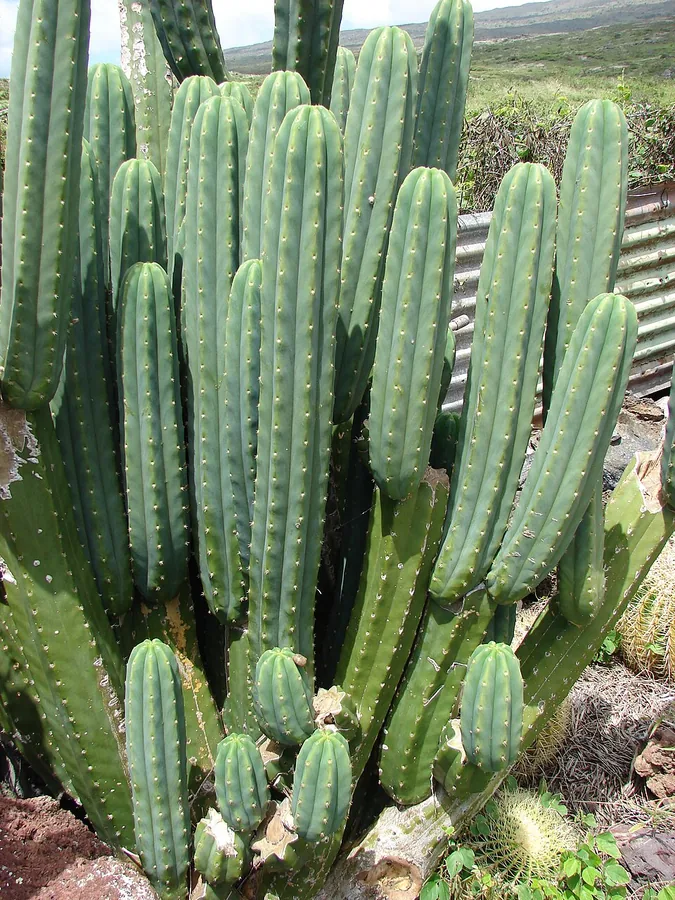
San Pedro is a tall, columnar cactus straight from the rocky Andean slopes of Ecuador and Peru, and it is a genuine joy to grow. Park it in a sunny window and it powers out ribbed green columns that shoot well past head height. Dial in the watering and it practically runs itself, which leaves all the fun and none of the fuss.
The real thrill is the pace: this cactus grows fast. Feed it full sun and warmth and the stems stack on height every single season, and once a plant matures it throws open big, fragrant white flowers on summer nights. Track down the widely traded clone called 'PC' for the quickest climber of the lot.
There is one serious note to respect. The flesh holds mescaline and related alkaloids, which is what earns it a long history in traditional Andean use and keeps it on the law's radar. Growing it as an ornamental is fine in most places, but the flesh is strictly off the menu. Grow it to admire and to watch climb, nothing more.
Care
The short version: pour on as much direct sun as you can, plant it in a gritty mix that drains in seconds, and soak it hard only once the soil dries out completely. Keep it warm, pull way back on water through winter, and watch it take off.
Light
Pour on full sun wherever you can, and aim for the brightest window in the house. Bright indirect light or partial sun will keep it alive, but shortchange it on light and the new growth comes in thin and stretched. Indoors, a grow light running 14 to 16 hours a day keeps it packing on solid growth.
Water
Soak it until water gushes out the base, then hold off until the mix goes bone dry, which usually lands every 10 to 21 days while it is growing hard. Through winter, keep it nearly dry and water only now and then. Overwater it and rot moves in fast, so lean dry and let it thrive.
Soil
Plant it in a gritty, fast-draining cactus mix, say one part potting soil to one part coarse sand. A pH of 6.0 to 7.5 keeps it cruising. The whole trick is that water races straight through and never sits around the roots.
Temperature
It powers along across a wide band, from 50°F to 95°F (10°C to 35°C). Warmth is the fuel behind its fast summer surge, while cold and damp open the door to rot, so move it in or keep it dry before the chill sets in.
Humidity
Low humidity is exactly its style, right around 10% to 40%. Plain dry indoor air keeps it happy, so skip the misting and put that energy elsewhere.
Feeding
Feed it lightly through late spring and summer with a phosphorus-rich houseplant fertilizer at half strength. Once or twice all season is plenty. Overdo the nitrogen and you push soft, floppy growth that loves to stretch.
Pruning
Great news for busy growers: this cactus barely needs pruning. Grab a clean blade only to take off a damaged or rotting segment, and let the cut callus over before it meets moisture again.
Repotting
Bump it into a fresh pot every 2 to 4 years, or jump on it sooner if roots burst through the drainage holes, the plant goes top-heavy, or the mix dries out unusually fast. Repot into dry gritty mix and hold the water for a week so any jostled roots can knit back together.
Size & spacing
Give it time and it rockets from 6.5 to 19.5 feet (2 to 6 m) tall, spreading 1 to 6 feet (30 to 180 cm) as it branches and pups. A mature plant carries real weight up top, so hand it plenty of room and a heavy, steady pot to hold the line.
Troubleshooting
Almost every snag with this cactus circles back to water or light. Rot from a soggy pot is the real danger, the one that can end a plant, while stretched or scorched growth just flags that the light is off. Spot your symptom below and jump on it before soft tissue gets moving.
Soft, mushy patches going brown or black on the stem
This is rot, and it almost always kicks off with water lingering around the roots. Cold, soggy mix hands fungus and bacteria a way in through any small wound, and the soft tissue takes off from there. Move quick: cut back to firm green flesh with a sterile blade, let the wound callus, then re-root the healthy top in dry, gritty mix.
Fix:
- Cut away all soft and discolored tissue back to firm green flesh with a sterile blade
- Let the cut surface callus in a dry, airy, shaded spot for 1-2 weeks
- Re-root the healthy upper section in dry, gritty mix
- Withhold water until new roots form
Thin, pale new growth stretching for the window
This is etiolation, the plant straining after light it is not getting. The new growth pushes out skinny and pale next to the older ribbed sections and cranes toward the brightest spot around. Shift it into full sun, easing the move over a couple of weeks so it does not scorch, and dial back feeding while it bounces back.
Fix:
- Move to the brightest available spot or full sun
- Acclimate gradually over 2-3 weeks to avoid sunburn
- Reduce or stop fertilizing
Bleached tan patches on the sun-facing side
This is sunburn, and it strikes when a shade-grown plant slams into harsh direct sun with no warm-up. The scorched patches stick to the sunny side and will not soften or spread the way rot does. Move it to a bright but lightly shaded spot, then ramp the full sun back up slowly over two to three weeks.
Fix:
- Move to a bright but lightly shaded position
- Reintroduce to full sun gradually over 2-3 weeks
Toxicity
Grow this one to look at, never to taste. The flesh packs mescaline and related alkaloids, so chewing any part can hit pets, livestock, and people with vomiting and neurological effects. The stiff spines pile on a second hazard, ready to jab a curious mouth, paw, or hand, so set the plant well out of reach of children and animals.
Toxic to
Cats · Dogs · Horses · Rabbits · Livestock · Birds · People
Cats Caution
The ASPCA does not tag the genus as poisonous to eat, but the flesh carries mescaline and related alkaloids, so a cat that takes a chew might drool, vomit, or act jittery and wired. The sharp spines are the bigger, faster danger, quick to jab a curious mouth or paw. Set it well out of reach.
Dogs Caution
A dog that gnaws a stem takes in the same alkaloids and can wind up with an upset stomach, vomiting, or wobbly, disoriented behavior. The stiff spines rip at the mouth and gums too. Most dogs skip it, but the determined chewer is the one to keep tabs on.
Horses Caution
No one has logged a horse being poisoned by it, yet the mescaline-loaded flesh would rattle the gut and could leave a horse dull or unsteady if it ate enough. The spines alone make it a bad pick near a paddock.
Rabbits Caution
A rabbit is small enough that even a bit of the alkaloid-rich flesh could kick off digestive trouble and leave it acting odd and sluggish, so it is no safe nibble. Keep the pot well clear of any free-roaming bunny.
Livestock Caution
Grazers like goats, sheep, and cattle could down the alkaloids along with the flesh and end up with an upset stomach or dull, off-balance behavior. Fence it off from anywhere stock can reach.
Birds Caution
Not much is on record for birds, but the same alkaloids that hit mammals make a pecked stem a bad move, and the spines can hurt a probing beak. Keep it off-limits for pet birds.
People Caution
The flesh carries mescaline, a psychoactive alkaloid, so eating any part can trigger vomiting and neurological effects and is not safe. Kids also risk painful spine jabs. Grow it as an ornamental and keep it up out of reach.
Wear thick gloves and lift larger plants with folded newspaper or foam padding; the rigid spines readily puncture skin. Keep within reach limited for children and pets to avoid spine injuries.
Helpline numbers

United States
ASPCA Animal Poison Control: (888) 426-4435 (fee applies)
Poison Control: (800) 222-1222



Canada
Poison Centres: 1-844-764-7669
Varieties
Most San Pedro you will track down is the straight species, but a couple of named forms surface in collections, and both are a kick to grow. Here are the two to watch for.
'Monstrose' (San Pedro Monstrose)
A wild mutation hands this one lumpy, knobby, irregular growth with few or no spines, and it is grown purely as an ornamental novelty.
'PC' (Predominant Cultivar)
This is the most widely circulated clone in the US, a favorite for its vigorous, fast growth and short spines.
How to propagate
San Pedro is a breeze to multiply, and most growers blow right past seed and just root a cutting or a pup off a plant they already have going.
Stem cuttingsEasy
Spring to early summer · 4-8 weeks to root
Cuttings are the fast, satisfying way to make more, taken in spring or early summer while the cactus is charging along. Slice off a segment, stand it in the shade for one to two weeks until the cut face calluses, then set it in dry, gritty mix and water sparingly. It fires out roots in about four to eight weeks.
Offsets & pupsEasy
Spring to summer · 4-8 weeks to root
Older plants keep pushing out pups and basal branches you can snap off in spring or summer. Twist one free, callus the wound just like a cutting, then root it in dry substrate, where it grabs hold in roughly four to eight weeks.
SeedModerate
Spring · Several months to a year
Seed is the slow lane, sown in spring on a gritty surface and kept warm and humid until it breaks ground. The seedlings crawl along at first and can take anywhere from several months to a full year to establish, which is why most growers grab cuttings instead.
Myths
San Pedro and peyote are the same cactus.
Not so, they are two different plants. Peyote is the small, button-shaped Lophophora williamsii, while San Pedro is the tall, columnar Echinopsis pachanoi. Both pack mescaline, but they are not the same species.
Just growing a San Pedro cactus is illegal in the US.
Keeping the living plant as an ornamental is legal in most US states. The line gets crossed only by extracting or preparing mescaline from it, a Schedule I controlled-substance offense, and a few jurisdictions pile on their own limits.