Houseplant · Cactaceae
Thanksgiving Cactus
Schlumbergera truncata
Feed it bright indirect light and cool fall nights, and this forest cactus bursts into bloom right on holiday cue.
Bright indirect
50–86°F · 10–30°C
USDA 10–12
4–20 in · 10–50 cm
Overview
Here is a cactus that breaks all the rules. The Thanksgiving cactus is a forest cactus from the coastal mountains of Brazil, a climber that once perched high on tree branches far from any desert. That wild past is what makes it so rewarding to grow: it drinks a little more, basks in softer light, and pays it all back with a burst of bright flowers in late fall, right around Thanksgiving.
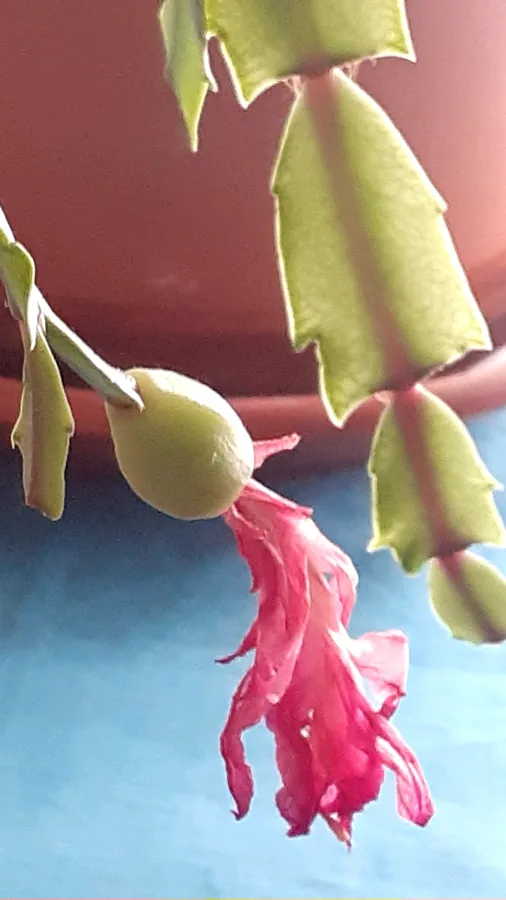
Half the fun is knowing exactly what you have. Run your eye along each flat stem segment and you will spot the pointed, claw-like teeth that give crab cactus and claw cactus their names. Its close cousin, the true Christmas cactus, wears rounded, scalloped segments and flowers a month later, and here is the kicker: most plants sold as Christmas cactus are really this livelier, earlier one.
Best of all, this is an easy grower that keeps going for decades and actually flowers harder every year. Nail two things and it thrives: hold its surroundings steady while it buds up, and let the cool nights and short autumn days work their magic to trigger those buds. Get that pairing right and it forgives just about everything else.
Care
The short version: bright indirect light, a good soak as soon as the mix dries out on top, and a stretch of cool fall nights to fire up the bloom. Keep it a touch potbound, and once buds show, leave it right where it is.
Light
Point it toward bright, indirect light and skip the direct sun. It will take partial shade or a little soft sun in stride, but blast it with harsh midday rays and the segments bleach out to pale or red. A window looking east or north hits the mark.
Water
Let the top half of the mix dry, then water it well and let it drink. It craves more than a desert cactus, yet leave it waterlogged and the roots rot fast. Once buds set, keep the mix evenly moist so not a single one drops.
Soil
Plant it in a well-drained, organic-rich potting mix built for epiphytes, one that races water through while still holding a little moisture. Keep it slightly acidic, right in the pH 5.5 to 6.5 band.
Temperature
It shrugs off a wide swing in temperature, cruising happily from 50°F to 86°F (10°C to 30°C). Fall is the moment that counts, though: cool nights teamed with short days flip the switch that sends it into bud.
Humidity
Ordinary indoor air keeps it thriving, so forget chasing a humidity number. A little extra moisture gives a fresh cutting a boost, but a grown plant powers along without it.
Feeding
Push growth with a monthly dilute balanced houseplant fertilizer through spring and summer, then cut it off in late summer to steer all that energy into fall blooms. It burns through more magnesium than most plants, so slip it an occasional Epsom-salt solution.
Pruning
Once the flowers fade, pinch or twist off a few stem segments and watch it respond. That single move kicks off fresh branching and bulks it up into a fuller, rounder plant.
Repotting
Repot on a lazy schedule, just every 3 to 4 years, because a snug pot pushes it to bloom harder. Bump it up a size the moment roots burst through the drainage holes, water rushes straight through, or growth flatlines.
Size & spacing
It keeps things compact, topping out around 4 to 20 inches (10 to 50 cm) tall and wide. One plant is all it takes to load up a hanging basket or own a windowsill without muscling out its neighbors.
Troubleshooting
This cactus rarely gives you grief, and when it does the culprit is almost always dropped buds or soft, discolored stems. Both point straight back to watering and placement. Spot your symptom below and dial in the conditions fast, before it spreads.
Stems turning soft, mushy, and black at the base
Soft, black, mushy stems spell root rot, and wet soil is the trigger. Move fast: cut out the rotted segments and any brown, soft roots, repot into a fast-draining epiphytic mix, and back right off the water. The winning play is prevention, so let the surface dry out fully between drinks.
Fix:
- Reduce watering frequency
- Repot into a fast-draining epiphytic mix
- Remove rotted segments and affected roots
Buds bail out before they open
Bud drop almost always means the plant hit a change it did not like. Once buds form, it wants one steady spot, even moisture, and zero drafts or temperature swings. Shuffle it around to show off the flowers and the buds bail within days, so hold your nerve and leave it parked until they open.
Fix:
- Keep the plant in one stable spot once buds form
- Keep the mix evenly moist (not soggy) while in bud
- Avoid drafts and temperature swings
Segments bleaching out to pale yellow or red
Segments washing out to pale yellow or red are shouting too much direct sun, and it peaks in a scorching, bright window over summer. Shift the plant into bright indirect light and block the fierce midday sun. Give it a little time and the color rebounds.
Fix:
- Move to bright indirect light
- Shade from hot midday summer sun
Toxicity
Great news for pet lovers: the Thanksgiving cactus is non-toxic to cats, dogs, horses, and everyone else in the house, and the ASPCA gives it a clean bill. The one small footnote is that a pet who devours a lot of the fibrous stems might get a quick, mild stomach upset, which clears fast.
Safe for
People · Cats · Dogs · Horses · Rabbits · Livestock · Birds
Cats None
Cats are in the clear here, with nothing toxic hiding in the stems or flowers. Should one tear into a big pile of the fibrous segments, it might drool or bring a little back up before bouncing back on its own.
Dogs None
Dogs get the all-clear too. Even a giant mouthful of the chewy stems rarely does more than spark a short bout of mild stomach upset.
Horses Safe
Horses win the ASPCA green light as well, so a stray taste carries no real risk.
Rabbits Safe
Rabbits can romp around it freely. Like any fibrous green, a big helping might loosen the stomach for a day.
Livestock Safe
Grazing animals meet zero toxin in the stems or blooms. Tear through a load of the fibrous segments and the worst outcome is a short, mild bout of indigestion.
Birds Safe
Pet birds thrive around this cactus, since not one part of it is poisonous.
People Safe
People are safe too, adventurous kids included. Nobody grows it to eat, and the fibrous stems just taste lousy rather than cause any harm.
Varieties
Schlumbergera delivers a whole spectrum of flower colors plus a couple of close relatives to chase down. Start with the standouts below.
'White Christmas'
A truncata cultivar that fires off crisp white flowers instead of the usual pinks and reds.
'Cambridge'
A truncata cultivar loaded with warm blooms that sweep from pink into orange.
Schlumbergera × buckleyi
The real Christmas cactus, a hybrid you can nail by its rounded, scalloped segments and a bloom that lands about a month after the Thanksgiving type.
How to propagate
This is where growing it gets addictive: it roots so easily that one snapped-off cutting turns into a brand-new plant with almost no effort.
Stem cuttingsEasy
Late spring to early summer (May-June) · Roots in about 3-8 weeks
Grab your cuttings in late spring to early summer, around May or June, while the plant is charging ahead. Twist off a run of 3 to 5 jointed segments, let the cut end callus for a day or two, then sink it into a moist, well-drained mix and keep it humid. Roots break out in 3 to 8 weeks, and just like that a whole new plant is underway.
Myths
The plant tagged Christmas cactus at the shop is the true one.
Here is the twist: most holiday cactus on shelves is really Schlumbergera truncata, the Thanksgiving or crab cactus. Two dead giveaways nail it down, the pointed, claw-like teeth along each segment and a bloom that fires in late fall, roughly a month ahead of the true Christmas cactus.
Holiday cactus will poison your pets.
Not a chance. The ASPCA lists Schlumbergera as non-toxic to cats, dogs, and horses. The worst a stem-chewing pet faces is a quick, mild stomach upset, and only after packing away a fair amount.