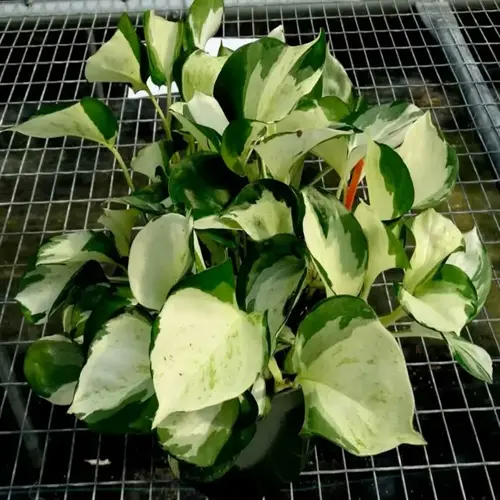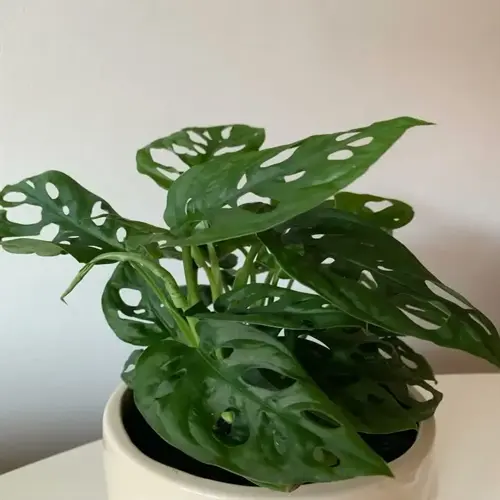

Yes. Satin pothos easy care is one of the most beginner-friendly plants you can put on a shelf. It forgives skipped waterings, handles a range of light, and rarely makes a fuss. If you have killed plants before, this is a great one to rebuild your confidence with.
My 'Argyraeus' sat on a north-facing bathroom windowsill for three years. I forgot it for weeks at a stretch, sometimes longer. The leaves would go soft and droop against the glass, the silver markings dulling to a tired gray. Then I would finally soak it, and within a day or two the stems firmed back up and the leaves lifted again like nothing happened.
That kind of recovery is why you will hear it called an easy care houseplant. It tolerates conditions that would sulk a fussier plant into dropping leaves. It is a slow grower too, so you are not repotting every few months or fighting a tangle of new growth. A little neglect here and there does not set it back the way it would with a thirstier plant. You can travel for a week, come home, and find it waiting patiently.
You do not need a green thumb to keep one alive either. Stick it somewhere with decent light, water it when you think of it, and it carries on. Compare that to a fern that browns the moment you look away, and you can see why it earns a spot on so many beginner lists. The forgiveness is built in.
The plant only asks for a few firm things, and you will find them simple to keep up with. Get these three right and you can relax about the rest. None of them call for special gear or a fixed schedule, so you fit the care around your week instead of the other way around.
Light
- What it wants: Give it bright indirect light near a window where the sun never lands directly on the leaves.
- Why it works: This keeps the silver variegation strong without scorching the foliage, which direct sun will do.
- Low-light note: It survives dimmer spots, but growth slows and the markings fade a bit.
Water
- When to water: Wait until the top inch (2.5 cm) of soil feels dry, then water until it drains out the bottom.
- How to check: Push a finger into the soil. If it is dry at that depth, water. If it is damp, wait.
- Margin for error: Going a few days late is fine. This plant would rather be dry than soggy.
Temperature
- The range: Keep it between 65 and 85 degrees Fahrenheit (18 to 29 degrees Celsius), which covers most homes.
- Avoid: Cold drafts and spots near an air vent that blasts hot or cold air.
- Bonus: It likes humidity, so a bathroom or kitchen suits it well.
There is really one mistake that trips people up, and it is overwatering. Soggy soil leads to root rot, and root rot is what kills these plants more than anything else. When in doubt, you should leave it a day or two longer. The plant handles dry far better than it handles wet feet, so your instinct to be generous with the can is the thing to fight.
The one time I lost a cutting was the season I kept it in a cute pot with no hole. The soil never dried, the lower leaves yellowed, and the stem turned to mush at the base. I had watered it on a schedule like a tomato. Once I moved my next plant into a pot that drained, the trouble stopped.
Set it up to drain and you remove most of the risk. Use a pot with drainage holes so excess water has somewhere to go, and never let it sit in a saucer full of water. Pair that with a chunky, well-draining mix and you have solved the only problem worth worrying about.
Put it near a bright window, check the soil before you reach for the watering can, and keep the room comfortable. Do that and the satin pothos will trail along happily for years with almost nothing else from you. Few plants give back this much for this little effort.
Read the full article: Satin Pothos Care: Silver-Leaf Vine Guide