
Yes, you can sprinkle bone meal on soil as a quick surface feed, but it works far better when you mix the powder into the top few inches. Surface bone meal breaks down slow and feeds your plants over a much longer time frame. Mixed-in bone meal hits the roots faster and gives you bigger results in one season.
I tested both methods in 2019 with two rose beds side by side. The bone meal top dressing bed got one cup of bone meal sprinkled on top. The other bed got the same cup mixed into the top four inches (10.16 cm) of soil. By July, the mixed bed had twice as many blooms and thicker canes than the dusted bed. The proof was clear.
Bone meal needs three things to break down into plant food. It needs soil microbes, moisture, and direct contact with the dirt itself. Surface dusting fails on two of these counts. The powder sits dry on top, away from the active microbe zone in the soil. Soil incorporation fixes this by putting the bone meal where the work happens fastest.
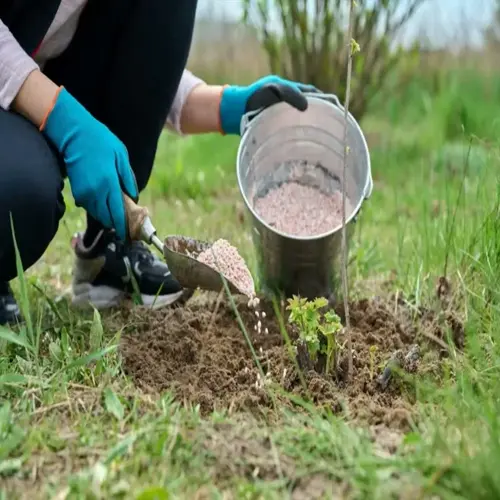
The right bone meal application method is simple and quick to do. Dig three to four inches (7.62 to 10.16 cm) deep into your bed with a hand fork or trowel. Sprinkle the bone meal evenly across the loose soil. Rake the powder into the dirt with light strokes. Water the bed deep right after for best results.
Surface Sprinkle Method
- Speed of release: Takes six to twelve months to break down because the powder lacks contact with deep soil microbes and moisture below.
- Pet and wildlife risk: Dogs and raccoons smell the bone meal from feet away and dig up your beds for an easy meal at night.
- Best uses: Only good for top-up feeding mature trees and shrubs where you cannot dig near roots without harm to the plant.
Mixed-In Method
- Speed of release: Starts feeding plants within two to four weeks because the powder sits in the active microbe zone of the soil.
- Pet and wildlife risk: Low risk once buried because the scent stays trapped under the dirt and out of reach from sniffing pets.
- Best uses: Works great for new beds, transplant holes, bulb planting, and any spot where you can dig the soil first.
Combo Method With Mulch
- Speed of release: Falls in the middle at four to eight weeks because the mulch holds moisture and protects the powder underneath.
- Pet and wildlife risk: Low when you cover with two inches (5.08 cm) of bark or straw mulch right after the sprinkle.
- Best uses: Good for adding a phosphorus boost to mature beds you do not want to dig or disturb in mid season.
If you must surface sprinkle, cover the powder with garden mulch right after you spread it. Use bark chips, straw, or wood mulch at a depth of two inches (5.08 cm). The mulch holds moisture against the bone meal and speeds the breakdown. It also blocks the scent that draws dogs and wildlife to the bed at night. This trick saves both time and money each season.
Water deep right after any bone meal goes on the bed, mixed or sprinkled. The water washes the powder down into the soil and starts the microbe work. Aim for about one inch (2.54 cm) of water across the whole bed. Skip this step and the bone meal can sit dry for weeks before it starts to work.
My rule of thumb is to mix bone meal in for all new plantings and reach for surface dusting only on mature beds I cannot dig safely. The mixed method saves time over the long haul and gives you faster blooms and harvests. Cover any surface dusting with mulch and a deep watering, and you will get most of the same gains in a longer time frame.
Read the full article: Bone Meal Fertilizer Guide