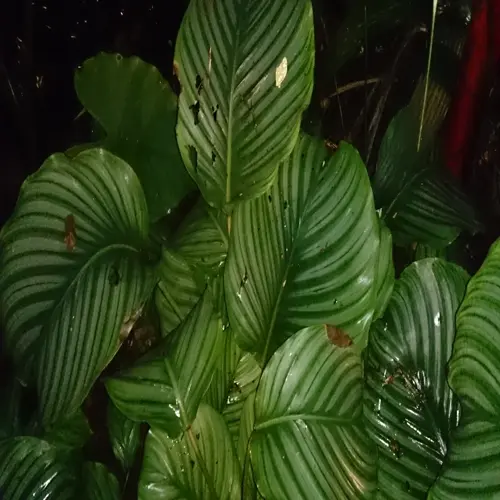

Yes, touching Dieffenbachia is safe as long as the plant is intact. Brushing a healthy leaf or wiping dust off the surface will not hurt you at all. The real trouble starts when you break the plant open. The milky sap inside the stems and leaves is what causes problems, not the leaf surface itself.
You feel nothing when your hand grazes a smooth, whole leaf. Snap a stem, though, and the sap that beads up on your fingers is the part that bites. So the danger lives inside the plant, not on the outside. A clean, unbroken dumb cane is a calm houseplant to be around.
Here is what makes the sap so harsh. It carries tiny needle-shaped crystals called raphides, which are made of calcium oxalate. The sap also holds oxalic acid. When the sap lands on your skin, those crystals act like microscopic glass. The acid then adds a stinging burn on top. This mix is the root of Dieffenbachia sap irritation. It is why North Carolina State University and MedlinePlus both flag the plant as a skin and eye risk.
The crystals do their damage on a tiny scale, but you feel it fast. Each raphide is shaped like a sharp little spear, and the sap holds them in bundles. When that sap meets skin, the spears press in and trigger an itch and a sting. Sensitive skin reacts more, and a fresh cut on your hand makes it sharper still. The reaction is not an allergy. It is a direct, physical irritation, so almost anyone can feel it from enough contact.
Skin contact with the sap can leave you with redness, itching, and a burning feeling. Most skin reactions fade on their own once you wash the sap off. Eye contact is far worse. Per MedlinePlus, sap in the eye can cause sharp pain and, in bad cases, damage to the cornea. That is why you should never rub your eyes while working with a cut plant. If sap reaches your skin or eyes, rinse with plenty of water right away and keep rinsing for several minutes. For an eye splash, flush it out and call a doctor or poison control to be safe.
Good dumb cane skin contact habits make all of this easy to avoid. The steps below keep the sap off your hands and out of your face during everyday care and pruning.
- Everyday touch: Brushing or dusting intact leaves is safe and will not release the irritating sap.
- Pruning or cuttings: Wear gloves whenever you cut stems, since cut surfaces leak sap loaded with calcium oxalate crystals.
- After handling: Wash your hands with soap and water and avoid rubbing your eyes or mouth.
- If exposed: Rinse skin or eyes with plenty of water and seek medical advice if irritation is severe.
Pruning and taking cuttings are the moments when sap flows free, so that is when gloves matter most. A cheap pair of garden gloves keeps the sap off your fingers entirely. Once you finish, wash your hands with soap and water before you touch anything near your face. This one habit stops most accidental exposure cold. Wipe down your scissors or knife too, since dried sap on a blade can still pass crystals to your next cut.
A few small choices make care even safer. Cut stems over a sheet of newspaper so drips do not land on your work surface. Keep curious kids and pets out of the room while you trim, since broken pieces leak the same sap. Throw cut stems straight into the trash rather than leaving them on the counter. These steps take seconds and keep the dumb cane sap where it belongs.
Keep your tools and hands clean and this plant stays an easy roommate. You can repot it, wipe its leaves, and move it around with no worry as long as you do not break the stems open with bare skin. The leaves themselves are not the threat, so daily care needs no gloves or fuss. Treat the sap with respect during pruning, and touching Dieffenbachia day to day is no risk at all.
Read the full article: Dumb Cane Plant Care Guide