
Introduction
The dumb cane plant is one of the easiest tropical houseplants you can bring home. Its big, splashy leaves look like they belong in a jungle, yet the plant forgives you when life gets busy and you forget to water. That mix of bold looks and low fuss is why so many people start their plant journey here.
You are in good company too. UF/IFAS says Dieffenbachia ranks in the top 10 for yearly foliage-plant sales. So nurseries grow it by the thousands, and experts know it well. The variegated foliage comes in creamy whites, soft yellows, and deep greens. Its size depends on the cultivar. Compact types stay near 12 inches (30 cm), while large ones can reach 8 ft (2.4 m).
There is one quirk worth flagging up front. The name comes from the sap. Chew a leaf and it can numb your mouth and throat, and you may not be able to speak for a short while. That is why toxicity gets a full, poison-control-grounded treatment here, not a quick FAQ line. You get clear steps for kids and pets, plus a water-quality angle that explains those stubborn brown leaf tips.
Beyond safety, you will get plain dumb cane care basics from the ground up. We cover light and water. We cover heat and humidity, and how to handle the plant safely. You will also learn simple propagation, the best cultivars to pick, and how to fix brown or yellow leaves. Treat this tropical houseplant right and it will give you years of lush, healthy growth.
Complete Dumb Cane Care
My four-year-old Tropic Snow sits in a bright north-facing corner of the room. It stands well clear of the radiator, and I check on it each morning from the kitchen. One winter I slid it next to a cold window for a week and the new leaves drooped. I moved it back into the warm corner and it perked up within days.
Good dumb cane care comes down to three things. Give the plant steady warmth, soft indirect light, and water only when the soil starts to dry. Get those right and the rest is easy. This is why so many people call it an easy houseplant that forgives a few mistakes.
Warmth comes first. The ideal dumb cane temperature runs from 60-75°F (16-24°C). Never let it drop below 55°F (13°C), per Clemson and UF/IFAS. Cold drafts from a window or door do more harm than a missed watering ever will.
Watering is the next thing people get wrong. Water the plant well, then wait until the top 1 inch (2.5 cm) of soil feels dry before you water again. Clemson and NC State both back this rhythm, and it keeps the roots from sitting wet. Plant it in loose, well-draining soil so extra water drains off fast and the roots can breathe.
Use the card below as a quick reference whenever you need to check a number at a glance.
Size depends on the cultivar you bring home, so pick one that fits your space. Compact types stay near 12 inches (30 cm) and suit a desk or shelf. Most plants reach 3-6 ft (0.9-1.8 m), and the largest cultivars climb to 8 ft (2.4 m) in a sunny room.
Dumb cane also puts up with low light and a wide range of indoor conditions, which is why UF/IFAS says growers run into few problems. Just know the trade-off. In a dim corner the growth slows and the stems stretch toward the nearest window.
Light, Water and Soil Needs
Three things shape how well your plant grows, and each one shows you fast when you get it wrong. Light controls the shape, water controls the roots, and soil ties both together. Miss one and the leaves will tell you within a week.
Your plant wants bright indirect light from an east or north window, where the sun warms the room but never hits the leaves head on. In a dim corner it keeps going, but growth slows and the stems stretch and lean toward whatever light they can find. That leggy, reaching look is the first sign the spot is too dark.
Smart dumb cane watering is about timing, not a fixed day. Push a finger into the soil to the first knuckle, and water only when that top inch comes out dry. Overwatering is the fastest way to kill this plant, because soggy soil rots the roots and turns the lower leaves soft and yellow. Soil and drainage decide whether that water drains away or drowns the roots, so the three needs really work as one system.
Light placement
- Best spot: Bright, filtered, indirect light near an east or north window keeps variegation strong and growth compact.
- Low-light tolerance: It survives dim corners and even fluorescent office light, but growth slows and stems stretch toward the light.
- Too much sun: Direct midday sun scorches the leaves, leaving pale or bleached patches on the foliage.
- Even growth: Rotate the pot a quarter turn every few days so the plant does not lean toward one side.
Watering rhythm
- The test: Water thoroughly until it drains, then wait until the top 1 inch (2.5 cm) of soil feels dry before watering again.
- Overwatering: Constantly soggy soil leads to root rot, soft stems, and yellowing lower leaves that drop.
- Underwatering: If soil stays bone dry too long, leaves droop and edges turn crisp and brown.
- Water quality: Sensitivity to substances in tap water can add to leaf-tip browning, so filtered, distilled, or rested water often helps.
Soil and drainage
- Mix: Use a loose, high-organic, well-draining potting mix; a peat-based blend with perlite and bark works well.
- pH: Aim for an acid-to-neutral range, roughly pH 5 to 6, which suits this tropical aroid.
- Drainage: Always use a pot with drainage holes so excess water escapes and roots never sit in standing water.
- Salt buildup: Flush the soil occasionally to wash out fertilizer salts that can also brown the leaf edges.
Humidity and warmth
- Humidity: Dumb cane prefers moderate-to-high humidity, which keeps leaf tips from drying out and turning crisp.
- Raising it: A humidifier, a pebble tray, or grouping plants lifts ambient humidity more steadily than misting.
- Temperature: Keep it at 60-75°F (16-24°C) and never below 55°F (13°C), away from cold drafts and radiators.
- Drafts: Sudden cold from open windows or air conditioning vents can cause leaf damage and dropping.
Soil is the part most people skip, yet it props up the other two needs. A loose, well-draining soil of peat with perlite and bark holds enough water to feed the plant but lets the rest run out the bottom. Aim for a slightly acid soil pH near 5 to 6, which suits this tropical plant, and always pot it where excess water can escape. Brown leaf tips often trace back to tap water, so filtered, distilled, or water left out overnight tends to help.
Do not water on a fixed weekly schedule. Check the top inch of soil first, because the same plant needs water far less often in a dim, cool room in winter than in bright summer light.
Toxicity and Safe Handling
Every part of this plant is toxic. The leaves, stems, roots, and sap all carry the same trouble, and this is the most studied and best-proven fact about the species. NC State Extension rates its poison severity as HIGH, and the plant can harm people, cats, dogs, and horses. In some cases it can be fatal to pets and livestock.
The danger comes from calcium oxalate crystals. These are sharp needle-like bits called raphides, packed tight inside the plant tissue. The leaves and sap also hold oxalic acid and asparagine. When someone chews or crushes a leaf, those tiny crystals fire out like a spray of glass slivers. That is why the burning hits right away and why the dumb cane sap deserves real respect.
Mouth contact brings fast, painful symptoms. MedlinePlus lists blistering, burning, and swelling of the lips and throat, a hoarse voice, drooling, and pain when you try to swallow. The plant is dumb cane toxic enough that the sap can numb and briefly paralyze the vocal cords, which is exactly where the name comes from. Most mild cases settle within a few days, but rare severe ones can swell the airway and become an emergency.
Take pet safety and child safety seriously here, since curious mouths are the ones most at risk. Keep the plant on a high shelf or in a room your toddler and animals cannot reach. Wash your hands after pruning or repotting, and pull on gloves before you take cuttings so the sap never touches your skin or eyes.
- Mouth contact: Wipe the mouth and gums with a cold, wet cloth to remove crystals, and offer milk to soothe unless swallowing is impaired.
- Eye or skin contact: Rinse the affected eyes or skin with plenty of water, since the sap can be painful and may cause corneal damage on the eye.
- Call for help: Call Poison Help at 1-800-222-1222 for people, and ASPCA Animal Poison Control at 888-426-4435 if a pet is exposed.
- Prevent exposure: Wash your hands after pruning or repotting, wear gloves for cuttings, and keep the plant out of reach of children and pets.
- Watch for severe swelling of the lips, tongue, or throat and seek emergency care, as rare cases can affect breathing.
Blistering and swelling in the mouth may be severe enough to prevent normal speaking and swallowing.
Propagation and Repotting
One bare cane in my bright north-facing corner turned into three leafy plants in a single season. The 'Tropic Snow' was 4 years old by then. It had grown leggy and top-heavy. A tall naked stem held just a tuft of leaves at the very top. I cut it back to about 6 inches (15 cm), then rooted the top and chopped the middle into pieces. The old stub pushed out fresh shoots within weeks, and every section I saved took root.
That sums up why dumb cane propagation is so forgiving. The plant regrows from almost any healthy piece, so a sad, stretched stem becomes free new plants instead of trash. Clemson lists several proven routes: cane cuttings, stem tip cuttings, division, and air layering. Spring or early summer is the best window because warmth and longer days push fast root growth.
Pick your method based on the result you want. Stem tip cuttings give you a leafy plant the fastest, since the cutting already has foliage on top. Cane cuttings turn one bare stem into several plants, though each one starts as a leafless chunk that needs patience. The steps below walk through both.
Use a leafy stem tip cutting for the fastest leafy plant, or cut a section of bare cane into pieces to grow several new plants at once.
In spring or early summer, use a clean, sharp knife and wear gloves, since the cut surfaces leak irritating sap. Wash your hands right after.
Place tip cuttings in water or moist mix. Lay cane pieces on damp rooting media so the buds face up and stay half buried.
Set the cuttings in warm, bright indirect light and keep the medium lightly moist until new roots and shoots appear.
Once roots are an inch or two long, pot each rooted cutting into a well-draining mix and resume normal care.
Air layering is the third option, and it suits a tall stem you do not want to behead all at once. You nick the stem, wrap the wound in damp moss and plastic, and wait for roots to form before you cut below them. A good rooting mix works for any of these methods: UF/IFAS suggests about 50% peat, 25% bark, and 25% perlite at a pH of 5 to 6. That blend holds moisture but still drains fast enough to keep rot away.
Repotting dumb cane is a separate job, and you only need it when roots crowd the pot or circle the drainage holes. Move the plant up one pot size in spring, into fresh well-draining mix, and water it in. Going too big traps wet soil around the roots, so resist the urge to jump several sizes at once.
Cultivars and How to Identify
My Camille glows in the dim north corner of my office. Its creamy yellow-and-green center catches what little light there is. Right next to it sits a taller Tropic Snow with bold white splashes down each leaf. Neither one has ever bloomed for me. The painted leaves are the whole point, and that holds for every plant in this group.
Most lists of dumb cane varieties just name a string of cultivars and leave you guessing which one sits on your shelf. So let's sort the common Dieffenbachia cultivars by look and size instead. That way you can match the plant in front of you and pick the right one for your space.
Size is the fast way to choose. Compact types stay around 12 inches (30 cm) and fit a desk or shelf. Vigorous ones like Tropic Snow can reach 8 feet (2.4 m) and fill a floor corner over a few years. The variegated foliage tells you a lot too. Each cultivar wears its cream, white, and green in a different pattern.
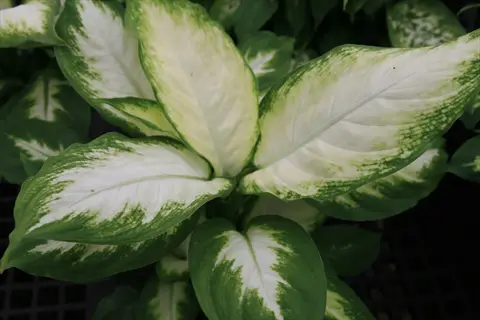
Tropic Snow
- Look: Large leaves with broad creamy-white and pale green centers framed by deep green margins.
- Size: A vigorous, upright cultivar that can grow tall enough to fill a floor corner over a few years.
- Light: Holds its bold variegation best in bright, filtered indirect light.
- Best for: A statement floor plant in a warm room with space to grow upward.
- Care note: Cut back to about 6 inches (15 cm) if it grows leggy, and it will resprout from the base.
- Safety: Like all dumb canes, every part is toxic, so place it away from pets and children.
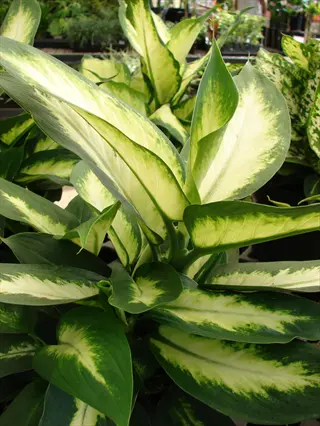
Camille
- Look: Compact leaves with creamy yellow-to-white centers and slim green edges, very bright in appearance.
- Size: A smaller, bushy cultivar that suits a shelf, desk, or tabletop rather than the floor.
- Light: Keeps its pale center vivid in bright indirect light and dulls in deep shade.
- Best for: Beginners and small spaces wanting an easy, cheerful variegated plant.
- Care note: Pinch or prune lightly to keep the bushy, rounded shape.
- Safety: The sap is toxic and irritating, so wash hands after any trimming.
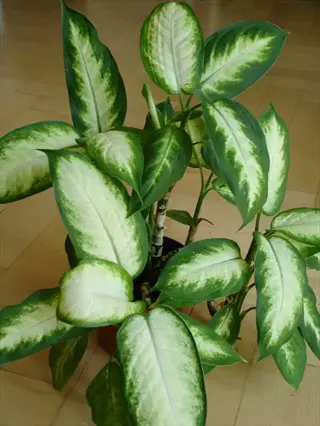
Tropic Marianne
- Look: Leaves with very pale, almost white centers and narrow green borders for a soft, light effect.
- Size: A medium, upright grower that stays manageable indoors.
- Light: Prefers bright indirect light to maintain the pale coloring without scorching.
- Best for: A bright accent plant in a spot that gets steady filtered light.
- Care note: Protect from direct sun, which bleaches and burns the already pale leaves.
- Safety: All parts contain irritating calcium oxalate crystals, so handle with care.
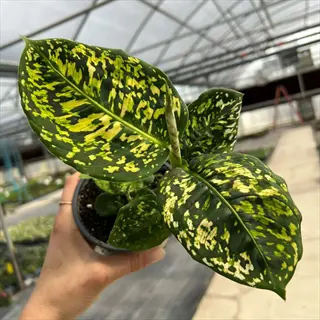
Sparkles
- Look: A compact cultivar with bright, speckled green-and-cream foliage noted by UF/IFAS.
- Size: Stays small and tidy, making it one of the easier types for tight spaces.
- Light: Does well in bright indirect light and tolerates lower light with slower growth.
- Best for: Desks, shelves, and grouped indoor displays.
- Care note: Keep evenly watered using the top-inch test to avoid leaf-tip browning.
- Safety: Toxic like all dumb canes, so keep it out of reach of curious pets.
Not sure you even have a dumb cane? People mix it up with Chinese evergreen all the time. NC State Extension points to the leaf veins as the giveaway. A dumb cane shows 20 to 30 side veins branching off the midrib, while a similar Aglaonema has only 5 to 8.
One last thing about the painted leaves you are paying for. That bright cream and white center fades in low light, so a cultivar parked in a dark corner slowly turns greener and loses its punch. Give it bright, filtered light and the variegation stays crisp.
Common Problems and Fixes
| Symptom | Likely Cause | What To Do |
|---|---|---|
| Yellow lower leaves dropping | Overwatering or root rot | Let the top inch dry, improve drainage, and trim any mushy roots. |
| Brown, crispy leaf tips | Underwatering, low humidity, or tap-water sensitivity | Water more evenly, raise humidity, and try filtered or rested water. |
| Soft, discolored stem | Severe overwatering and stem rot | Cut above the rot, let soil dry, and re-root a healthy top section. |
| Pale or scorched patches | Too much direct sun | Move to bright indirect light away from harsh midday sun. |
| Tall, leggy, bare stem | Too little light | Move to brighter light and cut back to 6 inches (15 cm) to rebush. |
| Sticky leaves or fine webbing | Pests such as scale or spider mites | Wipe leaves and treat with insecticidal soap or neem oil. |
| Water droplets on leaf tips are usually normal guttation, not a problem. | ||
Most problems with this plant trace back to one of two things: water or light. The leaves are honest. They tell you exactly what is wrong before the plant takes real damage, so you have time to fix it. Learn to read the signs and you will catch trouble early.
The table below pairs each symptom with its likely cause and a clear fix. Yellow lower leaves that drop point to overwatering and the start of root rot. Brown leaf tips point the other way, toward dry soil, low humidity, or salt from tap water. Match what you see, then act before the problem spreads.
Dumb cane yellow leaves are the most common worry I hear, and they almost always come back to soggy soil. Let the top inch dry out fully between waterings and the yellowing slows down. If the base feels soft instead of firm, the rot has reached the stem and you need to cut above it.
People often blame dumb cane drooping on a watering crisis when the cause is simpler. Droopy, leggy growth that leans toward the window means too little light. Move the plant somewhere brighter and cut it back to rebush. Pale or scorched patches mean the opposite problem of too much harsh sun.
Pests show up when care slips. Spider mites leave fine webbing under the leaves and tiny pale dots on top, while scale and mealybugs make foliage sticky. Wipe the leaves down and treat with insecticidal soap or neem oil every few days until they clear. Good watering and steady light keep most pests away in the first place.
5 Common Myths
Dumb cane is only mildly irritating, so a small nibble by a child or pet is nothing to worry about.
Severity is rated high; the sap can cause intense burning, swelling, and in rare cases enough throat swelling to threaten the airway.
Water droplets on the leaf tips always mean you are overwatering your dumb cane and must cut back right away.
Those droplets are usually guttation, a normal release of excess water through the leaf, not always a sign of overwatering.
Misting a dumb cane every day is the best way to give it the high humidity this tropical plant craves.
Misting raises humidity only briefly and can encourage leaf disease; a humidifier or pebble tray gives steadier, safer humidity.
Once a dumb cane grows tall and bare at the bottom, the leggy plant is ruined and should be thrown out.
You can cut a leggy stem back to about 6 inches (15 cm) and the plant will regrow fresh shoots below the cut.
Any tap water is fine for a dumb cane, and water quality has nothing to do with those brown leaf tips.
Sensitivity to substances in tap water can contribute to leaf-tip burn; filtered, distilled, or rested water often reduces the problem.
Conclusion
A dumb cane plant is far more forgiving than its long care list makes it look. Nail three things and the rest falls into place. Give it warmth between 60 and 75°F, bright but indirect light, and a drink only when the top inch of soil dries out. Good dumb cane care is mostly about not doing too much, and the plant rewards a light hand.
One fact should stay at the front of your mind. The toxicity of Dieffenbachia is rated high. Every part of the plant holds irritating calcium oxalate crystals. Chew a leaf or stem and your mouth and throat burn and swell within minutes. So where you set the pot matters as much as how you light or water it. Keep it out of reach of small children and curious pets, and wash your hands after you trim or repot.
Most trouble you will see is the plant asking for a small fix, not failing on you. Brown tips usually point to dry air or salt building up in the soil from tap water. Yellow leaves often mean the roots sat too wet for too long. Both are care signals you can read and correct. Even a tall, bare, leggy stem is not the end. Cut it back to about 6 inches (15 cm) and it will push out fresh growth from the cane.
Pick a variety that fits the spot you have. Compact forms stay near 12 inches (30 cm), while large cultivars can reach 8 ft (2.4 m) in time, so match the plant to your space and light. Treat it as a healthy houseplant that asks for steady habits and safe handling, and you get years of bold, patterned leaves with very little fuss. Enjoy it for what it is, a striking and easy plant, as long as you give it the respect those crystals call for.
Glossary
- Air layering
- A propagation method that roots a stem while it is still attached to the parent plant before it is cut off.
- Calcium oxalate crystals (raphides)
- Microscopic needle-shaped crystals in the plant's sap that release when tissue is chewed or crushed, causing burning and swelling.
- Cane cutting
- A piece of bare stem cut into sections and laid on rooting media to grow into new plants.
- cultivar
- A plant variety bred and named for specific traits like size, leaf color, or pattern.
- Guttation
- The normal release of excess water as droplets at a leaf's tips, which is not the same as overwatering.
- indirect light
- Light that reaches a plant after bouncing off a wall or passing through a sheer cover, instead of direct sun striking the leaves.
- variegated foliage
- Leaves marked with two or more colors, such as patches of cream or yellow against green.
- Variegation
- The patterned mix of green and cream or white coloring on a leaf, valued for its decorative look.
External Sources
Frequently Asked Questions
How do you take care of a dumb cane plant?
Give bright indirect light, water when the top inch of soil dries, keep it at 60-75°F (16-24°C), and handle the toxic sap carefully.
How often should I water a dumb cane?
Water when the top 1 inch (2.5 cm) of soil feels dry, which is often about once a week but varies with light, season, and pot size.
Can I touch Dieffenbachia?
Touching the leaves is fine, but the sap can irritate skin and eyes, so avoid broken stems and wash your hands after handling.
What are the disadvantages of Dieffenbachia?
Its main drawbacks are toxic sap, sensitivity to cold and overwatering, and leaf-tip browning from uneven or harsh tap water.
Should I mist my dumb cane?
Misting gives only a brief lift in humidity and can encourage leaf disease, so a humidifier or pebble tray is the safer choice.
Can Dieffenbachia live in just water?
Cuttings root well in water and can live there for a while, but long-term growth is stronger and steadier in soil.
What is the lifespan of a dumb cane plant?
With good care a dumb cane lives for many years, and you can refresh a leggy plant by cutting it back so it regrows from the base.
Does dumb cane purify air?
Dumb cane is grown mainly for its foliage; any air-cleaning effect from a single houseplant is very small in a real room.
What plant should you not put in a bedroom?
Avoid placing a highly toxic plant like dumb cane within reach of a bed, especially where children or pets sleep nearby.
What's the hardest houseplant to keep alive?
Fussy tropicals like fiddle-leaf fig are notoriously hard, while dumb cane is actually one of the more forgiving houseplants.