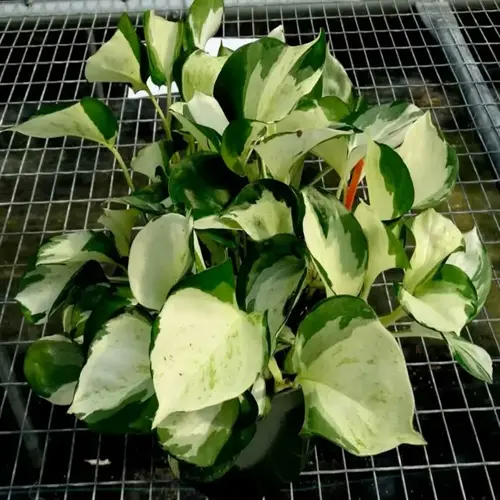

Satin pothos do both happily, so the real question of satin pothos climbing or trailing comes down to the look you want. The same plant can spill down from a shelf or scale a support, and your choice changes how it grows. Climbing gives you bigger leaves over time, while trailing keeps the plant tidy and compact. Neither way hurts the plant, and you can switch later if you change your mind.
Here is the part that surprises most people. Take one plant and let it trail off a high shelf, and the leaves stay small and even. Train that same plant up a support, and the new leaves come in noticeably larger. You did not buy a different plant. You just changed how it grows.
The reason traces back to how this vine lives in the wild. Satin pothos climbs tree trunks using small clinging rootlets that grip the bark, and in its native habitat it can reach up to 10 feet tall. As it climbs higher into the canopy, it shifts into a more mature stage of growth, and that stage brings the bigger foliage. Indoors the same trigger applies. Give the stems something vertical to grab, and the plant reads it as a tree to climb.
Trailing sends the opposite signal. When the vine hangs down with nothing to grip, it stays in a younger growth stage. The leaves stay smaller and the look stays neat. This is why the same variety can look so different in two homes. The change in satin pothos leaf size comes purely from the way it grows. You do not need to feed it more or buy a special cultivar to see it. Direction is the whole trick.
Setting up a climber is simple. Push a moss pole or a small trellis into the pot. Guide the longest stems against it and tuck the aerial roots toward the surface. A damp moss pole works best, since the rootlets grip moist material more readily than dry plastic. Mist the pole now and then to keep it slightly damp, and the plant starts to anchor itself within a few weeks. Use soft plant ties or twine to hold loose stems in place while the roots take hold. Keep this in mind too. Satin pothos is a slow grower, so a tall pole takes patience to fill, and you will not see those bigger leaves overnight.
Setting up a trailer takes even less. Drop the plant in a hanging pot or set it on a high shelf and let the stems fall. There is no support to manage and nothing to train. That makes this the easy, low-effort route. You get a soft cascade of silver-marked leaves. The only upkeep is the odd trim to keep the vines from getting leggy. Pinch the stems back now and then, and the plant grows fuller instead of thin and stringy.
Start a plant trailing for an easy display, then add a moss pole a year later when you want bigger leaves. The vine will climb the new support and grow up into its larger foliage without missing a beat.
Both habits keep the same matte, silver-splashed leaves that make this plant worth growing, so you are not trading away the looks either way. The difference is scale and effort. A climber draws the eye and acts like a living column in a room. A trailer softens a shelf or window and asks almost nothing of you. Think about the spot first. A bright corner with floor space suits a pole, while a high ledge or a hook near a window suits a hanging pot.
So pick based on the result you want. Choose climbing if you want a statement plant with large, dramatic leaves and you do not mind adding and dampening a pole. Choose trailing if you want a relaxed cascade with almost no setup. The best part is that nothing here is permanent. Add a support whenever you want the bigger look, or unclip the stems and let it hang again.
Read the full article: Satin Pothos Care: Silver-Leaf Vine Guide