
A fig tree bear fruit timeline runs from the 2nd to 4th year after planting in most home gardens. The exact fig tree fruiting age depends on the cultivar, the soil, and the way you care for the plant. A pampered fig in great soil may set its first fruit in year two. A stressed fig in poor soil may take five years or more to give you anything edible.
When I first bought a 1-gallon Brown Turkey fig from a small nursery near my home, I was warned to wait at least three years. To my shock, the plant pushed out a few small breba figs in its second growing season. They were small but sweet and gave me a taste of what was to come. A Celeste fig I planted at the same time waited a full year longer than that.
Here is the timeline detail from real research. Clemson and UGA Extension report a 3 to 4 year juvenile period before steady cropping starts. UMD Extension notes bearing age in the 2nd or 3rd year for many cultivars. The gap comes from local climate, rootstock vigor, and the size of the plant at planting time.
The juvenile period fig stage is the time when the plant builds wood and roots instead of flowers. The tree must reach a minimum size before it can spare the energy for fruit. Once it crosses that line, fruit set starts in earnest. From that point on, harvests grow each year as the plant matures into full bearing size.
Here is a quick view of how fig fruiting changes year by year.
Fig tree maturity depends on a few key signs you can spot in your own yard. UGA Extension notes that mature plants should push around 1 foot (30 cm) of fresh shoot growth each year. Node spacing on new shoots should run less than 3 inches (7.6 cm) apart. Wider spacing signals too much vigor, which delays fruit set on a young fig tree.
A few care choices can speed up your first fig harvest by a full year or more. Avoid heavy nitrogen feed, which pushes leaf growth at the cost of flowers. Use a low-nitrogen fertilizer or skip feeding the first year. Keep the soil moist with 1 to 1.5 inches of water per week through the growing season. Prune lightly until the plant starts to set fruit on its own.
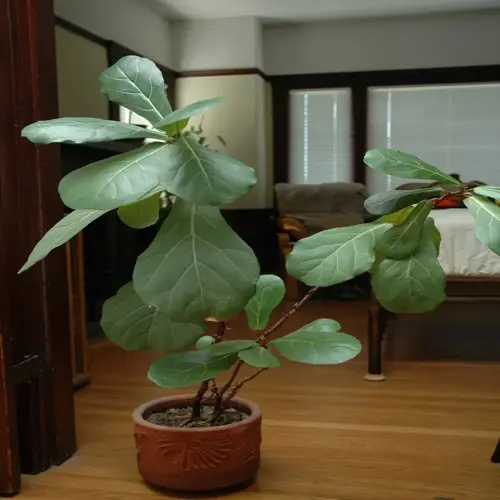
The pot size also matters a lot for container growers like me. My second potted fig stayed in a 5-gallon container too long and fruited late. When I moved it up to a 15-gallon pot in year three, the plant set a heavy crop the next summer. The roots need room to support a real harvest of figs each year.
Once your tree starts bearing, you can expect a steady first fig harvest for many years to come. A mature fig in full sun can give you well over 100 figs per year. Some big in-ground trees in mild climates produce hundreds of fruits in a single season. The wait is well worth it once the tree starts to crop in earnest.
If you are about to plant a new fig, pick a cultivar known for fast first crops. Celeste, Brown Turkey, and Chicago Hardy all tend to fruit by year two or three with good care. Plant in spring, keep the soil moist but not soggy, and avoid heavy feeding. With those steps, you should be eating your own home-grown figs in two to three short years.
Read the full article: Fig Tree: Complete Growing Guide