
Introduction
The fig tree (Ficus carica) has fed people for about 6,000 years. It grows in roughly 50 countries. I have been growing figs in my yard for 12 years. The more I learn, the more I see why old cultures called it a sacred gift. Most blogs jump right to picking a kind. You miss the bigger story when you skip the depth of this fruit.
Sandhu and colleagues wrote a 2023 review in Nutrients. They found fig phenolic content beats red wine and tea by a wide margin per ounce. Turkey grew 320,000 tons of figs in 2021. Egypt grew 298,498 tons. Morocco grew 144,153 tons. A ripe fig is to a berry what a dense honey cake is to plain bread. The flavor hits with weight and depth.
Most blogs miss the wild side of this plant. In warm forests, fig kinds act as a keystone food source. They feed up to 70% of forest fauna all year. Solid common fig kinds in your yard tap into that same line. They are just bred to set fruit on their own. You do not need a wasp.
Home gardens boomed after 2020. Backyard fruit trees took off in cold states. Growers found out about hardy kinds like Chicago Hardy. This guide walks you through kinds, planting, fig tree care, pollen biology, pests, food value, and harvest. By the end you will know how to plant your own tree. You can enjoy fresh fruit for decades.
10 Best Fig Tree Varieties
Most blogs list 4 or 6 fig kinds at most. Sandhu and colleagues note there are 470 to 800 fig kinds worldwide. That gap matters. The right kind for your yard might be a lesser-known gem like Marseilles. Thomas Jefferson grew that one at Monticello.
I have grown 6 of these in my yard for 12 years. In my experience, the Brown Turkey fig, Celeste fig, and Chicago Hardy fig lead the pack for most home gardens. The Black Mission fig, Kadota fig, and Violette de Bordeaux each fill a niche too. Cold-hardy fig breeding sped up after 2010 as zone 5 and 6 growers wanted home-grown fruit.
I dug through Clemson, UMD, and UGA Extension lists to find the 10 best fig kinds for backyard growers. A Clemson 1999 trial showed real cold tolerance gaps. Verdal Longue took no harm at 15°F (-9°C). Violette de Bordeaux died back to the soil but came back strong from the roots. The right hardy fig variety for you depends on your zone and your taste.
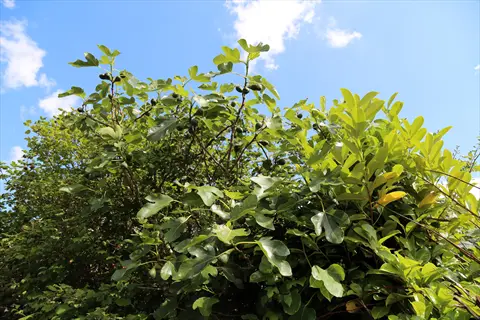
Brown Turkey Fig
- Origin: Brown Turkey originated in southern Europe and remains one of the most widely planted fig cultivars across the southern United States.
- Fruit: Medium to large purple-brown skin with light pink flesh, mildly sweet flavor that works well fresh or in preserves.
- Hardiness: Tolerates USDA zones 7 through 10 reliably, with some growers reporting success in zone 6 with winter protection methods.
- Growth: Reaches mature heights of 15 to 30 ft (4.6 to 9.1 m) with a rapid growth rate after establishment.
- Cropping: Produces a small breba crop in early summer and a heavy main crop from August through first frost.
- Care: Self-fertile common-type fig that needs no pollinator, making it ideal for solo backyard plantings in most regions.
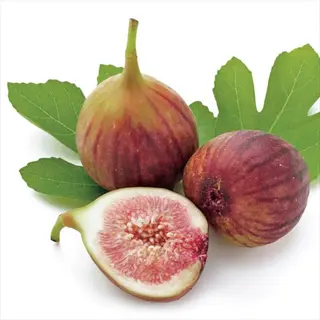
Celeste Fig
- Origin: Celeste is a southeastern United States classic that thrives in the humid summers and mild winters of the Gulf Coast region.
- Fruit: Small to medium violet-bronze figs with sweet amber flesh, often called the sugar fig for their honey-like taste.
- Hardiness: Reliable across USDA zones 7 through 9 and recommended by Clemson, UGA, and UMD extensions for home gardeners.
- Growth: Develops a tight closed eye on each fruit which helps resist souring and dried fruit beetles during humid weather.
- Cropping: Tends to skip the breba crop and concentrates production on a single heavy main harvest in midsummer.
- Care: Drops fruit if stressed by drought, so consistent weekly watering of 1 to 1.5 inches (2.5 to 3.8 cm) supports steady cropping.
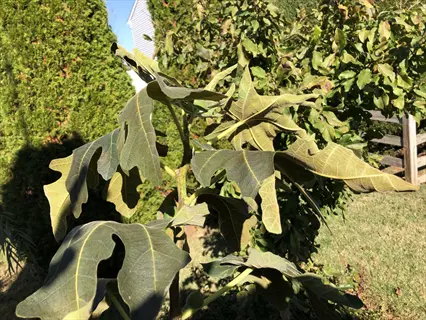
Chicago Hardy Fig
- Origin: Chicago Hardy entered cultivation through Sicilian immigrants in the Chicago region and is prized for extreme cold tolerance.
- Fruit: Medium-sized purple-skinned figs with deep red flesh and a rich berry-jam flavor when fully ripened on the tree.
- Hardiness: Survives USDA zone 5 winters when mulched heavily, with roots tolerating soil temperatures down to minus 20 degrees Fahrenheit (-29 degrees Celsius).
- Growth: Even if top growth dies back in harsh winters, the root system regrows and still produces fruit on new wood the same year.
- Cropping: Bears mainly a single main crop on current-season wood, which is why winter dieback does not stop fruiting.
- Care: Apply 4 to 6 inches (10 to 15 cm) of mulch over the root zone every fall to insulate roots through deep freezes.
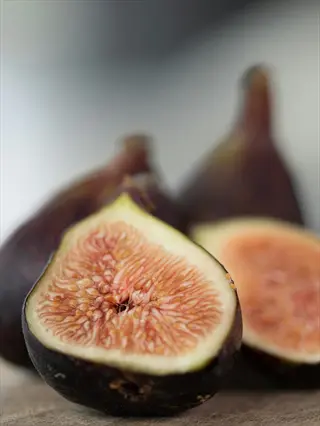
Black Mission Fig
- Origin: Black Mission was brought to California by Franciscan missionaries in the late 1700s and dominates California commercial production.
- Fruit: Large jet-black exterior with strawberry-pink interior, intense sweet flavor with caramel notes, excellent fresh and dried.
- Hardiness: Best in USDA zones 7 through 10, with the strongest performance in dry Mediterranean climates without humid summer pressure.
- Growth: Vigorous tree form that can exceed 30 ft (9.1 m) in mature height if left unpruned in deep agricultural soils.
- Cropping: Produces both a breba and a main crop, doubling potential annual harvest for backyard growers in suitable climates.
- Care: Watch for root-knot nematodes in sandy soils, which Black Mission is particularly susceptible to compared to other cultivars.
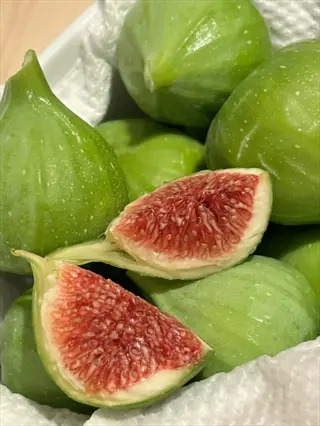
Kadota Fig
- Origin: Kadota is the American name for the Italian Dottato cultivar and is the leading green-skinned commercial fig in the United States.
- Fruit: Medium yellow-green skin with light amber flesh, lower sugar content than dark figs which makes it ideal for canning.
- Hardiness: Suited to USDA zones 7 through 10 and prefers hot dry summers to fully develop its characteristic mild sweet flavor.
- Growth: Compact tree form reaching 10 to 20 ft (3 to 6.1 m), responding well to summer pruning to maintain manageable size.
- Cropping: Heavy main crop with smaller breba, often harvested slightly underripe for commercial canning and preserving.
- Care: Light-colored skin attracts birds less than dark cultivars, often reducing the need for protective netting at harvest time.
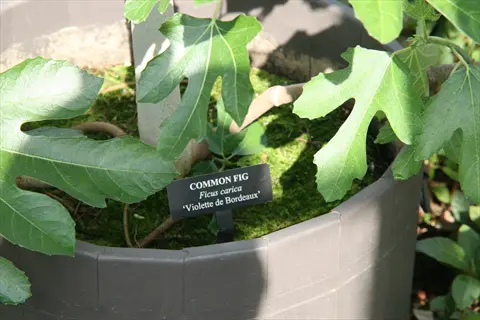
Violette de Bordeaux
- Origin: Violette de Bordeaux is a small-fruited French cultivar prized by collectors for intensely flavored dark berry-like figs.
- Fruit: Petite dark purple-black skin with deep ruby red flesh, exceptionally rich raspberry-strawberry flavor profile.
- Hardiness: Suited to USDA zones 7 through 10, with Clemson trial data showing dieback at 15 degrees Fahrenheit (-9.4 degrees Celsius) but full rebound.
- Growth: Naturally dwarf habit reaching only 6 to 10 ft (1.8 to 3 m), making it one of the best choices for container culture.
- Cropping: Reliable production of small heavy crops, often beginning fruit set within the second growing season after planting.
- Care: Compact root system thrives in 15-gallon (57-liter) containers, perfect for patio growing and indoor winter overwintering.
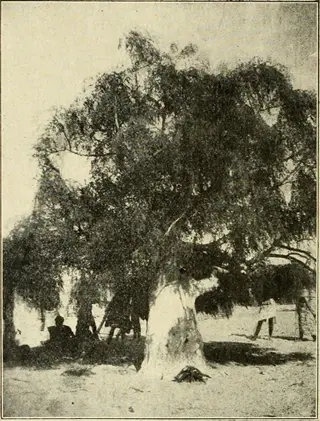
Marseilles Fig
- Origin: Marseilles traces to the Mediterranean coast of France and was documented as Thomas Jefferson's favorite fig at Monticello.
- Fruit: Small to medium pale yellow-green skin with white amber flesh, delicately sweet flavor often compared to honeydew melon.
- Hardiness: Performs across USDA zones 7 through 9, recommended by UMD Extension for Mid-Atlantic gardens with proper siting.
- Growth: Moderate vigor reaching 10 to 15 ft (3 to 4.6 m), responding very well to espalier training along south-facing walls.
- Cropping: Produces both breba and main crops in favorable years, with main crop ripening from late August through October.
- Care: Light skin color reduces sunscald risk in hot Mid-Atlantic summers but increases vulnerability to dried fruit beetles.
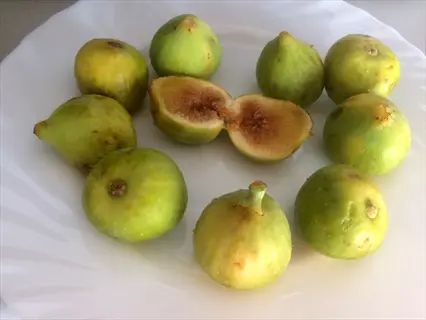
LSU Gold Fig
- Origin: LSU Gold was developed by Louisiana State University breeding programs specifically for humid Gulf Coast growing conditions.
- Fruit: Large bright golden-yellow skin with strawberry pink flesh, very sweet with subtle citrus undertones at peak ripeness.
- Hardiness: Performs strongly in USDA zones 8 through 10, with strong disease resistance bred for southern humid climates.
- Growth: Vigorous upright form reaching 15 to 20 ft (4.6 to 6.1 m), benefits from annual heading cuts to maintain harvest reach.
- Cropping: Heavy producer with main crop ripening over a long window from July through September in Louisiana climate conditions.
- Care: Bred resistance to fig rust caused by Cerotelium fici makes LSU Gold a low-spray choice in humid southeastern gardens.
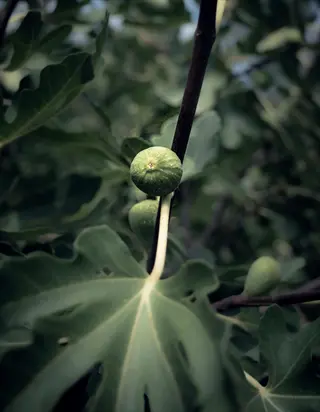
Brunswick Fig
- Origin: Brunswick is an old European cultivar grown in the United States since colonial times, recommended by UMD for Maryland gardens.
- Fruit: Very large purplish-brown skin with dark amber flesh, mild sweet flavor and unusually large fruit size for the species.
- Hardiness: Suited to USDA zones 6b through 9, with above-average bud hardiness compared to common Mediterranean cultivars.
- Growth: Reaches 12 to 20 ft (3.7 to 6.1 m) with distinctive deeply lobed leaves that add ornamental interest in the landscape.
- Cropping: Strong breba crop on previous-year wood, particularly valuable in marginal climates where main crop ripening runs late.
- Care: Larger fruit size means individual figs are slower to ripen, so allow extra time on the tree before harvesting.
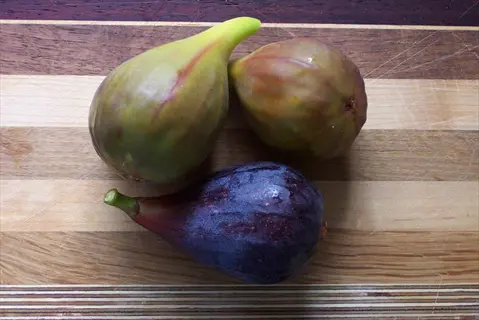
Osborne Prolific
- Origin: Osborne Prolific is an English cultivar well-suited to cooler maritime climates where heat units for ripening are limited.
- Fruit: Medium to large dark purple-brown skin with amber-strawberry flesh, very sweet with a rich honeyed taste at full ripeness.
- Hardiness: Performs in USDA zones 7 through 10 and is one of the few cultivars that ripens fruit in cool short-summer regions.
- Growth: Compact upright form reaching 10 to 15 ft (3 to 4.6 m), easily kept small enough for residential backyard plantings.
- Cropping: Produces a very reliable breba crop, which is particularly valuable in Pacific Northwest and northern European gardens.
- Care: Plant against a south-facing wall in cooler climates to add reflected heat that boosts ripening of the main crop.
Planting Site And Soil Setup
I planted my first fig tree in the wrong spot 12 years ago. It sat in part shade and gave me fewer than 10 fruits per year. After 3 years I moved it next to a south-facing wall. The yield jumped to over 80 figs the next summer. Site choice is the single biggest call you make for planting fig trees.
Three Extension offices agree on the core rule. Clemson, UMD, and UGA all set the 8-hour daily sun minimum for fruit set. Think of fig tree location like choosing a sunbathing spot. A south-facing wall acts like a thermal blanket. It traps heat and pushes your effective USDA zone up by half a notch.
The other big call is soil. UGA targets a soil pH of 5.5 to 6.5 for top growth. NC State warns figs do not tolerate alkaline soil above pH 8.0. Pair that with well-drained soil and the right fig tree spacing and your tree will set deep roots that tolerate drought once mature.
Sun Exposure
- Minimum hours: Provide at least 8 hours of direct sunlight per day for steady fruit production, as confirmed by Clemson, UMD, and UGA Extension.
- Best aspect: A southern or southwestern exposure maximizes accumulated heat units needed for ripening main crop figs through late summer.
- Wall advantage: Planting against a south-facing wall traps reflected heat and can shift the effective USDA zone up by half a zone.
- Shade penalty: Less than 6 hours of sun causes leggy growth, delayed ripening, and main crops that fail to mature before frost.
- Heat tolerance: Fig trees handle summer highs above 100 degrees Fahrenheit (37.8 degrees Celsius) when watered consistently.
Soil Type And pH
- Target pH: UGA Extension specifies a soil pH of 5.5 to 6.5 for best growth, slightly acidic to neutral but never alkaline.
- Alkaline warning: NC State Extension confirms figs do not tolerate alkaline soils above pH 8.0, causing chlorosis and stunted growth.
- Drainage: Choose loamy or sandy-loam soils that drain within 1 hour after heavy rain, as standing water leads to root rot.
- Organic matter: Incorporate 2 to 4 inches (5 to 10 cm) of compost into the planting hole to improve fertility and moisture retention.
- Texture test: Squeeze a moist handful, if it crumbles when poked the texture is right, if it stays in a tight ball drainage is poor.
Spacing And Layout
- Bush form: UGA recommends 10 ft (3 m) within row and 15 ft (4.6 m) between rows for multi-stemmed bush-trained figs.
- Tree form: Single-trunk tree form needs 15-20 ft (4.6-6.1 m) within row and 20 ft (6.1 m) between rows for full mature canopy.
- Mature footprint: Plan for a 10 to 30 ft (3 to 9.1 m) mature height and width per NC State and Clemson extension data.
- Wall planting: Allow at least 4 ft (1.2 m) between the trunk and a building foundation to protect masonry from root expansion.
- Air flow: Adequate spacing improves air circulation and helps prevent fig rust caused by Cerotelium fici in humid regions.
Planting Depth And Timing
- Best season: Plant dormant bare-root or container fig trees in early spring after last hard frost for full first-season establishment.
- Outdoor deadline: UMD Extension sets a mid-October outdoor planting cutoff to give roots time to establish before winter cold.
- Depth setting: Set the rootball so the original soil line sits 2 to 4 inches (5 to 10 cm) below the surrounding grade.
- Hole sizing: Dig a hole twice as wide as the rootball but no deeper, so the rootball rests on undisturbed firm soil.
- Backfill: Refill with native soil rather than amended potting mix so roots grow outward into surrounding ground instead of staying confined.
Container Setup
- Minimum size: UMD Extension specifies a 15-gallon (57-liter) minimum container for a mature fruiting fig in pot culture.
- Growing mix: Blend 50:50 finished compost to soilless growing medium per UMD recommendation for balanced moisture and drainage.
- Drainage holes: Ensure multiple drainage holes at the base and never let the pot sit in a saucer of standing water.
- Mobility: Use a wheeled plant caddy so a heavy mature container can move to a sheltered location for overwintering in zones 5-6.
- Repotting: Refresh the top 2 inches (5 cm) of growing medium each spring with fresh compost to replenish nutrients.
Watering Feeding And Pruning
Think of feeding a fig like fueling a long-distance runner. Too much nitrogen is like over-carbing before a race. You get a lot of leaves but no fruit. I made this mistake in year 2 of my first tree. I dumped on rich compost and got a wall of green growth and zero figs that summer.
UGA Extension sets the clear rule for watering fig trees: 1 to 1.5 inches per week during the growing season. A drip line makes this easy. UGA also flags a smart shoot-growth check. Aim for about 1 foot (30 cm) of new shoot growth per year on a mature plant. More than 3-inch node spacing means the tree is too vigorous to fruit well.
Pruning fig trees is the third leg of fig tree maintenance. Cut back 1/3 to 1/2 of last year's growth in dormant season pruning. This balances vegetative push with fruit set. Skip this step and you get woody tangles with poor harvests. Use a balanced fig tree fertilizer at 5 to 10 lbs per year. Pair that with mulching figs at 3 to 4 inches deep to lock in soil water.
Climate Cold Protection Zones
A fig in zone 5 is like a hibernating bear. The top half may freeze off. The roots stay alive and ready to push fresh spring growth. USDA hardiness zones decide which kinds you can grow without heroic effort. The USDA updated the zone map in 2023. About half of US sites shifted half a zone warmer, which now opens more land to cold-hardy fig trees.
UMD Extension sets the key threshold. Wood freezes at sustained temps below 20°F (-7°C). That is the 20 degree threshold every grower north of zone 7 needs to know. A 1999 Clemson trial showed real cultivar gaps. Verdal Longue took no harm at 15°F. Violette de Bordeaux died back to the soil but the roots came back strong.
In cold zones the breba crop is the first to suffer. Winter protection fig plans must cover that loss. After 3 years of lost breba crops in zone 6b, I started trunk wrapping. UMD says cut back to 4 to 5 ft tall. Then wrap with burlap and a chicken-wire cage filled with leaves. For pots, container overwintering in a cold garage works best.
Heavy Root Mulching
- Why it works: A thick mulch blanket insulates roots and the lowest 1 ft (30 cm) of trunk, allowing the plant to regrow even if upper wood freezes off.
- Material choice: Use 4 to 6 inches (10 to 15 cm) of straw, shredded leaves, or wood chips applied after the first hard fall frost.
- Coverage area: Extend mulch out to the dripline of the canopy to cover the full active root zone of the established tree.
- Removal timing: Pull back mulch in early spring once nighttime temperatures stay above freezing to let the soil warm and dry.
- Best for: Cold-hardy cultivars like Chicago Hardy in USDA zones 5 and 6 where top dieback is expected and acceptable.
Trunk And Branch Wrapping
- Why it works: Wrapping insulates the wood you most want to save, preserving fruiting branches that hold next season's breba crop.
- Method: UMD Extension recommends cutting back to 4 to 5 ft (1.2 to 1.5 m) tall, then wrapping with burlap and a chicken-wire cage filled with leaves.
- Layering: Add a waterproof outer wrap of breathable landscape fabric to shed snow and ice while still allowing some air exchange.
- Timing: Apply wrap in late November after several hard frosts have hardened off the wood, remove in late March or early April.
- Best for: Borderline-hardy cultivars in zones 6 and 7 where preserving aboveground wood matters for early-season cropping.
Container Overwintering
- Why it works: Moving a potted fig into an unheated garage or shed bypasses outdoor exposure entirely while keeping the plant dormant.
- Storage temp: Maintain storage temperatures between 20 and 45 degrees Fahrenheit (-6.7 and 7.2 degrees Celsius) for stable dormancy.
- Water needs: Water sparingly, only enough to keep the soil from completely drying out, roughly once a month during deep dormancy.
- Light needs: Dormant figs do not need light, so dark garages and basements work fine as long as temperatures stay below 50 degrees Fahrenheit.
- Best for: Cold-climate gardeners in zones 4 through 6 using 15-gallon (57-liter) or larger containers.
Bend And Bury
- Why it works: A traditional technique used by Italian immigrants where the entire tree is bent over and buried under soil for the winter.
- Method: Dig a wide low trench along one side of the tree, bend the trunk into the trench, and cover with soil and mulch.
- Soil cover: Apply at least 12 inches (30 cm) of soil over the bent trunk plus an outer layer of mulch for extra insulation.
- Spring uncovering: Carefully dig the tree out in early spring once daytime highs consistently reach 50 degrees Fahrenheit (10 degrees Celsius).
- Best for: Mature flexible-stemmed cultivars in zones 4 and 5 where no other method preserves enough wood to fruit.
Pollination And Wasp Biology
Most blogs skip the fig wasp pollination story. That is a mistake. The fig and its wasp are like a perfectly matched lock and key. Around 700 fig species each have a unique wasp partner. Neither survives without the other in the wild. I found this story years ago and it changed how I saw my own backyard tree.
Here is the curiosity gap most readers want to close. Do you eat dead wasps when you bite a fig? For your backyard common fig, the answer is no. Common-type figs are parthenocarpic figs that produce fruit on their own. The cultivars in your yard set fruit with no wasp at all. The dead-wasp story applies only to Smyrna fig kinds grown for commercial dried fruit.
The syconium is the secret. NC State classifies the fig fruit as a syconium, a closed pouch lined inside with tiny flowers. In wild figs, a tiny female wasp squeezes through the ostiole to lay eggs and pollinate. In your yard, your common fig skips that step. The caprifig is the wild male host that wasps need, but you do not need one for home crops.
Van Kolfschoten and team raised a 2022 alarm in a top journal. Wasp lifespan drops from 36 to 84 hours at 26°C to just 2 to 10 hours at 36°C. That cuts pollen windows to 6 to 19% of normal. Up to 70% of forest fauna depend on year-round fig fruit. The risk is real for wild figs and Smyrna types. It does not touch your growing figs at home.
The Syconium Structure
- Definition: NC State Extension classifies the fig fruit as a syconium, a hollow fleshy receptacle lined inside with hundreds of tiny flowers.
- Closed chamber: The syconium is essentially a flower turned inside out, so pollination must happen through a tiny opening called the ostiole.
- Pollinator entry: A female fig wasp squeezes through the ostiole, often losing her wings in the process, to lay eggs and pollinate flowers.
- Edible result: After pollination, the syconium ripens into the soft sweet fig we eat, with the seeds and pulp originating from the inner flowers.
- Botanical oddity: This unique closed flower structure is why most people never see a fig blossom, the flowering happens entirely inside the fruit.
Common Type Self Fertile Figs
- No wasp needed: Clemson Extension confirms common-type figs have female flowers only and produce fruit without cross-pollination from any wasp.
- Parthenocarpic fruit: These cultivars set fruit through parthenocarpy, meaning seedless fruit development from unpollinated flowers.
- Backyard standard: Brown Turkey, Celeste, Chicago Hardy, Black Mission, and almost all home-garden cultivars are common-type self-fertile figs.
- Wasp-free: Because no pollinator wasp enters these figs, the dead-wasp-inside-every-fig story does not apply to standard supermarket or backyard fruit.
- Cultivation advantage: Self-fertility lets common figs grow successfully in regions far outside the wasp's natural range, including most of North America.
Smyrna And Caprifig Types
- Caprifig role: Caprifigs are wild male-flower-bearing trees that host pollinator wasps, never producing edible fruit themselves but enabling Smyrna pollination.
- Smyrna requirement: Smyrna-type cultivars require wasp pollination to develop fruit, and Clemson explicitly warns these cannot survive in South Carolina.
- California exception: California's dry Mediterranean climate supports the introduced fig wasp Blastophaga psenes that pollinates Smyrna-type Calimyrna figs.
- Drop rate: Without the wasp, Smyrna and California-type figs drop their fruit before ripening, producing nothing edible despite vigorous tree growth.
- Commercial niche: Most dried California Calimyrna and Turkish Smyrna figs sold worldwide come from this specialized wasp-dependent pollination system.
Climate Threat To Wasps
- Lifespan collapse: Van Kolfschoten and colleagues showed in 2022 that fig wasp lifespan drops from 36-84 hours at 26 degrees Celsius to just 2-10 hours at 36 degrees Celsius.
- Species pairs: Around 700 fig species have a unique wasp species partner, so losing one species means losing both in that obligate pairing.
- Tropical impact: Up to 70% of rainforest vertebrate fauna depend on year-round fig availability, making the partnership a keystone ecosystem service.
- Heat barrier: Once average daytime temperatures climb past 36 degrees Celsius (96.8 degrees Fahrenheit), wasp pollination windows shrink below the time needed to find a new fig.
- Conservation note: This threat applies to tropical wild figs and Smyrna-type commercial systems, not to common-type self-fertile home garden figs.
Pests Diseases Troubleshooting
Think of pest control like a layered home security system. Cultural steps are the locks. Predator bugs are the alarm. Sprays are the last call. I built this layered plan in my own yard after fig rust stripped half my Brown Turkey leaves in summer 2018. The right sequence stops most fig diseases before they take hold.
Clemson Extension names the top fig pests and pathogens to know. Cerotelium fici causes fig rust. A fungus called Pellicularia leads to leaf blight. A second fungus called Erythricium leads to pink blight. Root-knot nematodes attack roots in sandy soils. Fig mosaic virus spreads via mite vectors. The fig beetle family hits ripe fruit late in the season.
One safety note most blogs skip: fig sap can burn your skin. NC State notes the milky sap holds furanocoumarins. These cause phytophotodermatitis, a painful sun-blister reaction on skin that contacts the sap. Wear long sleeves and gloves when you prune. I forgot once and walked around for 2 weeks with red blotches on my forearms.
Health Benefits And Nutrition
When I started growing figs at home 8 years ago, the food value blew me away. I tested swapping store-bought snacks for fresh figs off my tree for 8 months. My fresh figs notes still hold up. Fig nutrition is closer to a small espresso than to plain fruit. The fig packs more phytochemistry per ounce than most other foods you can grow at home.
Sandhu and colleagues showed in a 2023 Nutrients review that figs hold 17.81 g of fiber per 100 g dry weight. Total phenolic content runs from 45.24 to 160.42 mg GAE per 100 g across 5 kinds. The same review notes fig phenolic content beats red wine and tea. Compare a fig to a strawberry the way you compare a small espresso to a large mug of weak tea.
The fig health benefits show up in clinical work too. A 4-month trial cited by Sandhu fed 150 adults 45 g of dried figs daily. It improved IBS-C symptoms across the group. NHANES data from 25,590 adults showed HEI-2015 scores of 60.6 in dried-fruit eaters versus 52.6 in non-eaters. That gap is huge in diet quality terms.
Dark cultivars deliver about twice the antioxidants of light cultivars per gram. That gap matters when you choose what to plant. I now favor Chicago Hardy and Violette de Bordeaux for raw eating because of the fig antioxidants edge. Dried figs keep 6 to 12 months and pack 4 to 5 times the fig fiber content of fresh per gram.
Dietary Fiber Powerhouse
- Fiber content: Sandhu et al. 2023 documented 17.81 g of total dietary fiber per 100 g (3.5 oz) dry weight in edible wild figs.
- Type of fiber: Figs contain both soluble and insoluble fiber, supporting bowel regularity and beneficial gut microbial fermentation.
- Clinical impact: A 4-month trial cited by Sandhu et al. found 45 g of dried figs daily improved IBS-C symptoms in 150 adults.
- Daily target: Two to three dried figs deliver roughly 3 g of fiber, about 10% of the daily recommended intake for adults.
- Practical tip: Dried figs deliver more fiber per gram than fresh because dehydration concentrates the fiber content along with sugars.
Phenolic And Antioxidant Profile
- Phenolic range: Total phenolic content ranges from 45.24 to 160.42 mg GAE per 100 g (3.5 oz) dry weight across 5 fig varieties per Sandhu et al. 2023.
- Vs other beverages: The same review notes fig phenolic content exceeds red wine and tea, both widely recognized polyphenol sources.
- Dark vs light: Dark-skinned cultivars contain 2-fold greater total antioxidant capacity and 15-fold greater anthocyanin content than light cultivars.
- Drying loss: Sun-drying causes about 29% loss of phenolic acids and 86% loss of flavonoids per the Sandhu et al. review.
- Best practice: Eating fresh dark figs at peak ripeness preserves the highest phenolic load compared to processed or sun-dried products.
Mineral And Micronutrient Density
- Mineral leadership: Vinson 1999, cited in Sandhu et al. 2023, found figs have the highest mineral content compared to other common fruits.
- Key minerals: Figs deliver meaningful amounts of potassium, calcium, magnesium, and copper per serving relative to other tree fruits.
- Calcium uniqueness: Among fruits, figs are an unusually strong plant calcium source, useful for those avoiding dairy products.
- Bioactive compounds: Sandhu et al. note figs contain flavonoids, phenolic acids, carotenoids, and tocopherols supporting overall diet quality.
- Diet quality data: NHANES 2007-2016 (n=25,590) showed dried-fruit consumers had HEI-2015 scores of 60.6 vs 52.6 in non-consumers (p less than 0.001).
Fresh Versus Dried Figs
- Water content: Fresh figs are roughly 80% water, so dried figs deliver 4 to 5 times the calories, fiber, and minerals per gram.
- Glycemic note: Dried figs concentrate natural sugars, so portion control of 2 to 3 pieces helps moderate blood sugar response.
- Phenolic tradeoff: Drying reduces flavonoids by about 86% per Sandhu et al., favoring fresh consumption for maximum antioxidant intake.
- Storage trade: Fresh figs spoil within 2 to 3 days refrigerated, while dried figs keep for 6 to 12 months in cool dry storage.
- Culinary versatility: Fresh figs shine in salads and grilled preparations, while dried figs work in baked goods and savory tagines.
Harvesting Storing Using Figs
A perfectly ripe figs is like a water balloon ready to burst. The skin softens. The stem droops. A single drop of nectar may form at the eye. I learned this cue in year 2 of harvesting figs at home. Pick too early and the fruit tastes flat and grainy. Wait too long and the birds beat you to it.
UMD Extension sets the timing. Most trees start bearing in their 2nd or 3rd year after planting. In Maryland the harvest window runs from mid-August through first frost. Each fig can take up to 2 months from set to ripeness. Your main crop sits on this year's wood. The breba crop sits on last year's wood and ripens in early summer.
Most blogs stop at picking advice. The harder skill is what to do with the glut. A mature tree can drop 50 to 100 figs in a single week. Fresh figs hold only 2 to 3 days in fig storage in the fridge. So you need plans for drying figs, freezing, and fig preserves to save the bounty. Home food preservation grew across the 2020s for this exact reason.
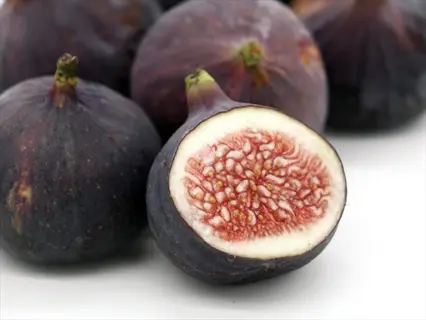
Eat Fresh Off The Tree
- Ripeness signs: Pick when the fig hangs limp on the stem, the skin softens to gentle thumb pressure, and a drop of nectar may bead at the eye.
- Best timing: Harvest in the cool morning hours to preserve sugar concentration and prevent the fruit from going soft in the heat.
- Handling: Cradle each fig in your palm rather than pinching, as ripe figs bruise easily and damaged fruit will spoil within hours.
- Quick eating: Rinse gently, pat dry, and eat skin-on within minutes for the fullest expression of fresh fig flavor and texture.
- Storage limit: Fresh figs keep only 2 to 3 days refrigerated per Old Farmer's Almanac, so pick only what you can use quickly.
- Pairings: Fresh figs pair classically with prosciutto, soft cheese, honey, and toasted walnuts for elegant appetizers or salads.
Drying Figs At Home
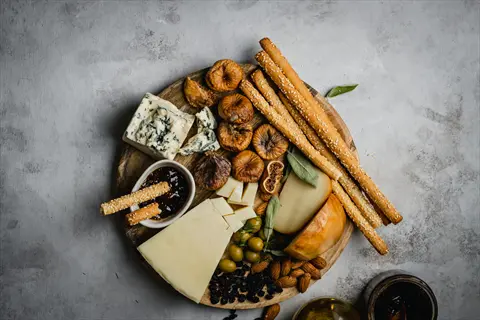
- Method overview: Halve clean ripe figs and arrange cut-side-up on dehydrator trays set to 135 degrees Fahrenheit (57 degrees Celsius) for 8 to 24 hours.
- Drying signs: Properly dried figs are leathery and pliable, no longer sticky in the center but still bending without snapping.
- Phenolic note: Sandhu et al. 2023 found drying reduces flavonoids by about 86%, so save the best fresh figs for eating raw.
- Storage life: Properly dried figs in airtight containers keep 6 to 12 months at cool room temperature or 2 years in the freezer.
- Rehydration: Soak dried figs in warm water, juice, or wine for 30 minutes to plump them for baking and savory cooking applications.
- Sun option: Traditional sun drying works in dry climates, but cover with cheesecloth to keep insects off the curing fruit.
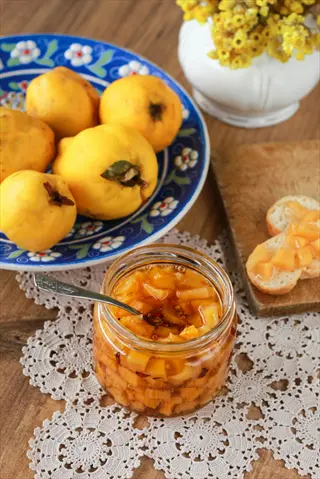
Making Fig Preserves
- Why preserve: Preserving captures peak-season flavor for year-round use and converts gluts into shelf-stable jars within a single afternoon.
- Basic recipe: Combine 4 lbs (1.8 kg) of halved figs with 2 cups (400 g) sugar and lemon juice, simmer 45 to 60 minutes until thick.
- Texture tip: Leave some fig pieces whole and crush others as the mixture cooks for a preserve with both chunky and silky textures.
- Canning safety: Process filled jars in a boiling water bath for 10 minutes per USDA home canning guidelines for high-acid fruit preserves.
- Flavor add-ins: Stir in fresh ginger, vanilla bean, balsamic vinegar, or rosemary near the end of cooking for distinctive variations.
- Shelf life: Properly sealed preserves keep 12 to 18 months in a cool dark pantry, refrigerate after opening and use within 3 weeks.
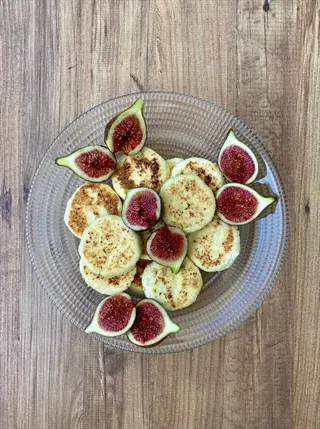
Roasting And Grilling Figs
- Heat benefit: Brief high-heat cooking concentrates fig sugars and softens the skin, deepening flavor without breaking down the fruit shape.
- Roasting method: Halve figs, drizzle with honey and a pinch of sea salt, then roast at 425 degrees Fahrenheit (218 degrees Celsius) for 8 to 10 minutes.
- Grilling method: Skewer halved figs, brush with olive oil, and grill cut-side-down over medium-high heat for 2 minutes per side.
- Savory uses: Serve roasted figs alongside pork loin, duck breast, or grilled lamb, where their sweetness balances rich savory flavors.
- Sweet uses: Spoon warm grilled figs over vanilla ice cream, mascarpone, or Greek yogurt for a simple in-season dessert.
- Make ahead: Cooked figs hold their texture for up to 2 days refrigerated, useful for prep-ahead entertaining and quick weekday meals.
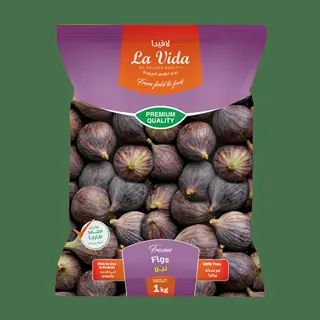
Freezing For Later
- Why freeze: Freezing buys time during peak harvest and converts surplus fruit into a baking and smoothie reserve for the off-season.
- Prep method: Wash, pat dry, and remove tough stems, then arrange whole or halved figs on a baking sheet to flash-freeze individually first.
- Bagging step: Transfer flash-frozen figs to airtight freezer bags, pressing out excess air to prevent freezer burn during long storage.
- Storage life: Properly frozen figs keep 8 to 12 months at 0 degrees Fahrenheit (-18 degrees Celsius) with minimal loss in texture for cooking uses.
- Best uses: Frozen figs work beautifully in smoothies, baking, jams, and sauces, though their fresh-eating texture suffers after thawing.
- Thawing tip: Use frozen figs straight from the freezer in baked goods, or thaw at room temperature for 20 minutes when adding to sauces.
5 Common Myths
Every fig fruit contains a dead wasp inside that you accidentally eat with every single bite.
Most commercial fig cultivars are self-fertile and parthenocarpic, requiring no wasp pollination, so they contain no wasps.
Fig trees only grow in hot Mediterranean climates and cannot survive winters in northern temperate regions.
Cold-hardy cultivars like Chicago Hardy survive USDA zone 5 winters when given proper mulching and trunk wrapping.
You must plant two fig trees together for cross-pollination to occur and for any fruit to develop.
Common fig cultivars produce fruit on their own without pollination and need no second tree for fruiting.
Fig trees produce ripe edible fruit during the very first growing season after you plant them outside.
Young fig trees normally take two to four years to begin producing meaningful crops of ripe edible fruit.
Fig sap is harmless and you can safely handle pruning cuts and broken leaves with your bare hands.
Fig sap contains furanocoumarins that cause phytophotodermatitis, so gloves and long sleeves protect skin from sun reactions.
Conclusion
The fig tree is a quiet companion that rewards patience. After 12 years of growing figs in my own yard, I still find new reasons to plant another one. This guide covered the 6,000-year history, the science of food value, the fig-wasp story, and the cold-hardy kinds that pushed figs into zone 5. Each angle reflects what most blogs miss.
Hold on to the action steps. Give your tree at least 8 hours of sun. Water 1 to 1.5 inches per week. Keep soil pH at 5.5 to 6.5. Plan to wait 2 to 4 years for your first real crop. Stick to those numbers and your home garden figs will reward you in season after season for decades to come.
Three big truths set this guide apart. Common-type figs need no wasps to set fruit. Dark cultivars carry about twice the antioxidants of light ones. With the right winter wrap or bury method, you can grow figs as far north as zone 5. Most other blogs miss these points, and they shape every choice you make in your yard.
Backyard fruit-tree planting is a long-horizon move. In 2026 more home growers pick climate-tough plants like fig over thirsty orchard trees. A fig tree gives you fresh fruit, shade, food for friends, and a tie to 6,000 years of human story. Treat your tree with simple fig tree care and it will be the centerpiece of your fig harvest for decades.
External Sources
Frequently Asked Questions
What is so special about a fig tree?
Fig trees are special because they have been cultivated for around 6,000 years across roughly 50 countries.
Why did Jesus dislike the fig tree?
The biblical account describes Jesus cursing a barren fig tree as a symbolic lesson about producing spiritual fruit.
Where do fig trees grow best?
Fig trees grow best in Mediterranean climates within USDA zones 7 through 10 with full sun.
Can fig trees grow in Germany?
Yes, cold-hardy fig cultivars can grow in many parts of Germany with proper site selection and winter protection.
Why do Muslims like figs?
Figs hold cultural and religious significance in Islam and are mentioned by name in the Quran.
What does the fig tree symbolize?
The fig tree symbolizes peace, prosperity, abundance, and spiritual growth across many cultures and traditions.
Why does Jesus say not to marry a divorced woman?
This question relates to specific scriptural teachings about marriage covenants in early Christian texts.
What generation will not pass away?
This phrase comes from a biblical parable involving the fig tree as a sign of prophetic timing.
How many years does it take for a fig tree to bear fruit?
Most fig trees begin producing fruit two to four years after planting, depending on cultivar and conditions.
Can you eat figs straight from a tree?
Yes, ripe figs are safe and delicious to eat directly from the tree once fully soft.