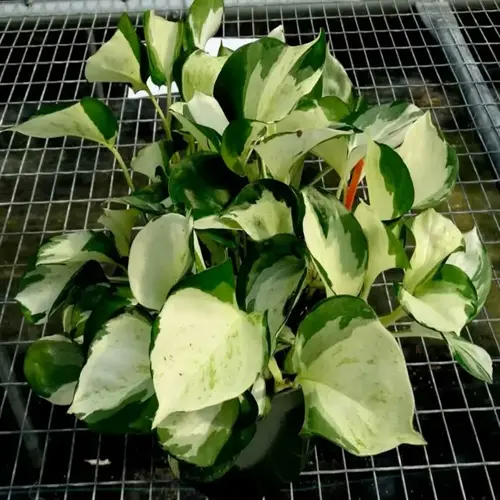

Water your Satin Pothos only when the top inch of soil is dry, not on a fixed day each week. The right satin pothos watering frequency depends on how fast the pot dries out, and that changes with the season, the light, and the room. So skip the calendar and let the soil tell you when.
Cool, gritty mix presses back when I check the soil in my own Argyraeus on the bathroom sill, finger pushed past the surface crust. It still holds water, so the can goes back on the shelf. A day or two later the same spot feels dry and crumbly, and that is when I pour. My finger reaches into that pot far more often than the watering can ever leaves the shelf. The bathroom stays humid from showers, so this plant drinks slower than the one by a sunny kitchen window.
The goal is soil that stays lightly moist, never soggy. Roots need air pockets in the mix to breathe, and water fills those pockets every time you pour. Once the soil dries a bit, air returns and the roots recover. Keep the mix wet all the time and those roots start to drown. Satin Pothos grows slow, so it sips rather than gulps, which means a heavy hand with the can does more harm than good.
That is where overwatering root rot comes in, and it is the most common way people kill this plant. Constantly wet soil suffocates the roots, then soft brown rot sets in below the surface. By the time the leaves yellow and droop, the damage runs deep. A plant that dries out for a day forgives you. One sitting in a swamp often does not. If you ever lift the pot and the roots smell sour or look mushy and dark, you have watered too much for too long.
To know when to water, feel the top inch of soil with your finger, about 2.5 cm down. Dry means pour, damp means wait. In warm months that works out to roughly weekly, since heat and active growth pull water through fast. In winter the plant slows down and the mix can stay wet for two weeks or more. Always test rather than guess, because the same plant drinks at a different pace from June to January. Bigger pots and denser soil also hold water longer, so a fixed schedule that works for one plant fails for the next.
Other things change how fast that top inch dries out. A plant in bright indirect light uses water faster than one in a dim corner. A small pot dries quicker than a deep one, and a terracotta pot pulls moisture out through its walls. Dry indoor air in winter from heating can fool you too, drying the surface while the core stays wet. So push your finger past the crust and feel what is really going on underneath before you reach for the can.
A few simple habits keep the roots safe and take the worry out of watering.
- Drainage: Use a pot with holes in the bottom so extra water can escape instead of pooling around the roots.
- Empty the saucer: Tip out any water that collects in the saucer within an hour of watering, since standing water keeps the soil too wet.
- Slow down in winter: Water less often once growth stalls in the cold months, and check the soil before each pour.
When you do water, pour until it runs out the drainage holes, then let the pot fully drain. This soaks the whole root ball and flushes out built-up salts. After that, leave it alone until the top inch dries again. I always check by hand first and never water on a set day, no matter what the calendar says. Touch the soil, trust what you feel, and your Satin Pothos will stay healthy for years.
Read the full article: Satin Pothos Care: Silver-Leaf Vine Guide