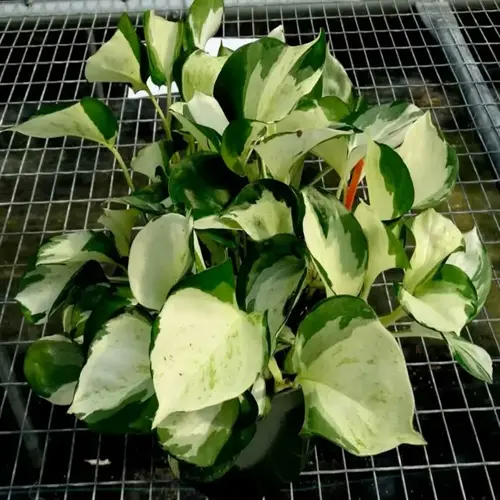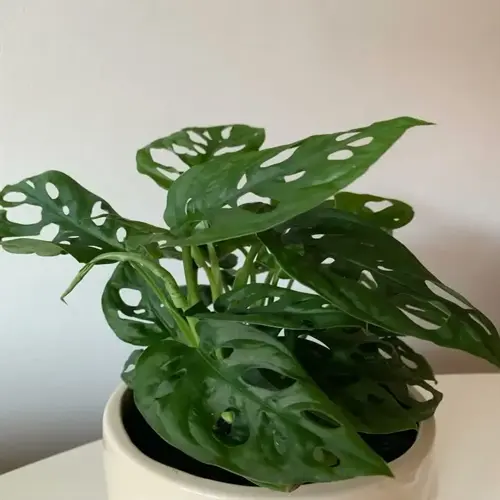

Walk through any plant shop and you will see this vine tagged as satin pothos or even silver philodendron. Both labels miss the mark. The plain truth is that satin pothos not a pothos is the accurate way to think about it. It is not a true pothos, and it is not a philodendron either. It just looks enough like one to borrow the nickname.
The plant on that shelf is Scindapsus pictus. That is its own genus in the arum family. True pothos sits in a different genus called Epipremnum. Philodendrons live in yet another genus. So three plants, three genera. All of them share one big family, Araceae. That shared family is why they trail, climb, and grow heart-shaped leaves in such similar ways. The family link is real. The genus is not the same at all.
The fastest way to tell them apart is the leaf. A golden pothos has glossy, almost waxy leaves that bounce light back at you. Satin pothos has a matte, satin finish dusted with silver markings. That soft, velvety sheen is where the satin name comes from. Run your thumb across one leaf and it feels smooth and dry, not slick or shiny.
Set a satin pothos vs pothos side by side and the contrast jumps right out. The satin plant shows silver splashes over a deep, grey-green base. A golden pothos leans yellow-green with creamy streaks. The leaf shape rhymes, but the color and texture do not. That is the quickest field test you can run in a store. Tilt both leaves toward a window. The pothos throws a clear glare. The satin one stays soft and flat. You will never confuse the two again once you spot that difference.
Check the leaf surface before you buy. A matte, silver-marked leaf means Scindapsus pictus. A bright, glossy leaf means a true pothos.
The science backs up the split too. The plant got its formal name way back in 1842. They baked the look right into that name. Pictus is Latin for painted. It points to those silver markings that seem brushed onto each leaf by hand. So the painted name has been on the books for well over a century. That is long before any shop tag ever got it wrong.
Why does the wrong label still stick around? Garden centers want a name people already know, and pothos sells fast. Marketing beat botany years ago. The nickname spread through stores and plant tags faster than anyone could fix it. You will likely keep seeing it sold this way for a long time, mislabel and all. Knowing the truth just makes you a smarter shopper.
Here is the good news for your shelf. The mix-up changes the name, not the care. Scindapsus pictus wants the same bright, indirect light that keeps a true pothos happy. It likes the same dry-out-between-waterings routine too. So you should treat it just like a pothos. Water it when the top inch of soil feels dry. Keep it out of harsh direct sun. Do that and it will reward you, even though it is a different plant under the hood.
Knowing the real genus still pays off when you shop. Search for Scindapsus pictus, not satin pothos. You will land on care notes that match the actual plant. You will also find the right variety names, like Exotica or Argyraeus. Buy by the true name and you always get the plant you wanted. The label may stay wrong for years, but now you can see past it.
Read the full article: Satin Pothos Care: Silver-Leaf Vine Guide