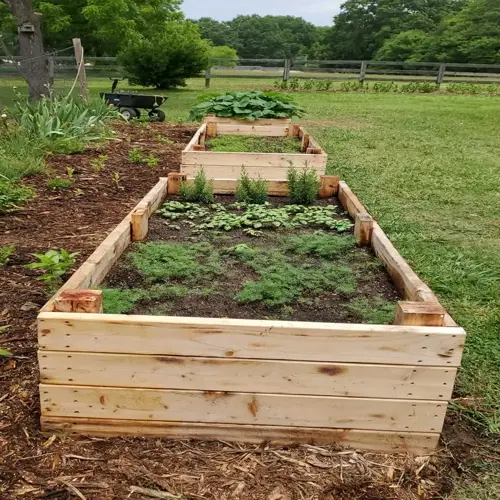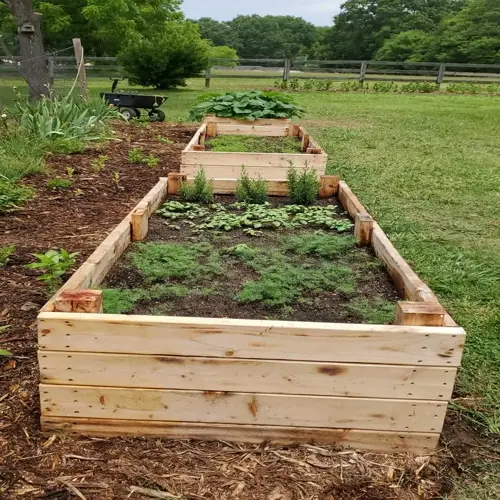

"Where's your compost bin?" my neighbor asked over the fence, eyeing the damp back corner. All she could see was flat cardboard and a layer of wood chips I had spread that morning. "There isn't one," I told her. "The bin is the bed." Six months later I dug into that same corner and pulled out a handful of dark, crumbly soil, formed right where it lay. I never hauled a thing in or out.
That answers the sheet mulching vs composting question in one move. The main difference is location. Sheet mulching breaks material down in place, right on the ground you want to plant. Composting breaks it down in a pile first, then you move the finished product wherever you need it. Same biology, two very different setups.
A compost pile works by concentration. You stack greens and browns together so they heat up, and that heat speeds the breakdown into finished compost. Then you carry that compost out and spread it. The trade is that you handle every shovelful twice, once into the pile and once back out onto the garden.
Sheet mulching skips the second trip. You lay thinner layers of cardboard, compost, and mulch flat on the lawn, and they rot slowly in place over months. There is no pile to turn and nothing to move. The microbes, worms, and fungi do the work right under the spot you plan to plant.
Layers break down right on the ground where you want the bed, converting lawn into soil in place over months with no pile to turn or move.
Materials break down in a pile or bin, heating up to make finished compost that you then carry and spread wherever it is needed.
The two methods overlap more than most people think. Sheet mulching has another name. Gardeners call it lasagna composting, or composting in place. It is the same rotting process, just spread out flat instead of stacked up. Oregon State University Extension uses that exact name in its guide EM 9559. The methods even feed each other. A few inches of finished compost from your pile often becomes one of the layers inside a sheet mulch bed.
Timing splits them too. A hot compost pile can finish in a few weeks if you turn it and keep the mix right. Sheet mulching runs cold and slow, so the layers need several months on the ground before the cardboard rots and roots can push through. That is why most gardeners lay a sheet mulch bed in fall and let winter break it down for a spring planting.
Both share the same goal, which is to build soil that holds water and grows healthy plants. They just take different paths to get there. One makes a portable product you can drop anywhere. The other rebuilds the ground under your feet. You never lift a wheelbarrow across the yard to do it.
So which one fits your job? Pick composting when you want finished compost you can carry to many spots. I use mine for topping containers, feeding seedlings, and side-dressing rows. The pile gives you a flexible material on demand. It also handles kitchen scraps better. Burying food waste under flat cardboard can draw animals, so scraps belong in a bin.
Pick sheet mulching when you want to turn one specific patch of lawn into a bed without moving material twice. Smother the grass in fall, layer it, and let winter do the rotting so the bed is ready by spring. You skip the digging, you skip the hauling, and the soil forms exactly where you wanted the garden all along.
Read the full article: Sheet Mulching: A Complete How-To Guide