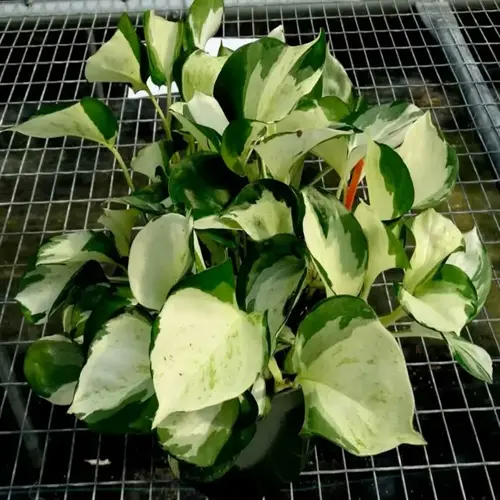

A Satin Pothos is a long-lived houseplant that survives for many years with steady, simple care. There is no short clock on this plant. The satin pothos lifespan runs well past a decade when you give it the right light and water. Cuttings can keep the same plant going far longer than that. Your plant can easily outlast the furniture it sits on.
I pulled my 'Argyraeus' off the shelf last week and counted the fresh silver leaves. It has run for three years on the same north-facing bathroom windowsill. I water it when the top inch of soil dries, and that is about all I do. No special feed. No grow light. No yearly move to a bigger pot. It just keeps growing, season after season, in a spot most people would call too dim for a houseplant.
The reason for that staying power sits in the plant's biology. Satin Pothos is a slow-growing tropical evergreen vine in the Araceae family. That is the same group as peace lilies and philodendrons. It is a perennial, so it does not die back with the seasons the way an annual flower does. There is no built-in end date written into its growth, which is why your plant can keep going for so long.
That sets it apart from the plants you replant every year. An annual finishes its whole cycle and dies on purpose. Your Satin Pothos just keeps adding leaves and length as long as its roots stay healthy. In good conditions, a single plant can grow for many years with no natural reason to quit. So when you ask how long it lives, the honest answer is as long as you keep its roots happy.
So what actually ends most of these plants? Almost never old age. The usual killer is root rot from soggy soil. When the roots sit in water too long, they suffocate and rot, and the plant collapses from the bottom up. Overwatering takes out far more Satin Pothos than neglect ever does. If you tend to fuss over your plants, this is the trap to watch for.
Stick a finger into the pot before you water. If the top inch (2.5 cm) of soil still feels damp, wait. Dry soil is easy to fix, but rotted roots usually are not.
Light matters almost as much as water for your plant. Keep it in bright indirect light so it has the energy to hold its leaves and keep growing. Harsh direct sun scorches the silver markings on the leaves. A dim corner leaves your vine leggy and weak. A spot near a window with a sheer curtain hits the sweet spot, and that is exactly where mine thrives.
A little upkeep stretches the years out further for you. Refresh the soil every couple of years so the roots get fresh nutrients and good drainage. Old, compacted soil holds water longer and quietly raises the rot risk. A bigger pot is optional. Fresh soil is not. Take the chance to check the roots while you are in there, and trim off any that look brown or mushy.
Here is the part that makes the lifespan question almost moot. You can propagate satin pothos from a simple stem cutting. I keep a rooted cutting of my 'Argyraeus' in a jar on the kitchen sill as a spare. Snip a piece with a node or two, root it in water or moist soil, and you have a new plant carrying the exact same genetics as the original. That cutting can outlive the parent and start the whole cycle again.
Keep one rooted backup going and you never really lose the plant. The original may fade after many years, but its clone carries on. Give it bright indirect light, water it only when the top inch is dry, refresh the soil now and then, and root a cutting as insurance. Do that, and the satin pothos lifespan on your shelf becomes almost open-ended. It will outlast most houseplants you bring home.
Read the full article: Satin Pothos Care: Silver-Leaf Vine Guide