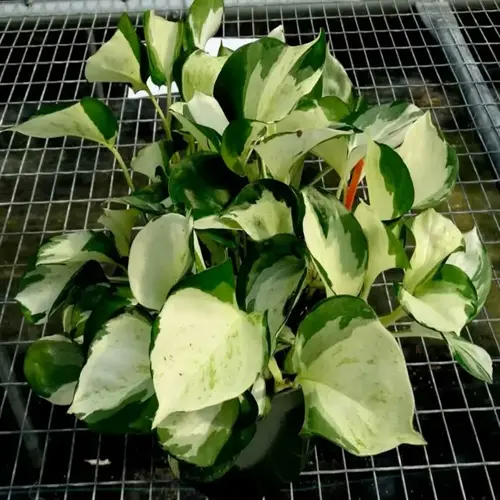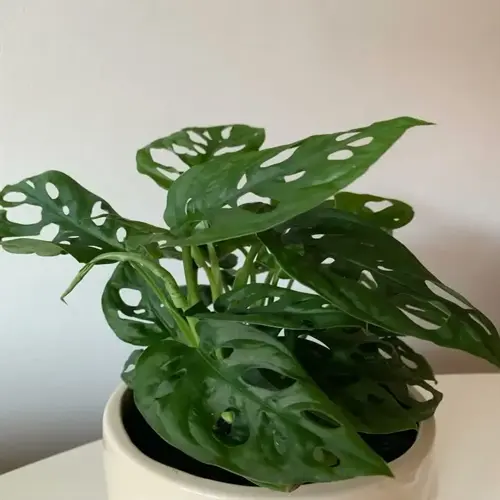

On a dim corner shelf sits a forgotten plant. Its glossy green leaves still trail down the wall weeks after the last drink of water. The soil is bone dry, the light is poor, and the vine keeps growing anyway. That stubborn refusal to die is the whole story behind the devil's ivy name. The plant is golden pothos, and it earned the nickname because it stays green and alive even when everything works against it.
Devil's ivy is the common name for golden pothos, known to botanists as Epipremnum aureum. People started calling it that because the vine is nearly impossible to kill. You can skip watering, push it into a low-light room, and forget it for a month. It holds its color and keeps putting out new leaves. A plant that survives that kind of neglect feels almost unnatural, so the devilish label stuck.
The name also points to how the plant spreads. Devil's ivy roots fast and climbs hard, and it keeps going where fussier plants would quit. In warm climates outdoors it can take over a fence or a tree trunk in a single season. You will see it pour over a wall before you think to trim it back. That same drive is what makes it such a forgiving houseplant. The toughness reads like a curse in the garden. On your shelf, it is a gift. You get a plant that shrugs off your mistakes and keeps growing while you are busy with other things.
Here is where you can get tripped up. Devil's ivy is not the same plant as satin pothos. Satin pothos is Scindapsus pictus, and it sits in its own genus, separate from Epipremnum. So the satin pothos vs pothos question really means two different plants. They share the pothos label and the same easy-care reputation, but that is where the overlap ends. The names sound alike, yet the science draws a clear line between them.
Devil's ivy has glossy green or yellow-green leaves. Satin pothos has matte leaves dusted with silver markings. Look at the shine and the silver to know which one you are holding.
The confusion makes sense once you see them side by side. Both are trailing aroids, both get sold as beginner houseplants, and both forgive a missed watering. But the leaves give it away every time. Devil's ivy leaves are smooth and shiny in green or yellow-green tones. Satin pothos leaves look matte and carry a frosted silver pattern across the surface. When you hold one in each hand, you cannot mistake the shine for the silver. The two names point to two distinct plants, even when the shop tag blurs the difference for you.
Care needs split them a little too, so your choice of spot matters. Golden pothos handles a dim hallway or an office with no window for weeks at a time. You can park it almost anywhere and walk away. Satin pothos leans a bit more on light to keep its silver markings bright, so give it a spot with steady indirect sun. Both still rank as low-fuss plants. You will not lose either one over a forgotten weekend, and neither needs you to fuss over feeding or repotting often.
So pick based on what you actually want. If you need a rugged, near-unkillable vine for a rough corner, get golden pothos, the true devil's ivy. If you want that soft silver shimmer and can give it a brighter spot, go with satin pothos instead. Both will reward you with long trailing growth and very little work. But only one truly earns the devil's ivy name and the reputation that goes with it.
Read the full article: Satin Pothos Care: Silver-Leaf Vine Guide