Houseplant · Crassulaceae
Aeonium
Aeonium
Hand it bright light, gritty soil, and a dry summer rest, and this winter grower keeps its rosettes plump and tight.
Full sun
Every 7–21 days
41–77°F · 5–25°C
USDA 9–11
Overview
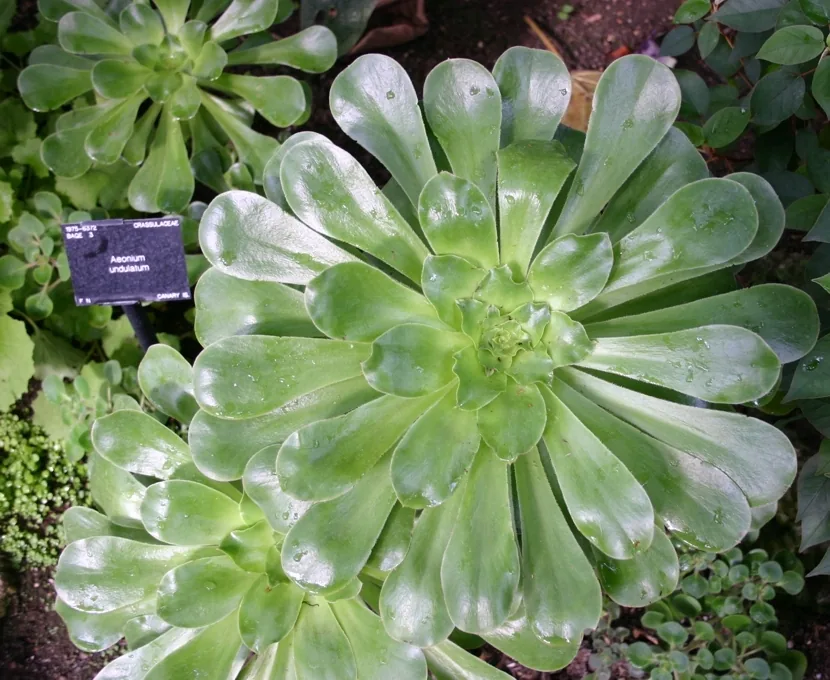
Aeonium piles its fleshy leaves into neat rosettes at the tips of its stems, a succulent from the stonecrop clan that thrives as a houseplant or out in a mild garden. The shapes are a treat to collect, swinging from a low saucer flat on the ground to a branching mini-tree. Best of all, it lives up to its easygoing rep: hand it sun and a gritty mix, and it pretty much takes care of itself.
The real fun is its upside-down calendar. Where most plants race ahead in summer warmth and coast through winter, Aeonium flips the script entirely. It powers up during the cool season and slides into a summer rest when the heat peaks, drawing its rosettes shut while lower leaves shrivel and drop. First-timers tend to panic at that sight, but it is the plant kicking back, not giving up.
Across the genus the variety is a delight, from snug windowsill rosettes to sprawling clumps in a rainbow of tones. Plenty stay a fresh green, while the celebrated black rose carries rosettes so deeply pigmented they pass for purple-black. Plant it outdoors in the right climate and it builds a sculptural mound, while a pot keeps it as a tidy, fuss-free pick for a sun-drenched sill.
Care
The short version: park it in full sun to bright light and a gritty, fast-draining mix. Splash water only once the soil has dried in the cool growing season, dial it way back through the summer rest, and feed at half strength while it is putting on growth.
Light
Pour on the full sun to bright light, and it happily handles partial sun or a bright indirect indoor corner too. Generous light is what packs the rosettes tight and compact. Cheat it of light and the stems stretch, lean, and open up bare gaps between the leaves.
Water
Hold off until the soil has dried out, and never forget you are tending a winter grower. Across the cool active months a drink every 7 to 21 days hits the mark, but once summer dormancy sets in, keep it far drier and leave the shut rosettes alone. Wet summer soil is the quickest route to a rotted stem.
Soil
Set it into a gritty, fast-draining mix that lets water rush straight past the roots. Aim for a pH of 6.0 and 7.0 to keep things comfortable. Sharp drainage beats rich soil every time here, because lingering moisture is the one thing this succulent simply will not tolerate.
Temperature
Aeonium cruises along between 41°F to 77°F (5°C to 25°C). Frost is a real threat since it carries no cold hardiness, so shield it from any freeze. Push past the high end of that band and the plant eases itself into its summer rest.
Humidity
Count this succulent among the fans of low humidity, since it brushes off dry indoor air without complaint. No moisture target needs chasing. A breath of fresh air moving around the rosettes beats any humidity tray hands down.
Feeding
Reach for a balanced fertilizer cut to half strength, timed to the cool active-growth stretch from fall through spring. A single feeding a month does the job. Hand it nothing during summer dormancy, when the resting plant is barely drinking anything in.
Pruning
Trim leggy or bare stems back down to a leaf rosette to spark fresh branching. Clip away faded flower stalks and any dead lower leaves to keep it looking sharp. Do not toss what you cut, because those pieces strike roots with ease.
Repotting
Move it up a pot every 2 to 3 years, lining it up with the start of the cool growing season so it settles in just as it wakes. Bump it when roots peek from the drainage holes, the mix drains too quickly, or the rosettes press against the pot rim. A batch of fresh gritty mix primes it for the next run of growth.
Size & spacing
Expect heights of 6 to 35 inches (15 to 90 cm) depending on the type, paired with a spread of 6 to 24 inches (15 to 60 cm). Low saucer forms cling near the soil while branching tree types climb for genuine height. It grows at a moderate clip, so what you plant stays close to what you get.
Troubleshooting
Nearly every Aeonium hiccup boils down to water and light. The plant flags problems early through soft tissue, stretched stems, or a summer slowdown that looks scarier than it is. Spot your symptom in the list below and tweak your care before a minor wobble grows into real trouble.
Squishy, discolored tissue at a rosette's base or along the stem
A squishy stem or a see-through base spells overwatering rot, and it pounces hardest on a summer-dormant plant left sitting in damp soil. Act fast: slice off every soft, discolored chunk until you hit firm tissue, let those healthy cuttings dry and callus, then start them again in dry gritty mix. Quick-draining soil plus water that only flows during active growth shuts the door on a repeat.
Fix:
- Cut away all rotted tissue back to firm, healthy stem
- Let cuttings callus, then re-root in dry gritty mix
- Withhold water until new roots form
Rosettes folding inward and shedding their oldest leaves once summer peaks
Relax, because this is textbook summer dormancy rather than a plant on its way out. The whole growth engine runs in the cool season and idles when summer bakes, so the heart of each rosette stays solid while the outer leaves tuck inward and let go. Pull back on watering, throw a bit of shade over it during fierce afternoons, and watch it surge back to life once fall cools things off.
Fix:
- Reduce watering and let the plant rest
- Provide light shade from intense summer afternoon sun
- Resume normal care as temperatures cool in fall
Stems racing upward bare, with foliage bunched at the very top
When stems shoot up naked with rosettes stranded at the top, the plant is shouting for more light. Each stem cranes toward the window and the leaves spread apart as the rosette hunts for brighter rays. Shift it to a sunnier perch that catches a few hours of direct light, and feel free to chop those leggy rosettes off and re-root them for a tight, fresh start.
Fix:
- Move to a brighter location with several hours of direct sun
- Behead leggy rosettes and re-root them to restart compact growth
Toxicity
Here is the part pet owners and parents love: Aeonium counts as non-toxic and pet-safe. The ASPCA leaves it off the toxic list for cats and dogs, and it threatens no poisoning to the rest of the animals sharing your home or yard. One curious chomp causes zero harm, so it can claim any windowsill spot without a second thought.
Safe for
People · Cats · Dogs · Horses · Rabbits · Livestock · Birds
Cats Safe
A cat that bats at a leaf or takes an experimental bite walks away just fine.
Dogs Safe
Should a dog gnaw on a rosette, there is no toxin in play and nothing to fear.
Horses Safe
A horse grazing on it runs into zero poisoning danger.
Rabbits Safe
Rabbits stay perfectly fine near it, with the usual reminder that greens belong as just a slice of their daily food.
Livestock Safe
Goats, sheep, and cattle can hang around it with no poisoning concern at all.
Birds Safe
Both pet birds and backyard chickens keep safe sharing space with it.
People Safe
Even a hands-on toddler who pokes and grabs is in no danger from this one.
Varieties
Aeonium shows up in a wild spread of forms, from flat ground-clingers to upright stems that mimic small trees. The trio below appear most often and capture just how far that range stretches.
Aeonium 'Zwartkop' (black rose)
Branching stems shoot upward and hoist rosettes of such deep purple that they look near-black, which is exactly how it landed the black rose name.
Aeonium arboreum
Vivid green rosettes crown sturdy, woody stems shaped like a tiny tree, lifting the plant to real stature.
Aeonium tabuliforme
This one presses a flat, dish-shaped rosette right against the soil, its leaves stacked into tight, crowded spirals.
How to propagate
Few succulents multiply as breezily as Aeonium, and the cool growing season is your prime window. Clip a cutting or snap off a side rosette, and a brand-new plant is yours for almost no effort.
Stem cuttingsEasy
During the cool active growing season (fall to spring) · 2 to 4 weeks to root after callusing
Stem cuttings strike with hardly any effort and reward you fast. Snip one in the cool growing season, give the cut end a few days to callus over, then nestle it into gritty mix. Roots push out in 2 to 4 weeks, though bear in mind that many Aeonium rosettes are monocarpic, so a rosette dies once it flowers.
Offsets & pupsEasy
During the cool active growing season · 2 to 4 weeks once detached and rooted
Branching kinds sprout side rosettes that come away as instant new plants. Twist off a pup in the cool growing season, sink it into gritty mix, and it digs in within 2 to 4 weeks. Keep in mind that many Aeonium rosettes are monocarpic, so a rosette dies once it flowers.
Myths
Aeonium thrives on the same steady watering routine as most houseplants.
Far from thirsty, this winter-growing succulent is built for drought and sips only a little. Run it almost bone-dry all through summer dormancy, and reach for the watering can only after the soil has dried out in the cool growing stretch.
Closed-up rosettes and a flurry of summer leaf drop signal a plant past saving.
Not at all, because that closed-up rosette is just a winter grower catching its breath in summer dormancy. Cool fall weather flips the switch and growth roars back, so leave it dry and let the rest play out.