Houseplant · Crassulaceae
Jade Plant
Crassula ovata
Give it bright light and a full dry-out between waterings, and the jade plant will keep outlasting houseplant after houseplant on the shelf.
Full sun
50–75°F · 10–24°C
USDA 10–11
1–6 ft · 0.3–1.8 m
Overview
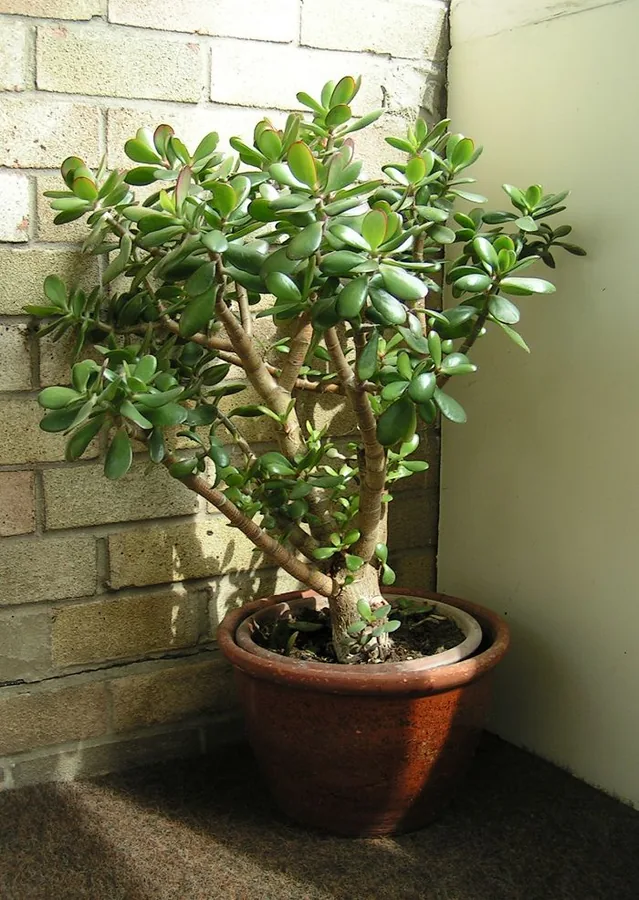
The jade plant is a succulent from southern Africa that has earned its spot as one of the toughest, most rewarding houseplants going. It banks water in thick, glossy leaves and a stout woody trunk, which is exactly why it powers through the neglect that flattens fussier plants. Park it in a bright window, step back, and watch it build itself into the shape of a small tree.
It grows slowly, but it plays the long game and wins. A jade can thrive for decades and climb to 1 to 6 feet (30 to 180 cm) indoors, thickening into a gnarled, bonsai-like form year after year. Its folk names, money plant and lucky plant, are fun to trot out, though the real payoff is how forgiving it is to grow.
The one thing that trips it up is a soggy pot. Nearly every jade that dies drowned in too much water, not too little. Nail the watering and drainage and the rest of its care practically runs itself, leaving you free to enjoy the plant.
Care
The short version: give it bright light with some direct sun, pot it up in a gritty fast-draining mix, and water only once the soil has dried out completely. Keep it warm, feed it lightly through the growing season, and hold off on overwatering.
Light
Jade craves bright light with several hours of direct sun, so aim it at a south-facing window and let it soak it up. Skimp on light and the stems stretch and lean, going pale and leggy as they strain toward the glass.
Water
Water it deeply, then hold off until the soil has dried out completely before the next drink, and dial way back in winter. Overwatering is the number-one jade killer, while too little just shrivels the leaves, and they bounce right back after a good soak.
Soil
Pot it in a gritty cactus or succulent mix that drains fast, always in a pot with drainage holes. A slightly acidic pH of 6.0 to 6.5 keeps it thriving, and that loose, sandy texture stops water from pooling around the roots.
Temperature
Everyday room warmth hits the mark, around 50°F to 75°F (10°C to 24°C). Keep it clear of cold drafts and never let it drop below 50°F (10°C), which can set off a sudden leaf drop.
Humidity
This dry-climate plant runs happiest in low humidity and hates damp, stuffy air. Skip the misting, because your normal household air already does the job.
Feeding
Feed it monthly through spring and summer while it's charging along, then cut it off for winter. Reach for a balanced or low-nitrogen succulent fertilizer diluted to half strength, since jade grows slowly and runs on very little.
Pruning
Pinch or prune in spring to drive fuller, tree-like growth and to clear out leggy or weak stems. Jade shrugs off hard pruning, and every piece you snip roots easily as a fresh cutting, so keep the trimmings and grow more.
Repotting
Repot it every 2 to 3 years in spring, or the moment roots burst through the drainage holes and it turns top-heavy. Bump it into a slightly larger pot with fresh gritty mix, then go easy on the water for a week or so.
Size & spacing
Indoors a jade climbs to 1 to 6 feet (30 to 180 cm) tall with a spread of about 1 to 3 feet (30 to 90 cm). It grows slowly, so set it in a stable, heavy pot to keep that thickening top from tipping the whole thing over.
Troubleshooting
Nearly every jade hiccup traces back to water and light, so the fix is usually close at hand. Soft, mushy growth means too much water, while a wrinkled or stretched plant is begging for a drink or a brighter spot. Match what you see below and you can turn it around long before the plant is lost.
Soft, mushy stems and yellowing at the base
A base gone soft, dark, and yellow spells root and stem rot, which strikes when water lingers around the roots too long. Don't give up on it: grab a clean blade, cut away every rotten scrap back to firm tissue, let the wounds dry, or launch a fresh plant from a healthy cutting. Then switch to watering only once the soil dries out completely and the comeback is on.
Fix:
- Stop watering immediately and allow the soil to dry out
- Remove the plant, cut away rotted roots and tissue, and let cuts callus
- Repot into fresh, fast-draining gritty mix
- Propagate healthy stem or leaf cuttings if the base is lost
Leaves dropping all at once
A jade that dumps leaves in a hurry is reacting to stress from a sudden change in light, temperature, or watering. Track down the recent shake-up, whether a move to a new spot, a cold draft, or a leap from dry to soaked. Lock it into one steady home and routine, keep it clear of cold below 50°F (10°C), and let it find its feet at its own speed.
Fix:
- Stabilize location, light, and watering routine
- Protect from cold drafts and temperatures below 10°C
- Allow the plant to acclimate gradually to new conditions
Wrinkled, shriveled, or drooping leaves
Soft, bendy leaves over bone-dry soil point straight to underwatering, since the plant has spent the water it banked in those leaves. Pour it a deep drink until water runs from the bottom, then hold off until the leaves lose a little firmness before the next round. Watch them bounce back plump and firm within a day or two.
Fix:
- Water thoroughly until it drains from the bottom
- Resume a regular dry-out watering cycle
- Move out of excessive heat if leaves continue to shrivel
Stretched, leggy stems with gaps between leaves
Stems shooting up with wide gaps between the leaves shout for more light, a state gardeners call etiolation. Shift it to a bright south-facing window with a few hours of direct sun, and spin the pot now and then so it fills out on every side. That stretched growth won't snap back, but prune the leggy stems and the plant rebuilds a compact, tree-like shape fast.
Fix:
- Move to a brighter spot with several hours of direct sun
- Rotate the plant periodically for even growth
- Prune leggy stems to restore a compact shape
Toxicity
Keep the jade plant away from cats and dogs. The ASPCA lists it as toxic to both, and a pet that chews the leaves can vomit, turn lethargic, walk unsteadily, and develop a slowed heartbeat. Strangely, no one has ever identified the exact toxin, so the safe play is simply to set the plant where pets can't get at it. People are essentially fine around it.
Toxic to
Cats · Dogs · Horses · Rabbits · Livestock · Birds
Safe for
People
Cats Moderate
A cat that chews the leaves will usually vomit and turn dull and sluggish. Keep sharp eyes on any wobbly, uncoordinated walk, and after a bigger bite, a heartbeat that slows below normal.
Dogs Moderate
A dog that gets into jade tends to throw up and drop into a quiet, low-energy slump. Some go shaky on their feet, and a slowed heartbeat can trail a larger mouthful, so act quickly if that shows.
Horses Caution
Horses aren't a documented target, yet no one has cracked the toxin behind jade's effect. Until they do, keep the plant well out of reach rather than gamble on it being harmless.
Rabbits Caution
No solid record shows how jade hits rabbits, and a succulent like this has no business in their diet anyway. Treat it as off-limits and block any nibbling.
Livestock Caution
Grazing animals haven't been tested against this plant, and with the active compound still a mystery, the smart move is to fence it off from goats, sheep, and cattle.
Birds Caution
No one has confirmed what jade does to birds, but a curious parrot will gnaw at nearly anything. Keep it clear of cages and perches and skip the risk.
People Low
People are basically in the clear, and jade doesn't count as a hazard to handle or live alongside. It still isn't food, so skip the taste test, and steer small children away from popping leaves in their mouths.
Helpline numbers

United States
ASPCA Animal Poison Control: (888) 426-4435 (fee applies)

United Kingdom
Animal PoisonLine: 01202 509000 (fee applies)

Australia
Animal Poisons Helpline: 1300 869 738
Varieties
Beyond the everyday jade wait a handful of cultivars grown for their wild leaf shapes and colors. These are the ones worth hunting down.
'Gollum'
Its leaves shoot out as narrow tubes capped with reddish suction-cup tips, giving the whole plant a striking coral-like look.
'Hobbit'
Its leaves curl and roll back into little trumpet shapes on a plant that stays noticeably more compact than 'Gollum'.
'Hummel's Sunset'
Its golden-yellow foliage fires up red margins that deepen under bright light and cooler temperatures.
'Variegata' (Tricolor)
Each leaf splashes creamy white and green streaks and often flushes pink along the edges.
How to propagate
Few plants are as much fun to multiply as a jade. A single dropped leaf or a snipped stem roots almost on its own, which is how one plant snowballs into a whole windowsill of them.
Leaf cuttingsEasy
Spring or summer during active growth · 2 to 4 weeks to root, several weeks more to form plantlets
One leaf launches a whole new jade, and that never stops being fun to watch. Snap off a healthy leaf in spring or summer while the plant is growing, let the cut end dry and callus for a few days, then lay it on or barely into gritty mix. It roots in 2 to 4 weeks and takes several weeks more to push out tiny plantlets, so it is the slow but nearly foolproof route.
Stem cuttingsEasy
Spring or summer during active growth · 2 to 3 weeks to root
Chasing a real plant faster? A stem cutting delivers. Take one during the spring or summer growth surge, let the cut callus for several days, then plant it in dry succulent mix. Roots break out in around 2 to 3 weeks, and it establishes quicker than a leaf because it starts life already as a piece of stem.
Myths
The jade plant is the true money plant that brings wealth, the same one sold as a trailing vine.
Money plant is a folk name that gets stuck on all kinds of unrelated species. Jade is a succulent, while the trailing vine sold under that name is usually a pothos or a Pilea, so the two aren't close relatives at all. The name springs from folklore, not from any plant that actually grows wealth.
Jade plants are perfectly safe to keep in a home with pets.
The ASPCA flags jade as toxic to cats and dogs, and the wild part is that no one has nailed down the exact compound behind it. A pet that eats it can vomit, turn lethargic, walk unsteadily, and develop a slowed heartbeat. Keep it well out of reach of cats and dogs.