Houseplant · Crassulaceae
Ghost Plant
Graptopetalum paraguayense
Hand it bright light and a dry rest between waterings, and the ghost plant powers ahead on its own.
Full sun
Every 10–21 days
50–86°F · 10–30°C
USDA 9–11
Overview
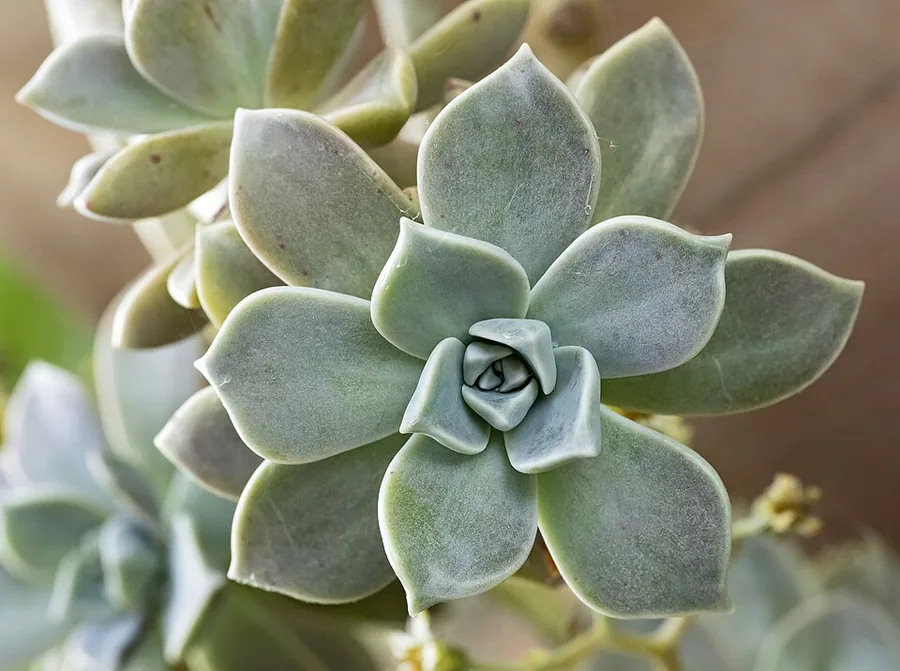
The ghost plant is a tough, rewarding little succulent from Mexico, named for the pale, powdery bloom that wraps its rosettes in a chalky, ghostly glow. It runs with the same family as the jade plant and the houseleeks, banking water in fat, fleshy leaves that swing from gray-blue to soft pink. Chase down an easier plant to grow and you'll come up empty.
It throws low rosettes that trail and spread as the stems stretch out, tumbling over a pot edge or a wall as it ages. The leaves drop at the lightest touch, which startles most people on day one. That very quirk turns into a payoff, though, because nearly every fallen leaf roots itself and kicks off a brand-new plant right where it lands.
Two things drive it: strong light and very sharp drainage. Lock those in and it powers through heat, drought, and stretches of pure neglect. Bury it in damp soil or a dim corner instead and it fires back fast, stretching out and turning soft at the base.
Care
The short version: bright light or full sun, a gritty mix that drains in a flash, and a deep soak only once the soil has dried out completely. Back off a little and it thrives on the neglect.
Light
Give the ghost plant full sun or very bright light and the rosettes stay tight and packed with color. It'll coast along in bright indirect light, but drop any dimmer and the stems stretch while the leaves drift apart.
Water
Soak it deeply, then hold off until the soil goes bone dry, which usually lands every 10 to 21 days. Those fleshy leaves stash their own reserve, so too much water is the real threat, never too little. Overwatering is what kicks off rot.
Soil
Pot it in a gritty cactus or succulent mix that drains in seconds, and steer clear of ordinary potting soil that stays wet. Any pH from 6.0 to 7.5 works, so texture carries far more weight than chemistry.
Temperature
It cruises between 50°F and 86°F (10°C to 30°C) and takes summer heat in stride. It's not frost hardy, though, so haul it indoors or shield it before the cold rolls in.
Humidity
This is a low-humidity plant with no number to chase, right at home in the dry air of most rooms. Damp, stagnant air trips it up, so good airflow beats misting every time.
Feeding
Feed it monthly through spring and summer while it's charging ahead, using a diluted balanced or low-nitrogen succulent feed at half strength. Ease off through the cooler months, and skip rich fertilizer, which only pumps out soft, weak growth.
Pruning
Pruning stays quick and easy. Pull off dead leaves and snip away leggy or stretched stems to keep it compact, and behead any rosette that has shot up too far so you can replant the top.
Repotting
Repot it every 2 to 3 years, or sooner once the rosettes crowd over the pot edge, and do it in spring. Roots bursting from the drainage holes or soil that dries almost instantly are the plant begging for more room.
Size & spacing
Each plant hugs low, around 6 to 12 inches (15 to 30 cm) tall, and fans wider as the stems trail, hitting 12 to 24 inches (30 to 60 cm) across. Leave room for that spread and for fresh rosettes to pack in around the base.
Troubleshooting
Nearly every ghost plant hiccup traces to one of two culprits: too much water or too little light. Better yet, both flash warning signs early once you know the tells. Match the symptom below and knock it out before rot or stretch digs in.
Base going soft under watery, see-through leaves
Those glassy, collapsing leaves spell root and stem rot, and it nearly always starts with too much water or soil that stays soggy. Slide the plant out and hunt through the roots and lower stem for anything black, soft, or smelly. Cut away every rotten bit, park the healthy rosettes or cuttings to callus for a few days, and relaunch them in dry gritty mix.
Fix:
- Stop watering immediately
- Remove the plant and cut away all rotted tissue
- Let healthy cuttings or rosettes callus for several days
- Replant in dry gritty succulent mix
Rosette stretching skyward with gappy, pale leaves
That drawn-out, loose look is etiolation, the plant straining after light it simply isn't getting. Watch the stems tilt toward the window as the once-snug rosettes open up and flatten. Shift it into several hours of direct sun, behead the stretched rosette and replant that top, then let the leftover stem surprise you with a burst of fresh offsets.
Fix:
- Move to a brighter location with several hours of direct sun
- Behead the stretched rosette and replant the top
- Propagate the bare stem to produce new offsets
Toasted brown patches once the plant hits full sun
Those brown blotches are sunburn, the toll of hurling a plant straight from soft indoor light into blazing full sun. They land on the most exposed leaf faces within a day or two of the move. Whisk it back into bright but shaded light, dial the sun up over a week or two, and let the plant shed the scarred leaves on its own schedule.
Fix:
- Move to bright but slightly shaded light temporarily
- Acclimate gradually to stronger sun over one to two weeks
- Leave scarred leaves in place until they are naturally shed
Toxicity
Great news for a home packed with pets or small kids. The ghost plant is non-toxic across the board, with the ASPCA listing it as safe for cats and dogs and no toxin in it to trouble other pets or people. The worst a stray nibble delivers is a bit of passing stomach upset from the bulk.
Safe for
People · Cats · Dogs · Horses · Rabbits · Livestock · Birds
Cats None
Cats can prowl right past it without a care. Nibble a leaf and a cat might feel a bit full for a moment, but nothing in the plant is poisonous.
Dogs None
Dogs get the all-clear here. The ASPCA marks it non-toxic, so a chewed leaf rarely stirs up more than a brief patch of stomach upset.
Horses None
Horses run no risk from this succulent, oddball stable snack that it is. A stray mouthful passes with zero harm.
Rabbits None
Rabbits can hop around it freely. The fleshy leaves pack no toxin, so a curious bite comes to nothing.
Livestock None
Goats, sheep, and the rest of the grazers face no poison in this succulent. Shrug off a few eaten leaves as a total non-event.
Birds None
Birds stay in the clear, with no toxic compounds anywhere in play. A pecked leaf might dab a powdery smudge on the beak that simply wipes away.
People None
People, kids included, can handle it or sneak a taste with no trouble at all. The chalky bloom lifts onto fingers but stays completely harmless.
The powdery (farinose) coating on leaves rubs off easily when handled, which is cosmetic and harmless.
Varieties
Only a couple of forms show up with any regularity, and both trade the plain gray-blue rosette for a hit of extra color. These two are the ones to chase.
Graptopetalum paraguayense 'Pink Form'
Pour on strong light or cool nights and its rosettes blaze pink to rose, while the plain form holds a cool chalky gray-blue.
×Graptosedum (Graptopetalum × Sedum hybrids)
These sedum crosses grab the ghost plant's shape and run with it, delivering brighter colors and a faster, more trailing habit.
How to propagate
Almost no plant multiplies as eagerly as this one. A single leaf, an offset, or a beheaded rosette will all root with barely a nudge from you.
Leaf cuttingsEasy
Spring through summer during active growth · 3 to 6 weeks to root and form new rosettes
Here's where the fun kicks in. Through spring and summer, twist off a whole healthy leaf, let the broken end callus for a few days, and lay it on dry gritty mix. Roots and a tiny rosette pop up in about 3 to 6 weeks, and dropped leaves race to do the exact same thing wherever they land.
Offsets & pupsEasy
Spring through summer · 2 to 4 weeks
All through spring and summer the plant fires out rosette offsets along its stems. Snap one off, let it callus for a moment, plant it, and watch it dig in within 2 to 4 weeks.
Stem cuttingsEasy
Spring through summer · 2 to 4 weeks
In the warm months, behead a rosette with a short chunk of stem and let the cut callus over. Drop it back in soil and it roots eagerly, grabbing hold in roughly 2 to 4 weeks.
Myths
That powdery, dried-out finish means the plant is begging for water constantly.
Don't let the dusty finish fool you, because that pale, powdery coat is a natural waxy bloom, not a thirst signal. The plant stockpiles water in its plump leaves and much prefers to run dry between drinks. Water it on the dusty look and you'll rot it in record time.
It carries the pet toxicity that runs through much of the succulent world.
Plenty of succulents earn a spot well out of reach, but this one skips that whole worry. The ASPCA lists the ghost plant as non-toxic to cats and dogs, so a curious nibble is nothing to panic about.