Shrub · Garryaceae
Japanese Laurel
Aucuba japonica
The shade-loving evergreen that turns dark corners into gold-dusted color.
Partial shade
Every 7–14 days
USDA 6–10
6–15 ft · 1.8–4.6 m
Overview
The Japanese Laurel (Aucuba japonica) brings life to the shady corners most plants give up on, and it does the job with very little fuss. This evergreen shrub from the family Garryaceae earns its easy reputation, shrugging off poor soil and even urban pollution while holding its glossy leaves all year. Gardeners reach for it again and again to light up deep shade.
Give it room to settle and it climbs to 6 to 15 feet (1.8 to 4.5 m) tall and spreads 4 to 9 feet (122 to 274 cm) wide, building a dense, rounded shape at a slow, steady pace. The gold-dusted forms throw the brightest speckles in deep shade, exactly where you need a spark of color, and the plant grows happily in the ground or in a container indoors.
Here's the rewarding twist: only the female plants carry those bright red drupes that ripen in fall and hang on into spring, and they need a male nearby to do it. Grow the self-fertile Rozannie and you skip that step entirely, picking up berries from a single plant.
Care
The short version: Plant the Japanese Laurel in partial to full shade with good drainage and you've won half the battle. Keep young plants evenly moist while they root, then ease off, since established shrubs handle drought well and resent soggy soil. Feed lightly once in spring, prune in late winter, and shelter it from harsh sun and drying wind.
Light
Partial to full shade is where this shrub truly shines, and it will happily take a touch of partial or morning sun on top of that. Push it into strong direct sun, though, and the leaves scorch. The gold-dusted forms reward you with their best color in deep shade, so the darker the corner, the brighter they glow.
Water
Keep young plants evenly moist while they root, watering roughly every 7 to 14 days, and they'll establish fast. Once settled, the plant turns notably drought tolerant, so let the top half of the soil dry before you water again. Steer clear of soggy, wet ground, which invites root rot.
Soil
This shrub isn't picky and grows in loam, clay, or sandy soil, as long as it's rich in organic matter and drains well. It even shrugs off poor soil and urban pollution, making it a champ for tough city spots. Aim for a pH of 5.5 to 7.0.
Temperature
Cold-hardy and adaptable, the Japanese Laurel takes 0°F to 86°F (-18°C to 30°C) in stride and thrives across USDA zones 6 through 10. Tuck it somewhere sheltered from cold drying wind and it'll sail through winter looking sharp.
Humidity
Average household humidity suits this plant just fine, with no target percentage to chase. Indoors, watch the air though, because very dry indoor air invites spider mites to set up shop on the foliage.
Feeding
A light feeder by nature, this shrub asks for almost nothing at the table. One application of balanced slow-release fertilizer in spring covers its needs for the whole season and keeps the growth steady.
Pruning
Prune in late winter to early spring to shape it, working before new growth pushes since the flowers bloom on new wood. Cut leggy stems back to build a dense, rounded habit, and don't worry about going hard, because it takes heavy pruning in good stride.
Repotting
Repot container or indoor plants every 2 to 3 years to keep them growing strong. Watch for the telltale signs it's outgrown its home: roots circling the pot or sneaking out the drainage holes, water draining straight through, and stunted growth with yellowing leaves.
Size & spacing
Plan for a generous shrub that reaches 6 to 15 feet (1.8 to 4.5 m) tall and 4 to 9 feet (122 to 274 cm) wide as it fills out slowly. Tight on room? Nana stays small, holding to about 3 feet by 3 feet, so space your plants to match the cultivar you grow.
When to plant
Get the timing right and this shrub establishes without a hitch. Aim for the planting and bloom windows below, suited to the temperate northern hemisphere.
Northern hemisphere
Southern hemisphere
Typical months for a temperate climate: start earlier in warm zones, later where spring frosts linger.
- Plant: Spring or fall in a shaded, wind-protected site
- Harvest: March to April (small reddish-purple flowers); red drupes ripen in fall and persist into spring
Hardiness
USDA hardiness zones: 6–10
Temperature: down to -23°C
Troubleshooting
This is a tough, forgiving shrub, so trouble is rare and usually easy to read. Run through the symptoms below and you'll match each one to its cause and a quick fix.
Wilting plant with dark, mushy roots
This is the one to take seriously. When soil sits soggy, Phytophthora root rot moves in, the roots turn brown, soft, and foul-smelling instead of firm and white, and the whole shrub wilts as its yellowing leaves give it away. Dry the site out, lift and toss badly hit plants, and replant healthy stems somewhere that drains, since this shrub repays good drainage every time.
Fix:
- Improve drainage and stop overwatering
- Remove and discard severely affected plants
- Replant healthy specimens in well-drained soil
Sticky leaves with bumps or cottony specks on the stems
Spot the sticky residue and sooty mold early and you stay ahead of the bugs behind it. Flip the leaves and check the stems for armored scale bumps, white cottony mealybugs, or the fine webbing of spider mites that show up on indoor plants in dry air. Wipe or prune light infestations, reach for horticultural oil or insecticidal soap, and open up air flow to send them packing.
Fix:
- Wipe off or prune lightly infested parts
- Treat with horticultural oil or insecticidal soap
- Improve air circulation for indoor plants
Leaves scorched black on the sun-facing side
Catch this one fast and the plant bounces right back. The leaves taking the brunt of direct sun turn black or burn brown, and young foliage suffers first while shaded interior leaves stay healthy and green. Cold or hot drying wind delivers the same punishment, so a sheltered, shadier home turns the problem around.
Fix:
- Relocate or transplant to a shadier, wind-protected location
- Provide afternoon shade in hot climates
- Remove badly damaged leaves
Toxicity
The Japanese Laurel carries a low-severity rating, with the glycoside aucubin in its fruits and leaves. Swallowing them brings on nausea, vomiting, and stomach upset, so here's how it affects the household.
Toxic to
Cats · Dogs · Horses · Rabbits · Livestock · Birds · People
Cats Mild
A nibbling cat usually drools first and then vomits; the upset tends to settle on its own, though a call to the vet makes sense if it drags on.
Dogs Mild
Dogs that chew the leaves or fruit may vomit and pass loose stool, but the trouble stays mild and clears within a day.
Horses Mild
The aucubin leaves horses off their feed with a queasy, unsettled stomach, so keep all clippings well away from them.
Rabbits Mild
Rabbits get the same digestive upset, and their small size means very little does the damage, so offer them no part of the plant.
Livestock Mild
Goats, sheep, and cattle that graze it tend to drool and turn up with a sour stomach, so fence the shrub off from the herd.
Birds Caution
Wild birds happily eat the ripe red drupes and spread the seed unharmed, but it pays to keep cage birds away from the leaves to be safe.
People Caution
No part is meant for eating; swallowed fruit or leaves bring on nausea and vomiting, while handling the foliage stays perfectly fine and won't irritate skin. Keep the fruit away from small children.
Foliage does not cause contact dermatitis and is safe to touch; keep berries and leaves away from pets and small children.
Helpline numbers

United States
ASPCA Animal Poison Control: (888) 426-4435 (fee applies)
Poison Control: (800) 222-1222



Canada
Poison Centres: 1-844-764-7669
Varieties
Several standout cultivars give you real choice, from bold leaf color to compact size to a berry-setting loner. Match one to your spot and you'll love the result.
Variegata (Gold Dust)
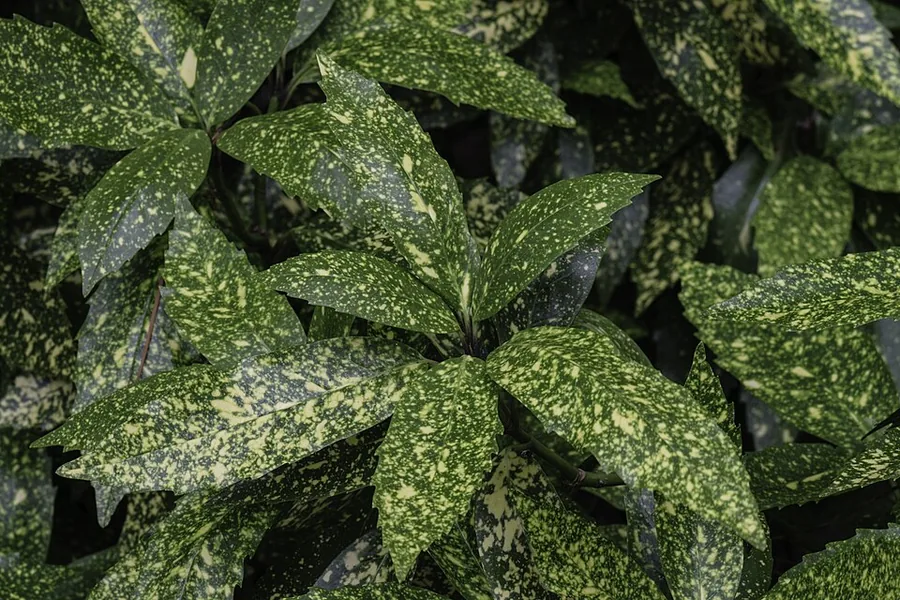
Glossy dark green leaves come dusted all over with yellow speckles, and that gold dusting shines brightest in full shade.
Picturata
A bold golden-yellow center floods each leaf, ringed by a green margin flecked with the same yellow.
Nana
This slow dwarf stays compact at roughly 3 feet by 3 feet, perfect for tucking into tight spots.
Rozannie
A compact, self-fertile pick that sets its red berries solo, with no male plant needed nearby.
How to propagate
Multiplying this shrub is genuinely satisfying, and you've got three solid routes to take. Pick the one that fits your timeline and tools.
Stem cuttingsEasy
Summer to early fall (semi-hardwood cuttings) · 6 to 10 weeks to root
Take semi-hardwood cuttings from summer to early fall and expect roots in 6 to 10 weeks. Label each one male or female so you know exactly what you're growing on.
SeedModerate
Sow ripe seed in fall · Several weeks to germinate; slow to reach size
Sow ripe seed in fall and give it patience; germination runs several weeks, growth is slow, and seedlings come out variable, with no way to sex them until that first flower opens.
LayeringEasy
Spring to summer · Several months to root
From spring to summer, peg a low branch down into the soil and let it root in place over several months. It's a low-effort, reliable way to make a new plant.
Myths
Every Japanese Laurel will reward you with bright red berries.
This shrub is dioecious, carrying male and female flowers on separate plants, so only females fruit and they need a male nearby; the self-fertile Rozannie is the exception that berries on its own.
More sun means a brighter, healthier gold-dusted shrub.
Strong direct sun scorches the leaves, and the gold-dusted forms actually hold their color best in deep shade, which is exactly where this plant wants to be.