Shrub · Nyctaginaceae
Bougainvillea
Bougainvillea spectabilis
Give it sun, a touch of thirst, and a little benign neglect, and bougainvillea pays you back with sheets of color.
Full sun
Every 7–14 days
USDA 9–11
15–40 ft · 4.6–12.2 m
Overview
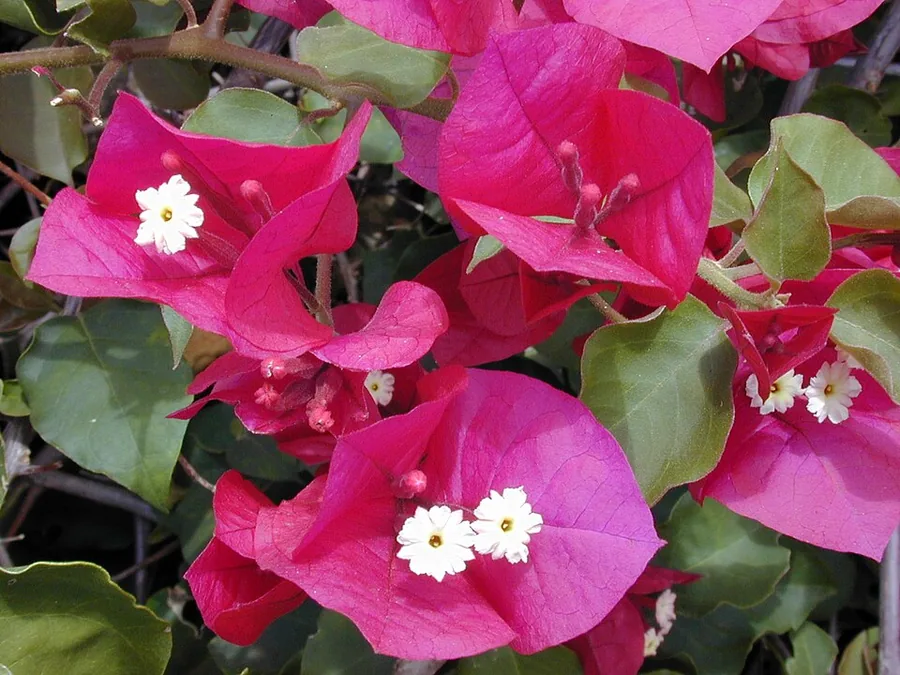
Those cascades of color spilling over walls and arbors across warm regions? That is bougainvillea at work. A woody, thorny shrub native to South America, it will climb or ramble up to 15 to 40 feet (4.6 to 12.2 m) where conditions suit it, yet keep to a tidy size inside a pot. The part that looks like a bloom is really a mass of papery bracts, the texture that earned this shrub its paper flower nickname.
Here's the twist that catches people out: this plant flowers hardest under a bit of stress. Spoil it with rich earth, constant water, and generous feeding and you'll grow a green, leafy thing with almost no color. Pull back instead, hand it scorching sun along with lean, parched footing, and the bracts come pouring out from spring into fall.
Hardiness outdoors holds only through USDA zones 9 to 11, the band where hard freezes seldom arrive. Anyone in a colder spot can still succeed by potting it and wheeling the container to shelter for the winter, helped along by fast growth and a forgiving response to the shears. The thorns, on the other hand, never ease off, so heavy gloves stay part of the routine.
Care
The short version: plant it in all-day sun and fast-draining soil, then water only after the top has dried. Feed lightly, keep the nitrogen low, prune once it finishes flowering, and shield it from frost.
Light
Bougainvillea craves full sun, at least 6 hours a day, and piles on color with every extra hour. Shade is the fastest route to a leafy green plant and no bracts, because it takes strong light just to set them.
Water
Give it a deep soak, then wait until the upper layer of soil has dried before the next drink, which typically works out to every 7 to 14 days on an established plant. Bougainvillea handles drought well and flowers more freely when kept slightly thirsty, whereas constant moisture swaps bracts for foliage and courts root rot.
Soil
Set it into well-drained sandy or loamy soil and it takes hold quickly. A pH running from slightly acidic up to neutral, somewhere across 6.0 to 7.0, suits it best, and soggy footing is the one thing it refuses.
Temperature
Heat is where it shines, comfortable across roughly 30°F to 100°F (-1°C to 38°C). The line it cannot cross is frost, so any reading below freezing means covering it up or moving it indoors.
Humidity
Average humidity keeps it perfectly happy, with no number you need to chase. It cares far more about strong sun and dry roots than about how moist the air is.
Feeding
From spring through midsummer, offer a balanced fertilizer once a month, mixed to half the usual rate. Keep nitrogen on the low side, since too much of it pushes leaves forward and holds back the very bracts you want.
Pruning
Time your cutting for late winter or early spring after flowering. Hold the heaviest reshaping until the bloom period wraps up, and glove up every time, because the thorns bite.
Repotting
Step it into a larger pot every 2 to 3 years, or sooner if it has clearly outgrown the one it is in. Crowded roots actually encourage flowering, so a snug, slightly pot-bound ball is fine and a bigger container can wait.
Size & spacing
Turned loose, it climbs to 15 to 40 feet (4.6 to 12.2 m) tall with a matching spread, so back a climber with a strong wall or trellis. Potted, it stays far more modest, and dwarf cultivars suit cramped corners.
When to plant
Warmth drives this plant, and a frost will stop it cold. Wait until the chill has fully cleared in spring before planting it out, and color rolls in from spring through fall, often lingering through winter wherever the climate stays mild.
Northern hemisphere
Southern hemisphere
Typical months for a temperate climate: start earlier in warm zones, later where spring frosts linger.
- Plant: after all danger of frost has passed in spring
- Harvest: spring through fall, sometimes into winter
Hardiness
USDA hardiness zones: 9–11
Temperature: down to -7°C
Troubleshooting
Two complaints come up again and again with bougainvillea: no color, or leaves hitting the ground. How it is grown explains most of it, with disease rarely the culprit. Work through the symptoms below, see which one fits the plant in front of you, and respond quickly before a small slip leaves you staring at a bare, sulky shrub.
Foliage and bracts shedding in one go
An abrupt drop usually follows some jolt, and the usual suspects are a cold snap, a draft, or a move somewhere new. Once frozen, the leaves and tender shoots look water-soaked and soon blacken. Settle it into a single stable, warm, sunny home, keep the watering steady, and bring any container indoors as the reading approaches 30°F (-1°C).
Fix:
- Protect from frost and bring containers indoors before temperatures fall below about 30 degrees F
- Keep the plant in a stable location and avoid moving it
- Maintain consistent watering, avoiding both drought and waterlogging
Yellow leaves with the veins still green
Yellowing new growth with veins that stay green points to a micronutrient shortfall the roots can't take up, generally because the soil leans too alkaline or holds water far too long. Plant it in slightly acidic, well-drained ground and allow drying time between waterings. A foliar micronutrient spray formulated for citrus or palms brings the color back.
Fix:
- Maintain slightly acidic, well-drained soil
- Apply a foliar micronutrient spray suitable for citrus or palms
- Improve drainage and avoid keeping soil constantly wet
Plenty of green growth, hardly any color
All foliage and no bracts almost always signals a plant having too easy a time of it. Bougainvillea flowers under pressure, so trim the watering, move it where it gets at least 6 hours of full sun, and cut the nitrogen back. A spell of drought, or even roots that are slightly pot-bound, nudges it into bloom.
Fix:
- Move to or provide full sun (6 or more hours direct)
- Allow soil to dry out between deep waterings and reduce watering
- Stop high-nitrogen feeding; use a balanced fertilizer at a reduced rate
- Allow the plant to become slightly pot-bound or stressed to encourage blooming
Notched, chewed leaf margins with dark droppings
The culprit is the bougainvillea looper, an inchworm-style caterpillar that comes out once the sun is down and nibbles the margins into scallops. Head outside after dark to find them at work and pick them off one by one. Should the population grow, treat the smaller larvae with Bt, or switch to spinosad, which clears both juveniles and full-grown caterpillars.
Fix:
- Handpick caterpillars, checking at night when they feed
- Apply Bacillus thuringiensis (Bt) to control young larvae
- Apply spinosad, which controls both young and mature larvae
Toxicity
If you keep animals, the chemistry here is reassuring: this plant holds no recognized toxin, so a stolen mouthful won't sicken your dog, your cat, or anything that grazes. The trouble is mechanical instead. Stiff, sharp thorns line every stem and can deliver puncture wounds, scratches, and now and then a touch of dermatitis, while contact with the sap may sting on delicate skin, so pull on heavy gloves before tackling it.
Safe for
People · Cats · Dogs · Horses · Rabbits · Livestock · Birds
Cats None
Since the plant holds nothing poisonous, an inquisitive cat that samples a leaf comes to no chemical harm. What it can run into are the stiff spines, capable of scratching a paw or the face, so set any pot somewhere a jumping cat won't land on it.
Dogs None
Dogs share space with bougainvillea safely, and a mouthful of leaf leaves them unharmed. The catch is the canopy itself: a dog squeezing past can catch on a thorn, so look out for an occasional scratch or jab rather than illness.
Horses Safe
Grazing does a horse no chemical harm, as the plant carries no toxin. Only the spines warrant care, because a horse pressing in among the stems risks a jab to the skin.
Rabbits Safe
Leaves pose no poisoning risk to a rabbit that nibbles them. The hazard is purely the spines, so route the prickly stems well clear of any small pet, since one could badly wound tender skin or catch an eye.
Livestock Safe
For cattle, goats, and sheep, there is nothing poisonous to fear in the foliage. Mind the woody spines instead, which can rake a hide or a muzzle while the herd browses among the stems.
Birds Safe
Free of any toxin, bougainvillea lets birds perch and build nests without harm. Better still, the thick, prickly tangle of branches gives smaller birds dependable shelter.
People Safe
Poisoning is off the table for people, yet the spines are not. A jab or scrape from them can trigger dermatitis or, on rare occasions, an infection in the wound, and the milky sap may irritate touchy skin, so glove up with something heavy whenever you cut or work on it.
Not chemically poisonous, but the plant has sharp woody thorns/spines that cause puncture wounds and scratches (rarely skin infection or dermatitis), and the sap may cause mild skin irritation in sensitive people. The physical thorns are the real hazard, not chemical poisoning. Wear heavy gloves when pruning or handling.
Varieties
From sprawling climbers down to dwarf forms built for containers, bougainvillea covers a wide span of color and stature. These are the cultivars you will bump into most often.
Barbara Karst
A fast, eager grower that throws heavy flushes of bracts in vivid red to magenta.
San Diego Red
A widely planted large red cultivar valued for just how freely it flowers.
Raspberry Ice
A compact choice pairing variegated foliage with rose-red bracts.
California Gold
Swaps the familiar pinks and reds for bracts in warm yellow to gold.
Pixie
A naturally compact dwarf that settles happily into a container.
Helen Johnson
A dwarf, compact cultivar that performs well in pots and hanging baskets.
How to propagate
Multiplying bougainvillea is straightforward as long as you allow it time, and copying a specimen already in your care beats starting from seed by a wide margin.
Stem cuttingsModerate
Summer · Several weeks to a few months
Most growers reach for summer cuttings. Take a stem of this year's growth, push it into a sand and peat mix, and let it sit, since rooting runs anywhere from a few weeks to a few months.
LayeringModerate
Growing season · Several weeks to months
Layering is another option through the growing season: bend down a stem near the base and pin it so it roots while still fed by the parent. Give it several weeks to months to build enough roots in that buried section before you sever it.
SeedDemanding
Warm season · Slow and variable
Seed can work in the warm season, but expect slow, uneven results, and the offspring rarely look like the parent. For that reason, named cultivars get propagated through cuttings or layers nearly every time.
Myths
Those colorful parts on a bougainvillea are the flowers.
Each papery, brightly colored petal is really one of the modified leaves called bracts, not a flower at all. The genuine blooms are slim tubes in white or cream sitting at the core of every cluster, lost in all that color unless you look for them.