Tree · Rutaceae
Calamondin Orange
Citrus × microcarpa
A pot-sized citrus that pushes out fragrant blooms and sour orange fruit at once, all year on a sunny sill.
Full sun
Every 5–10 days
55–86°F · 13–30°C
USDA 10–11
Overview
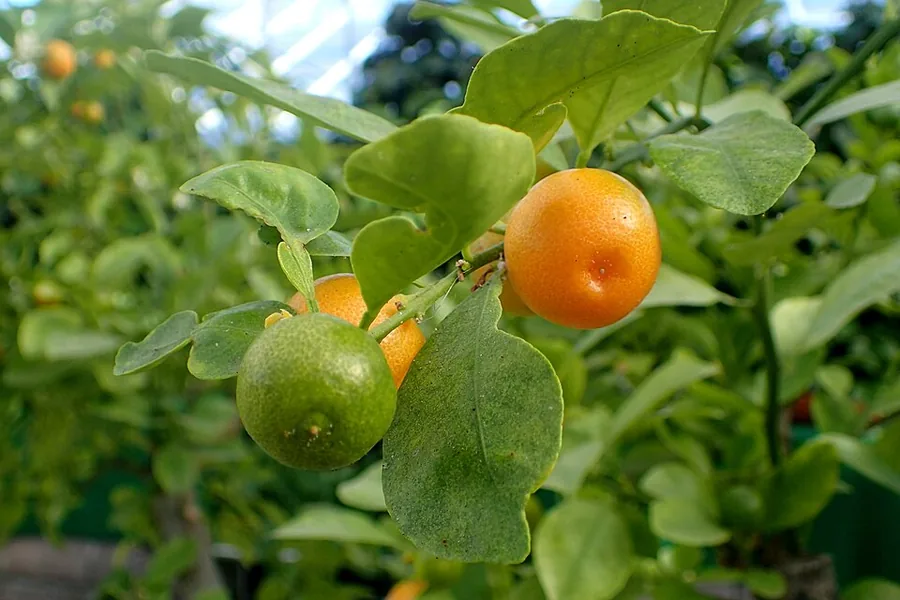
The calamondin is the citrus that actually thrives indoors, and growing it pays off fast. This compact hybrid, usually read as a kumquat crossed with a mandarin, pulls off the neat trick of flowering and fruiting at the same time. Park it in a bright window and it cranks out fragrant white blooms and small sour oranges together, more or less all year round.
Outdoors in the warmth of zones 10 and 11 it shoots up into a small tree, but most growers keep it potted and whisk it under cover before frost bites. That portability is the whole hook. The plant shrugs off hard pruning, so you can hold it to the size of your room and still pull fruit off the branches.
Skip any hope of a sweet eating orange, though. The fruit hits bracingly tart, which is exactly why it shines in marmalade, juice, and a squeeze over food rather than as a snack. Pour on strong light, even moisture, and a steady citrus feed, and it pays you back with both scent and color.
Care
The short version: blast it with the brightest light you can, full sun for the win, keep the soil evenly moist in the growing months and drier in winter, feed monthly from late winter into fall with a citrus fertilizer, and stand it in a warm, draft-free spot.
Light
Hand a calamondin all the full sun you can muster, which means your brightest window, a south-facing one for the win. It scrapes by in bright indirect light or partial shade, but thin light robs you of flowers and fruit, so chase the brightest spot you have got.
Water
Keep the soil evenly moist all through the growing season, letting the top inch or so dry between drinks, then dial it back in winter. A settled plant rides out a short dry spell, but let it bake dry and the fruit set drops off.
Soil
Set it in a rich, well-drained mix, a loose all-purpose potting blend in a container or a sandy to clay loam in the ground. Hold the pH at 6.0 to 7.0 and the roots stay happy while the leaves stay green.
Temperature
It powers along from about 55°F to 86°F (13°C to 30°C) and refuses to deal with frost. Keep it well off cold drafts and hot vents, both of which can trigger a sudden drop of leaves.
Humidity
Shoot for 40% to 60% humidity, an easy target outdoors and in plenty of homes. Dry winter air calls in spider mites, so fire up a humidifier or mist now and then once the heating kicks on.
Feeding
Feed it monthly from about February to October with a balanced citrus fertilizer that carries micronutrients. That extra iron, zinc, and manganese keeps the new leaves from yellowing on a citrus that eats like a champ.
Pruning
Prune lightly to shape the plant and to clear out dead, weak, or crossing wood. Rub off any suckers below the graft union, since they steal energy from the plant, and trim away freely to hold a container specimen tight and compact.
Repotting
Bump it up to a larger pot every 2 to 3 years in spring, before the roots circle inside or shove out the drainage holes. Water blasting straight through, or a plant that wilts in a flash, is your cue it has outgrown its home.
Size & spacing
Cut loose, it climbs to 6 to 20 feet (1.8 to 6 m) tall with a spread of 6 to 10 feet (1.8 to 3 m), though a pot and steady pruning keep it far smaller. Give an in-ground tree room for that full spread so air can rip through the canopy.
Troubleshooting
Almost every calamondin hiccup turns up on the leaves, and most of it traces back to light, water, or a pest that wormed its way in. Spot the early signs and you can knock out the cause before the plant drops its whole canopy. Match what you see below, then jump on it.
Leaves yellow and drop fast once the plant comes indoors
A calamondin hauled straight from bright outdoor sun into a dim, warm room reacts hard, and shock leaf drop is the result in the first days or weeks. Move it to your brightest window right away, lock the temperature steady and clear of vents and drafts, and let the soil surface dry before each watering. Crank up the humidity with a humidifier or regular misting, and the plant pushes out fresh growth the moment it finds its footing.
Fix:
- Place in the brightest available window (a sunny southern exposure)
- Keep temperatures stable and away from heat vents or cold drafts
- Mist or use a humidifier
- Let soil surface dry before watering
Pale leaves with veins still glowing green
Yellow leaves on a citrus signal chlorosis, and it points straight at a hungry plant or roots stuck in soggy soil. Track the pattern: green veins on yellow new growth flag a micronutrient gap, while an even paleness shouts for nitrogen. Hit it with a balanced citrus fertilizer that packs micronutrients, fix any drainage that traps water, and shift the soil toward the slightly acidic side it loves, and the green charges back.
Fix:
- Apply a balanced citrus fertilizer containing micronutrients
- Improve drainage and avoid waterlogging
- Correct soil pH toward slightly acidic
Sticky leaves, a black sooty film, or fine webbing
Sticky leaves under a black, sooty film hand you the signature of scale or mealybugs, sap-feeders that pump out honeydew the mold then feasts on. Fine webbing and stippled leaves flip the diagnosis to spider mites, which surge in dry indoor air. Scrub the pests off and treat with horticultural oil or insecticidal soap, push the humidity up to drive the mites back, and pull the plant away from your others until it comes up clean.
Fix:
- Wipe off pests and treat with horticultural oil or insecticidal soap
- Raise humidity to discourage spider mites
- Isolate the plant from other houseplants until controlled
Toxicity
The sour fruit is a joy to eat, but the rest of the plant is no treat for animals. The leaves, peel, and fruit pack essential oils and psoralens that turn a pet's stomach and leave skin touchy in sunlight. Keep pets and livestock clear of the foliage and prunings, and scrub your hands once you have handled it.
Toxic to
Cats · Dogs · Horses · Rabbits · Livestock · Birds
Safe for
People
Cats Mild
A cat that bites into the leaves or peel may drool, vomit, or pass loose stools, and it often slips into a quiet, off-food mood. The oils can also leave its skin reacting to sunlight, so keep the plant where a cat cannot get at it.
Dogs Mild
A dog that chomps the foliage or fruit usually winds up with an upset stomach, vomiting or diarrhea, and a dip in its usual energy. Those citrus oils can leave the skin prone to a sun rash too, so set the pot beyond reach.
Horses Mild
The oils and psoralens in the leaves and peel unsettle a horse's gut and can leave it dull and out of sorts. Sweep clippings and dropped fruit out of the paddock so a horse never grazes them.
Rabbits Caution
The same irritant citrus oils make the leaves and peel a poor pick for rabbits, so keep them firmly clear of the plant.
Livestock Caution
Goats, sheep, and cattle are likely to react to the foliage oils much as other animals do, so fence the plant off and toss every pruning in the bin rather than within reach.
Birds Caution
Treat the essential oils in the leaves and peel as off limits for pet birds, even though a thin sliver of the ripe flesh sometimes makes it onto the menu.
People Fruit safe
Great news for cooks: the sour ripe fruit is a kitchen favorite and safe for people to eat. Wash your hands after pruning, since the oils in the leaves and peel can irritate skin and leave it touchy in the sun.
Leaves, peel, and fruit contain irritant citrus oils; wash hands after pruning or handling fruit and keep fallen leaves and peels away from pets.
Helpline numbers

United States
ASPCA Animal Poison Control: (888) 426-4435 (fee applies)
Poison Control: (800) 222-1222



Canada
Poison Centres: 1-844-764-7669
Varieties
Just a couple of forms show up in homes and garden centers, and what tells them apart comes down to the look of the leaves.
Variegata (variegated calamondin)
Catch it by the leaves splashed green and creamy white, plus young fruit that flaunts green-and-white stripes which fade off as it ripens.
Standard calamondin
The plain glossy-green form is the one most growers reach for as an ornamental indoor citrus.
How to propagate
Multiplying a calamondin at home is a fun project, whether from cuttings or seed, though the fastest and surest plants come grafted from a nursery.
Stem cuttingsModerate
Late spring to summer · About 6 to 10 weeks to root
Snip cuttings in late spring or summer, dip the cut ends in rooting hormone, and tuck them somewhere warm and humid under cover. Give them that and they fire out roots in about 6 to 10 weeks, growing into plants identical to the parent.
SeedModerate
Spring · Several weeks to germinate; years to bear fruit
Drop fresh seed in spring and it springs up within a few weeks. Calamondin seeds run polyembryonic, so the seedlings come fairly true to type, but brace for the long game, since they grow slowly and take years to bear their first fruit.
GraftingDemanding
Spring to summer · Several weeks for the union to take
Most nursery plants arrive grafted in spring or summer onto a vigorous rootstock, the union knitting over several weeks. It is the toughest method to nail at home, but it pays off big with faster growth and earlier fruit.
Myths
Calamondin fruit is poisonous to people.
Not a chance, since the fruit is mouth-puckering sour but fully edible, and cooks spin it into marmalade, juice, and a sharp seasoning. It runs acidic, never poisonous. The real watch-out is pets, since the oils in the leaves and peel can irritate them.
Calamondin is a true orange species.
The name oversells it, because this is a hybrid, Citrus x microcarpa, usually read as a kumquat crossed with a mandarin. It is no true orange, and that mixed parentage drives much of the fierce tartness.