Tree · Rutaceae
Meyer Lemon
Citrus × meyeri
Hand it bright sun, even water, and cover from frost, and this dwarf citrus rewards you with fragrant blooms and sweet fruit.
Full sun
Every 5–10 days
USDA 9–11
6–10 ft · 1.8–3 m
Overview
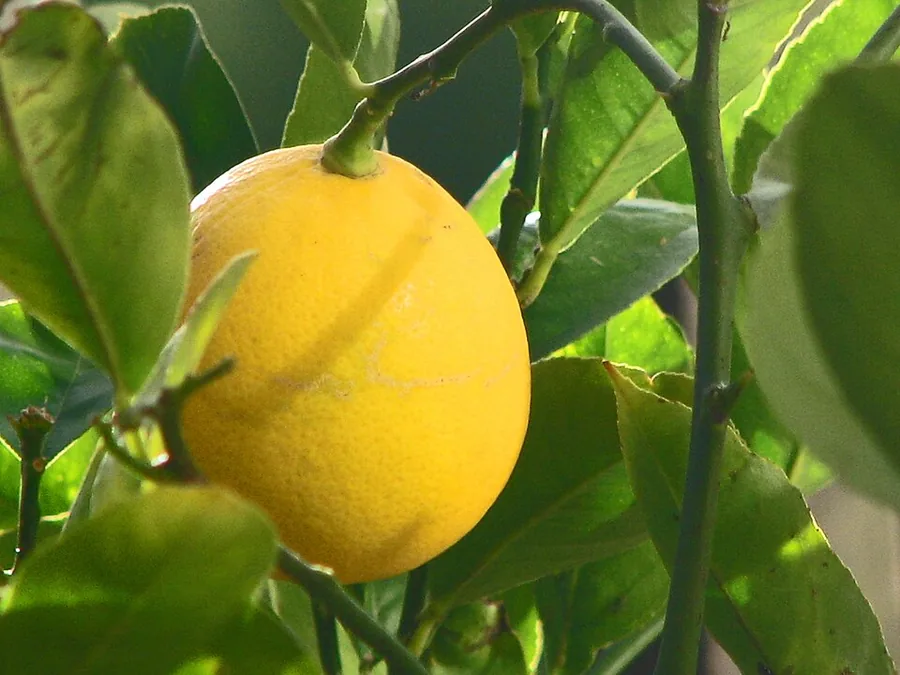
The Meyer lemon packs a lot of reward into a small tree. It is a hybrid citrus, most likely a lemon crossed with a mandarin or sweet orange, and that cross delivers fruit that is rounder, sweeter, and thinner-skinned than anything on a grocery shelf, with just enough tartness to snap a dish awake. Best of all it stays pot-sized, which is why growers chase it far beyond the warm zones where it lives outdoors.
Turn it loose and it builds a compact evergreen tree, climbing to 6 to 10 feet (1.8 to 3 m) tall in the ground and staying far smaller in a container. The fragrant white flowers keep coming through the year, peaking in spring, while the fruit takes its time and ripens mostly from fall into winter. Watch closely and one healthy tree will carry blossoms and fruit together.
It knows what it wants, and it wants it plainly. Feed it strong light, steady moisture, and cover from hard frost, and it stays glossy and cranks out fruit. Slip on the cold or the watering, though, and it fires off a warning fast, dropping leaves or yellowing between the veins.
Care
The short version: give it full sun and a well-draining, slightly acidic mix, water once the top inch dries, feed monthly through the growing season with a citrus fertilizer, and keep the tree above 50°F by moving containers indoors before frost.
Light
Pour on the full sun, ideally eight hours a day or more, and the tree answers with steady blooms and fruit. It gets by in partial sun or light shade, but the canopy thins and the crop shrinks. Growing it inside? Slot it at the brightest window going, or fire up a grow light.
Water
Let the top inch (about 3 cm) of mix dry out, then soak it deeply until water runs from the drainage holes. Never let the rootball bake dry or stew in standing water, and pour more often for container trees through summer heat. That even, steady moisture is what pins the leaves and fruit to the tree.
Soil
Set it in a well-draining, slightly acidic sandy loam or a solid citrus or potting mix. A pH of 6.0 to 7.0 keeps the micronutrients within reach, which is what shuts down the yellow leaves citrus loves to throw. Above everything else here, sharp drainage carries the day.
Temperature
The tree runs happily across roughly 23°F to 95°F (-5°C to 35°C), but the cold end is where trouble waits. With protection it hangs on near 20°F (-7°C), yet a hard frost torches the leaves and can kill an unguarded tree, so haul containers above 50°F (10°C) before winter lands.
Humidity
Everyday household air near 40% to 60% does the job. The dry heat of a winter room can stress an indoor tree and roll out the welcome mat for spider mites, so a humidity tray or a quick misting pays off. Outdoors, nothing to chase.
Feeding
Feed it monthly from spring through late summer while it powers through active growth, using a balanced citrus fertilizer loaded with nitrogen plus iron, zinc, and manganese. Those micronutrients shut down the interveinal yellowing that flares when the tree runs hungry. Then back right off through the dormant winter months.
Pruning
Prune lightly after the main harvest to shape the tree and throw the canopy open to light and air. Cut out deadwood, crossing branches, and any suckers shooting up below the graft. It shrugs off a harder cut too, which makes holding a container tree compact a breeze.
Repotting
Bump the tree into fresh citrus or potting mix every 2 to 3 years, or sooner the moment it goes rootbound. Roots winding round the pot, shooting through the drainage holes, or water blasting straight through all shout that it is time. Step up just one pot size so the mix never turns soggy.
Size & spacing
In the ground a Meyer lemon shoots up to about 6 to 10 feet (1.8 to 3 m) tall and 4 to 8 feet (122 to 244 cm) wide, though a pot reins it in well under that. Give an in-ground tree room for that full spread and space for air to sweep around the canopy.
When to plant
Meyer lemon thrives in the mild winters of zones 9 to 11, where it can hold a spot in the ground all year. Colder than that? Grow it in a container, run it outside after the last frost once nights hold above 50°F (10°C), and haul it back in before the cold circles round. It blooms on and off all year but throws its best show in spring, with fruit ripening through fall and winter.
Northern hemisphere
Southern hemisphere
Typical months for a temperate climate: start earlier in warm zones, later where spring frosts linger.
- Plant: After the last frost when night temperatures stay above 50°F (late spring); in zones below 9 grow in a container and overwinter indoors
- Harvest: Blooms intermittently year-round, heaviest in spring; fruit ripens mainly fall through winter
Hardiness
USDA hardiness zones: 9–11
Temperature: down to -7°C
Troubleshooting
Most Meyer lemon trouble comes down to cold, water, or feeding, and the leaves fire off the first flare. Read those early signs and you can steer things back before the tree drops its canopy. Match what you spot below, then jump on it while it still counts.
Pale leaves over bright green veins
Catch this early and it turns around fast. When leaves fade but the veins glow green, the tree is showing interveinal chlorosis, its way of saying it cannot reach the iron, zinc, or manganese it wants, usually thanks to a soil pH that has climbed too high or roots left sitting wet. Reach for a complete citrus fertilizer with chelated micronutrients, sharpen up the drainage, and coax the pH back toward 6.0 to 7.0 to green it up again.
Fix:
- Apply a complete citrus fertilizer with chelated micronutrients
- Improve drainage and reduce watering frequency
- Adjust soil pH toward 6.0 to 7.0
The whole canopy dropping at once
A tree that flings off its leaves in a hurry has taken a real jolt. The prime suspect is cold near or below 20°F (-7°C), though a hard dry-out, waterlogged roots, or a quick dash between indoors and out will spark it just as fast. Whisk the tree to a sheltered spot above 50°F (10°C), keep the moisture rock-steady, and throw frost cloth over it the moment a cold snap threatens, and it bounces back.
Fix:
- Move the container to a sheltered spot above 50°F
- Maintain even soil moisture
- Protect with frost cloth during cold spells
Blossoms and baby fruit dropping
Spot a few flowers and fruitlets on the ground and relax, because a little drop is exactly what a healthy tree does, thinning out more than it could ever ripen. Heavier drop is the one to chase down, and it usually traces to water or heat stress, dry air, or a move made mid-bloom. Hold the conditions rock-steady, stay right on top of watering and feeding, and let the tree sit put once the flowers pop open.
Fix:
- Maintain steady watering and feeding
- Avoid relocating the plant during bloom and fruit set
- Keep humidity moderate when grown indoors
Toxicity
The juicy flesh is a treat, but the rest of the tree earns a hard pass. The peel, leaves, and seeds carry essential oils and psoralens that upset an animal's stomach and can leave skin sensitive to sunlight. Keep prunings, peels, and windfalls well away from cats, dogs, horses, and grazing animals.
Toxic to
Cats · Dogs · Horses · Rabbits · Livestock · Birds
Safe for
People
Cats Mild
Let a cat chew the peel or leaves and it usually lands an upset stomach, with vomiting, loose stools, and a flat, sulky mood. Those essential oils can leave the skin touchy in sunlight too.
Dogs Mild
A dog that gnaws leaves, peel, or a dropped fruit tends to come down with vomiting, diarrhea, and sagging energy. Most cases stay mild, though the oils can rile the skin.
Horses Mild
The same oils and psoralens stir up a horse's gut, dragging down the appetite and loosening the droppings. Clear prunings and windfalls right out of the paddock.
Rabbits Caution
The peel and leaves pack those irritating oils, so they make no safe nibble for a rabbit. Let one get into them and it may quit its food or pass soft stools.
Livestock Caution
Goats, sheep, and cattle can pick up a stomach upset from the oily peel and foliage if they browse the tree or its trimmings. Fence them out and sweep up any fallen prunings.
Birds Caution
The concentrated oils in peel and leaves can rattle a bird, so keep both off the menu. A small taste of the plain flesh is the safer play.
People Flesh safe
The juicy flesh is a kitchen star and great to eat. Handle a pile of peel or leaves, though, and skin can turn sun-sensitive, so rinse your hands after pruning.
Keep prunings, peels, leaves, and seeds away from pets; the fleshy fruit is generally only a mild stomach irritant in small amounts.
Helpline numbers

United States
ASPCA Animal Poison Control: (888) 426-4435 (fee applies)
Poison Control: (800) 222-1222



Canada
Poison Centres: 1-844-764-7669
Varieties
Only two clones really matter here, and the story that splits them comes down to a virus.
Improved Meyer
This virus-free, tristeza-tested selection from the 1970s is the one you will grab at nearly any nursery, the clone that stepped up after the original trees had to go for quietly carrying the disease.
Original (True) Meyer
The pre-1970s clone got shown the door because it hauled citrus tristeza virus around the whole time without ever flashing a single symptom.
How to propagate
Meyer lemon ranks among the easiest citrus to multiply at home, and the method you pick sets just how soon you get to pick fruit.
Stem cuttingsModerate
Late spring to summer from semi-hardwood growth · 6 to 12 weeks to root; 2 to 3 years to first fruit
Here is where it gets fun: Meyer lemon strikes from cuttings far more eagerly than most citrus, so it often grows right on its own roots. Snip semi-hardwood pieces in late spring or summer, watch them root in 6 to 12 weeks, and count on that first fruit another 2 to 3 years out.
GraftingDemanding
Spring or late summer (T-budding) · A few weeks to take; 1 to 2 years to a field-ready tree
Chase a tougher, faster-growing tree by budding or grafting onto a disease-tolerant rootstock. Run the T-budding in spring or late summer, watch the bud knit in a few weeks, and land a field-ready tree in 1 to 2 years.
SeedModerate
Sow fresh seed in warmth · Several years to fruit
Sow fresh seed somewhere warm and it will sprout, but the seedlings drag and come out not reliably true to type, taking several years to fruit. Chalk it up as a fun side project, not the way to score real Meyer lemons.
Myths
A Meyer lemon is a true lemon.
Nope, it is a hybrid, most likely a lemon crossed with a mandarin or sweet orange. Thank that parentage for fruit that comes out sweeter, less sharp, and thin-skinned, and for a tree that stays compact and takes cold far better than a true lemon.
You can grow a true Meyer lemon from a saved seed.
Seedlings crawl along and will not reliably copy the parent tree. Grow a named Meyer lemon from cuttings or grafting instead, since that is the one sure way to keep the fruit true to type.