Tree · Rutaceae
Lime
Citrus × latifolia
Feed it full sun, brisk drainage, and dependable warmth, and the tree pumps out fruit for years.
Full sun
Every 5–10 days
USDA 9–11
8–20 ft · 2.4–6.1 m
Overview
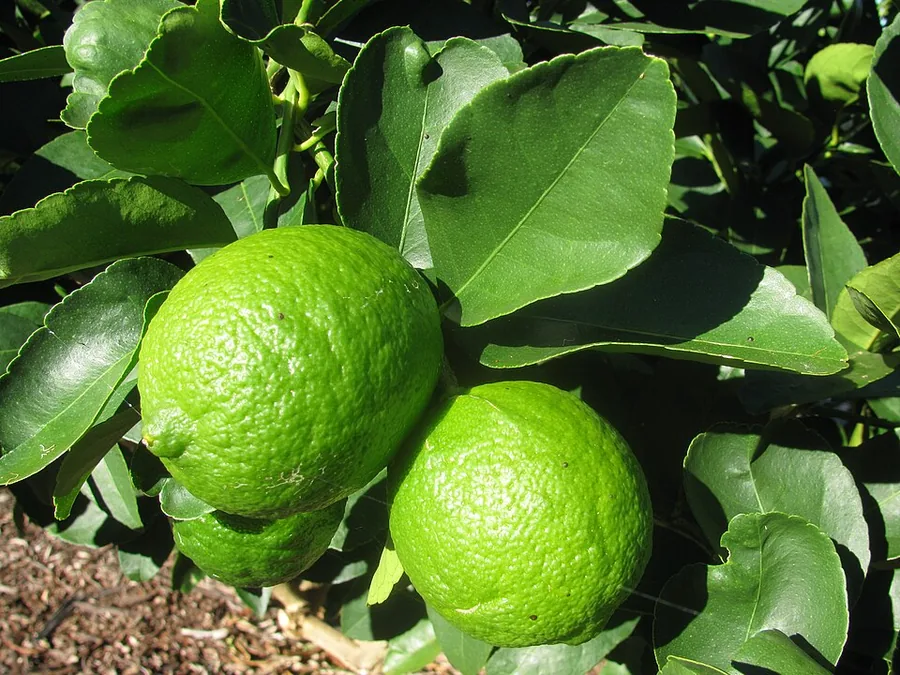
The Persian lime is the seedless, smooth-skinned lime stacked at almost every market, a hybrid citrus grown for its bright, sharp, aromatic juice, and it is a joy to grow. It builds into a handsome small tree that reaches 8 to 20 feet (2.5 to 6 m) with a rounded canopy and keeps pushing fruit on and off through much of the year in warm climates. Most growers snap up the limes while still green, right when the acid peaks.
At heart this is a warm-climate tree that thrives in the ground across USDA zones 9 to 11 and takes to a pot anywhere colder so it can dodge the frost. It handles cold a step better than the Mexican (Key) lime, though a hard freeze still bites. Give it full sun, free-draining soil, and a break from biting wind, and it powers ahead.
Limes stay easygoing day to day, and a few smart moves lock in success. Wet feet bring root and foot rot, the wrong soil pH shuts off nutrients, and a short list of citrus diseases can undo a tree if the early signs slip past. Nail the drainage and feeding and you land a long-lived tree that rewards every bit of the effort.
Care
The short version: hand it full sun, free-draining sandy loam, and a deep but infrequent soak once the top few centimeters dry, then feed through the growing season with a citrus fertilizer that carries the trace nutrients limes need.
Light
A lime tree craves full sun, ideally 8 hours or more a day, to crop big. It will take a little partial sun, but shade thins the canopy and drags down the harvest.
Water
Water deeply once the top few centimeters of soil dry out, then let it drain clean through. Established in-ground trees coast on less, while pots dry fast and may need water every few days in heat. The one thing to dodge is waterlogged roots, which invite foot and root rot.
Soil
Plant in well-drained sandy loam, because standing water is the fastest way to lose a citrus tree. A pH of 6.0 to 7.5 keeps the nutrients flowing, and a pH that climbs too high is what triggers the yellow, veiny leaves of micronutrient deficiency.
Temperature
Limes love the heat, roughly 32°F to 95°F (0°C to 35°C), and grow year-round where it stays mild. They are tender to frost, so a cold snap means cover or a move indoors for potted trees.
Humidity
Average humidity of 40% to 60% suits a lime fine, so no special target to chase here. Good airflow through the canopy matters far more, since warm, still, humid air is what greasy spot and other fungal diseases feed on.
Feeding
Feed through the active growing season, from spring into late summer, with a balanced citrus fertilizer that packs magnesium, manganese, zinc, and iron. Those micronutrients are exactly what limes run short on, and a complete citrus feed heads off the yellowing before it starts.
Pruning
Limes ask for little pruning. Take out dead, damaged, or crossing branches and any suckers below the graft union, and thin lightly after harvest to open the canopy. Wear gloves, because the peel and juice oils plus sun can blister bare skin.
Repotting
Bump a container tree into a larger pot every 2 to 3 years in spring. Roots circling the pot or breaking out the drainage holes, water running straight through, and slowed growth with yellowing leaves all shout that it is time.
Size & spacing
A mature lime shoots to 8 to 20 feet (2.5 to 6 m) tall and about as wide, so hand it real room to spread. In a pot it stays smaller, but it still wants air moving freely around the whole canopy.
When to plant
A lime tree runs on warmth and hates frost, so plant it out in spring the moment the soil and air have settled into reliable heat. In warm climates it keeps blooming on and off all year, and the main crop rolls from summer into winter, with the fruit picked green for the sharpest juice.
Northern hemisphere
Southern hemisphere
Typical months for a temperate climate: start earlier in warm zones, later where spring frosts linger.
- Plant: Plant in spring after all danger of frost, once soil and air are reliably warm.
- Harvest: Blooms on and off year-round in warm climates; main harvest summer into winter, with fruit picked while green for highest acidity.
Hardiness
USDA hardiness zones: 9–11
Temperature: down to -7°C
Troubleshooting
Most lime trouble breaks out on the leaves first, so scan the canopy often and you will catch it early. Some problems clear fast with a bit of sanitation or feeding, while two of the diseases below are serious enough to report. Match what you see, then jump on it before it spreads to the rest of the tree.
Raised corky tan lesions haloed yellow across leaves, twigs, and rind
This one is citrus canker, a bacterium that rides in on wind-driven rain and hops between trees on dirty pruning tools. Spot it fast: the corky, yellow-ringed lesions strike the fruit rind as well as the leaves, which is the tell that separates it from greasy spot. Bag the infected growth, disinfect your tools between every cut, and where canker is under quarantine, alert your local agricultural authorities.
Fix:
- Remove and bag infected leaves and twigs
- Disinfect pruning tools between cuts
- Apply preventive copper sprays
- Report to local agricultural authorities in regulated/quarantine areas
Lopsided yellow mottling, twig dieback, and small, misshapen fruit
Brace for the big one, citrus greening, or huanglongbing, the disease that has flattened citrus across whole regions. The Asian citrus psyllid spreads it, and the dead giveaway is a blotchy mottle that runs across the leaf midrib instead of matching side to side, plus small lopsided fruit. No cure exists, so move fast to remove and destroy an infected tree, knock back the psyllid, and report every find to agricultural authorities.
Fix:
- There is no cure; remove and destroy infected trees to protect others
- Control Asian citrus psyllid with approved insecticides or oils
- Report finds to agricultural authorities
Yellow blotches above and greasy brown blisters beneath the leaves
Meet greasy spot, a fungus that jumps into action in warm, humid weather and feeds on the leaves rotting under the tree. It hits hardest with a wave of leaf drop in late summer and fall. Get ahead of it: rake up and destroy the fallen litter, open the canopy for airflow, and land a copper or oil spray in early summer to shut it down.
Fix:
- Rake up and destroy fallen leaves to cut inoculum
- Apply a copper fungicide or horticultural oil in early to mid summer per label
- Prune to improve air circulation
Green-veined yellow foliage on the freshest new growth
Yellow leaves with veins that stay green, showing up first on the youngest growth, flag a micronutrient shortage of iron, manganese, or zinc, usually because the soil pH has climbed too high or the roots are sitting wet. Older leaves going yellow all over point to nitrogen instead. Turn it around fast: spray a chelated micronutrient feed, swap to a citrus fertilizer loaded with those trace elements, and fix the drainage.
Fix:
- Apply a chelated micronutrient foliar spray
- Switch to a citrus fertilizer that includes micronutrients
- Correct drainage and avoid overwatering
Toxicity
The juice and flesh are safe to eat and a delight in the kitchen, but the rest of the tree plays by different rules. The peel, leaves, and seeds carry essential oils and psoralens that upset a pet's stomach and can blister human skin in sunlight. Keep prunings, peels, and seeds away from animals, and pull on gloves before you handle the tree.
Toxic to
Cats · Dogs · Horses · Rabbits · Livestock · Birds
Safe for
People
Cats Mild
Chew on the peel, leaves, or seeds and a cat usually lands vomiting, loose stools, and a dull, low mood, with the oils sometimes leaving the mouth or skin irritated. Keeping those parts out of paw's reach heads it off.
Dogs Mild
Let a dog gnaw on peel, leaves, or seeds and an upset stomach with a bout of diarrhea tends to follow, often with a flat, depressed look afterward. Stash the prunings and it stays a non-event.
Horses Mild
Those same peel and leaf oils can leave a horse off its feed and queasy, so clear prunings and dropped fruit from the paddock and keep the trouble away.
Rabbits Caution
The aromatic oils in peel and foliage clash with a rabbit's sensitive gut, and with no upside on offer, skip the lime for rabbits altogether.
Livestock Caution
Goats and other stock might grab a fallen fruit without harm, but a belly full of bitter peel and leaves can sour the stomach, so fence them off from prunings and windfalls to stay clear of trouble.
Birds Caution
A small bird usually handles a taste of the flesh, yet the strong oils in peel and leaves can irritate, so hand over only a little clean fruit and keep the rind away.
People Fruit safe
Dig into the juice and flesh freely, since both are a kitchen staple and safe to eat. The skin is the catch, because peel oils and juice in sunlight can raise a blistering 'margarita burn,' so rinse your hands after handling.
Wear gloves when pruning or zesting; lime juice or peel oils on skin exposed to sunlight can trigger phytophotodermatitis ('margarita burn'), a painful blistering rash.
Helpline numbers

United States
ASPCA Animal Poison Control: (888) 426-4435 (fee applies)
Poison Control: (800) 222-1222



Canada
Poison Centres: 1-844-764-7669
Varieties
Persian lime goes by more than one name, and a couple of forms show up at nurseries. Here is exactly what those labels mean.
Bearss
Bearss powers the Persian lime crop across the US and especially Florida, a nearly thornless, seedless tree whose smooth-skinned fruit ripens from green to yellow.
Tahiti
Tahiti is just another name for the same triploid seedless lime as Bearss, a vigorous tree that shrugs off the cold better than the Mexican (Key) lime.
Companions
A lime grows best beside flowers that pull in the predators of its pests, and worst with grass crowding the trunk where rot likes to start.
Plant near
Sweet alyssum: Its tiny flowers attract hoverflies and parasitic wasps that help control aphids and psyllids.
Marigold: Draws beneficial insects and may deter some pests around young trees.
Keep apart
Turf grass grown up to the trunk: Lawn competes for water and nutrients and holds moisture against the trunk, raising foot-rot risk; keep a mulched, grass-free zone.
How to propagate
Two paths lead to more lime trees: the grafting nurseries swear by, or the slower home methods worth a go, and grafting alone hands over every benefit a rootstock brings.
GraftingDemanding
Spring to early summer when the bark slips · 1 to 3 years to bearing
Grafting is the nursery's power move, and it pays off. Bud or graft your lime onto a disease-resistant, often dwarfing rootstock in spring or early summer while the bark still slips, and the young tree charges ahead with vigor, cold tolerance, and disease resistance before it starts bearing in 1 to 3 years.
Air layeringModerate
Warm growing season · Several months to root, then 1 to 2 years to establish
Air-layering is a rewarding home project through the warm growing season, running several months to root and then 1 to 2 years to establish. Just weigh the catch: an own-rooted tree skips the rootstock, so it lands more cold-tender and more prone to disease.
Stem cuttingsModerate
Semi-hardwood cuttings in late spring or summer · 1 to 2 years
Take semi-hardwood cuttings in late spring or summer and watch them root and push to a usable size in about 1 to 2 years. Like air-layered trees, these own-root plants miss the cold hardiness and disease protection a rootstock would hand them.
Myths
Limes are just unripe lemons.
Not a chance: limes and lemons are separate citrus, and Persian lime is its own hybrid, Citrus x latifolia. Growers pick limes green for their sharp acidity, but the fruit turns yellow when fully ripe, which is nothing like an unripe lemon.
Drop a lime seed into soil and up springs an identical Persian lime tree.
Forget the seed dream, because Persian lime is a seedless triploid that almost never sets a viable seed, so nurseries graft it instead. Any stray seedling you did manage to sprout would not come true to the parent tree.
The entire citrus plant is acutely toxic to both dogs and cats.
The fruit flesh amounts to a mild stomach upset, nothing more. It is the essential oils and psoralens packed into the peel, leaves, and seeds that the ASPCA flags as toxic, not the juicy part people eat.