Shrub · Rubiaceae
Coffee
Coffea arabica
Give it warmth, bright indirect light, and humid air, and watch the coffee plant grow into a glossy evergreen that may one day set cherries of its own.
Bright indirect
Every 5–7 days
59–82°F · 15–28°C
USDA 10–11
Overview
The coffee plant brings real growing fun to a windowsill, a tropical evergreen straight from the highland forests of Africa, where it thrives in the dappled shade of taller trees. Out in the wild it climbs toward the size of a small tree, but indoors and in the garden it holds as a tidy, glossy-leaved shrub. The very plant that fills the world's cups doubles as a striking houseplant well before it fruits.
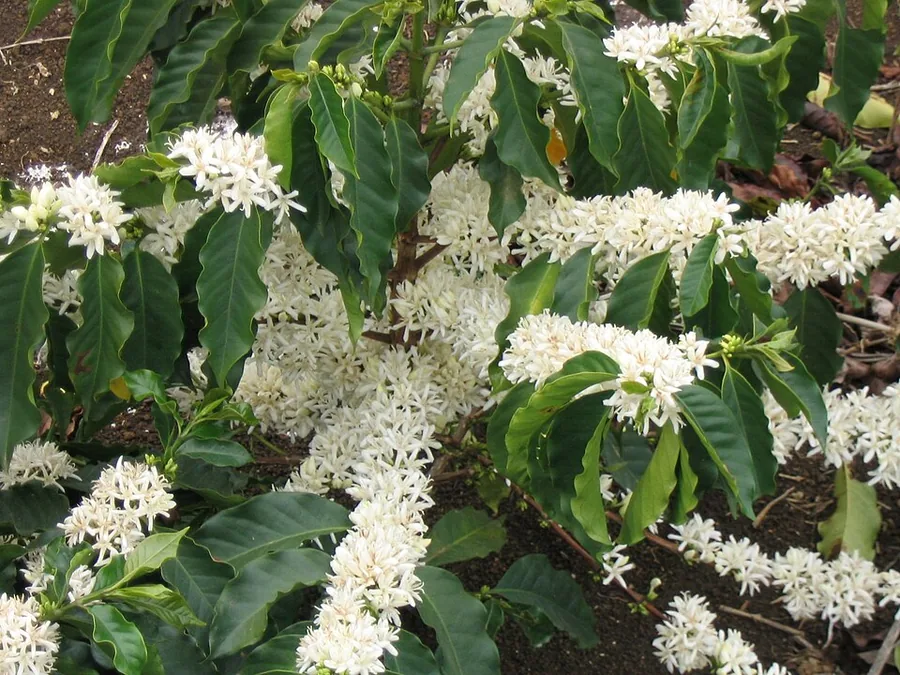
At home, coffee delivers on its waxy, deep green leaves long before any harvest, and that foliage alone makes it worth growing. Keep it warm and stay patient, though, and it rewards you with fragrant white flowers, then red cherries months later that cradle the seeds known as coffee beans. Fruit tends to hold off until the plant hits 3 to 4 years old, so the leaves carry the show for most growers.
Hit a few key conditions and this plant pays you back fast. Steady warmth, humid air, and bright filtered light push it to thrive, while cold drafts and harsh sun knock it back in a hurry. Recreate its forest beginnings and it stays lush and lively for years.
Care
The short version: bright indirect light, warmth above 60°F (16°C), humid air, and soil kept evenly moist but never soggy, plus a monthly feed through the growing season.
Light
Coffee thrives on bright, indirect light, the kind that streams through a sheer curtain or sits an arm's length from a sunny window. It handles partial shade or partial sun with ease, but hot direct rays scorch the leaves, so dodge those. Park it in the brightest spot that never burns and it powers along.
Water
Keep the soil evenly moist but never soggy, watering about every 5 to 7 days and dialing back in winter. Let the surface dry a little between drinks, then water until it runs from the base. Skip the standing water, since roots left sitting wet yellow the leaves in no time.
Soil
Plant it in an organically rich, well-drained loam that leans slightly acidic, around a pH of 6.0 to 6.5. A peat-based mix boosted with extra perlite holds the moisture coffee craves while still draining fast. Sharp drainage keeps the roots charging ahead.
Temperature
Hold a range of 59°F to 82°F (15°C to 28°C) and keep the warmth rolling year-round. Cold is the real threat, since drafts and anything near 50°F (10°C) trigger sudden leaf drop. Keep it clear of chilly windows once winter sets in.
Humidity
Coffee loves moist air and hits its stride at 50% to 80%. Dry rooms crisp the leaf edges, so cluster it with other plants, set it over a pebble tray, or fire up a small humidifier nearby. Crank the air toward tropical and the plant looks its very best.
Feeding
Feed it monthly through spring and summer while growth surges, using a balanced or acid-loving liquid fertilizer. Ease off through the cooler months when the plant slows. A light, regular feed drives steadier growth than an occasional heavy hit.
Pruning
Prune in spring to rein in the height and shape, since an unchecked plant shoots tall. Pinch the growing tips to spark side branching and a fuller, bushier form. Keep pinching those tips and a young plant fills out dense and lush.
Repotting
Bump it up a pot every 2 to 3 years in spring, or sooner the moment it cramps. Roots breaking from the drainage holes, growth that stalls, and soil that dries almost overnight all shout that it has outgrown its home. Jump just one pot size each time and it surges right back.
Size & spacing
Pruned indoors, coffee stays a manageable shrub, but let it run and it shoots to 5 to 10 feet (1.5 to 3 m) tall with a spread of 3 to 6 feet (90 to 180 cm). Give it room for air to move around the canopy, which keeps pests and fungal trouble from gaining a foothold.
When to plant
Indoors, coffee skips any planting season and powers ahead year-round wherever it stays warm. In the ground it thrives only in the frost-free tropics of zones 10 and 11, set out once the cold has cleared for good. Flowers burst out in spring and summer, and the cherries that follow take about 6 to 9 months to ripen.
Northern hemisphere
Southern hemisphere
Typical months for a temperate climate: start earlier in warm zones, later where spring frosts linger.
- Sow: year-round in warm conditions above 70°F using fresh seed
- Plant: after all frost danger has passed; year-round outdoors in zones 10-11
- Harvest: fragrant white flowers in spring/summer; red cherries ripen about 6-9 months later, usually once the plant is 3-4 years old
Hardiness
USDA hardiness zones: 10–11
Temperature: down to -1°C
Troubleshooting
Most coffee setbacks trace straight back to light, water, or temperature drifting out of the range this forest plant craves. The leaves flag it first, browning, yellowing, or dropping depending on the cause. Match what you spot below and adjust quickly, and the plant rebounds before a small slip turns into a bare stem.
Crisp brown margins and scorch marks on leaves
Brown, crisp edges flag leaf scorch, which flares up when hot direct sun collides with dry air. Coffee grew up under a forest canopy, so harsh light scorches the foliage in a flash. Shift it into bright indirect light, drive the humidity up around it, and fresh growth charges back in clean.
Fix:
- Move to bright indirect light or filtered shade
- Raise humidity by grouping plants or using a humidity tray
Yellowing kicking off at the bottom leaves
Lower leaves yellowing while the soil stays wet shout overwatering, with the roots stuck in soggy ground. Coffee wants steady moisture, not a swamp, and it bounces back once you ease up. Water less often, get the pot draining freely, and dump any water pooling in the saucer.
Fix:
- Reduce watering frequency
- Ensure the pot drains freely and empty the saucer
Rapid leaf drop right after a cold snap
A sudden rush of falling leaves signals cold-shock leaf drop, which usually trails a draft or a night near 50°F (10°C). This warmth-loving tropical has zero patience for chill. Whisk it to a snug spot above 60°F (16°C) and keep it clear of cold windows and doors.
Fix:
- Move the plant to a warm spot above 60°F
- Keep away from cold windows and doors
Tacky film, cottony clumps, and dull speckled leaves
Sticky residue, cottony tufts, or dull stippled leaves call out sap-sucking pests like scale, mealybugs, or spider mites. Scout the leaf undersides and stems for insects, sticky honeydew, or fine webbing. Wipe them off, hit them with insecticidal soap or horticultural oil, and isolate the plant until it is clean.
Fix:
- Wipe off pests and treat with insecticidal soap or horticultural oil
- Isolate the plant until controlled
Toxicity
Here is the one hard line: keep this plant well away from animals. Every part packs caffeine and related methylxanthines, from the leaves to the cherries to any spent grounds nearby, and those compounds are toxic to cats, dogs, horses, and more. The roasted bean fuels your morning, but the raw plant is no treat for pets or curious children.
Toxic to
Cats · Dogs · Horses · Rabbits · Livestock · Birds · People
Cats Severe
A nibbled leaf or a few beans can leave a cat vomiting and wired, with a racing heart and trembling that may surge into seizures, so race it to a vet without waiting.
Dogs Severe
Dogs charge straight for the beans or spent grounds, and the caffeine drives vomiting, restlessness, a pounding heartbeat, and tremors, while larger doses can tip into seizures.
Horses Toxic
The same caffeine and related methylxanthines hit horses hard, sparking colic, a quickened pulse, jitteriness, and muscle tremors, so keep every plant part well out of reach.
Rabbits Toxic
Caffeine slams a rabbit's small body, and even a little of the leaves or cherries can upset the gut and set off a fast, irregular heartbeat, so this plant stays off the menu entirely.
Livestock Toxic
Grazing animals like cattle, goats, and sheep can take in dangerous amounts from the foliage and fallen cherries, which drives digestive distress and an overstimulated heart and nervous system.
Birds Toxic
Birds are sensitive to caffeine, which can trigger an erratic heartbeat, agitation, and tremors, so keep pet birds away from the plant and from any coffee around the house.
People Caution
The roasted, brewed bean fuels an everyday drink, but the raw plant is another beast, since chewing the leaves or unripe cherries delivers a rough dose of caffeine, so keep children from sampling it.
Keep the plant, its cherries/beans, and any coffee grounds out of reach of pets and children.
Helpline numbers

United States
ASPCA Animal Poison Control: (888) 426-4435 (fee applies)
Poison Control: (800) 222-1222



Canada
Poison Centres: 1-844-764-7669
Varieties
A handful of named Arabica selections circulate among home growers, each bringing its own size, yield, and cup quality. Get to know these before you pick one to grow.
'Typica'
The original tall heirloom Arabica, chased after for its cup quality even though it yields less than newer types.
'Bourbon'
A high-quality heirloom that crops more heavily than Typica and shows off rounder leaves and cherries.
'Caturra'
A natural Bourbon mutation that loads higher yields onto a shorter, more compact plant.
'Nana' (Dwarf)
A small, bushy selection bred for container life and easy growing indoors.
Companions
Plant near
shade trees such as banana or Inga: Provide the filtered light and wind protection coffee prefers, mimicking its natural understory habitat.
Keep apart
turfgrass or aggressive groundcovers at the base: Compete with shallow coffee roots for moisture and nutrients.
How to propagate
Grow your collection by raising more coffee from seed or from cuttings, and the route you choose sets how soon fruit arrives.
SeedModerate
Spring or year-round in warmth · 2-3 months to germinate; several years to first fruit
Kick off with fresh seed, since coffee loses viability fast and old seed rarely sprouts. Sown in warmth it takes 2 to 3 months to germinate, and the seedling then needs several years of growing before it sets its first fruit, so settle in for the long haul. The flowers are self-fertile, so even a single plant can still pump out cherries.
Stem cuttingsModerate
Warm season · About 6-8 weeks to root
Cuttings race you to a fruiting plant far quicker. Snip semi-hardwood pieces about 3/16 to 5/16 inch thick during the warm season, dip the cut end in rooting hormone, and stand them under a humidity tent in moderate shade. Roots fire up in roughly 6 to 8 weeks.
Myths
Coffee plants demand full sun to flourish.
Coffea arabica is a tropical understory shrub, so it powers along best in filtered sun or partial shade. Push it into harsh direct light and the leaves scorch. Bright, indirect light is what it actually wants, and giving it that sets the plant up to thrive.
Coffee is a tree, not a shrub.
Coffee is a woody evergreen shrub that shoots up into a small tree if left alone, though most growers prune it right back to shrub size. Both forms are the very same plant, just cut to different heights, so you steer the shape.
Used coffee grounds are no threat to pets.
Spent grounds still pack plenty of caffeine, and so do the beans and leaves. All of them stay toxic to cats and dogs if eaten, so toss the grounds into a sealed bin and keep them clear of a pet's reach.