Herb · Boraginaceae
Comfrey
Symphytum officinale
A rugged, deep-rooted perennial that powers your compost and keeps coming back once it gets a foothold.
Full sun
Every 3–7 days
USDA 3–9
2–4 ft · 0.6–1.2 m
Overview
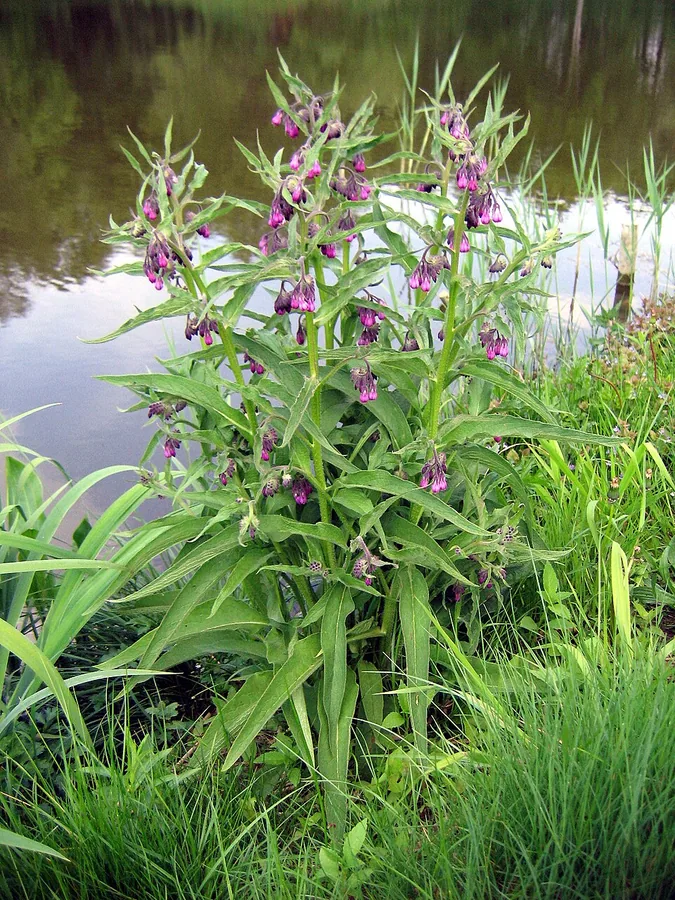
Comfrey is a bold, hairy-leaved perennial in the borage family that gardeners plant for the foliage instead of the flowers. It drives down a deep taproot that hauls nutrients up from far below where other roots reach, which is exactly why people keep cutting it for mulch and compost. Those nodding bell-shaped blooms in purple, pink, or cream pull in bees from late spring right through summer.
It demands next to nothing from you. Comfrey thrives in full sun or partial shade, laughs off cold all the way down to -4°F (-20°C), and once the taproot has anchored it powers through dry stretches that would knock out a thirstier plant. Hand it a damp, rich corner and it takes off fast and leafy.
Here is the trade-off: comfrey moves in to stay. Every leftover scrap of root can fire up a whole new plant, which makes it almost impossible to remove once it is settled. Choose its home with care, because wherever you plant it is most likely where it lives for good.
Care
The short version: full sun to part shade in deep, rich, moist soil. Keep it watered as it establishes, feed it next to never, harvest the leaves for mulch all season, and plant it somewhere you are glad to keep it for keeps.
Light
Comfrey thrives in full sun or partial shade. Full sun delivers the leafiest growth and the breeziest airflow, which holds the foliage fungi back, while a touch of shade works fine where summers run hot.
Water
It wants soil that stays evenly moist and feels right at home in damp ground beside ponds or ditches. Keep the water coming steadily while a young plant is digging in. Once the deep taproot anchors, a settled clump rides out dry spells with little drama.
Soil
Set it into deep, fertile, moisture-holding loam loaded with organic matter. Comfrey shrugs off pH worries and accepts anything from 6.0 to 7.5, but the richer and deeper the ground, the bigger and faster it powers up.
Temperature
This is a truly hardy plant, easy across -4°F to 86°F (-20°C to 30°C). It dies back over winter and rockets up fresh in spring, untroubled by even hard freezes.
Humidity
Average humidity of 40% to 70% suits it nicely, and it stays unfussy. Packed, stagnant air is the one genuine hazard, since it ushers in the rust and mildew that mark the leaves, so leave space for the air to flow.
Feeding
Comfrey hardly wants feeding at all. A light dressing of compost or aged manure in spring covers it, since this is a hungry accumulator that digs up its own nutrients and ends up feeding the plants around it instead of asking for a meal.
Pruning
Cut the leaves back several times a season for mulch or compost, and the plant springs right back. Trim off the flower stalks if you would rather skip the self-seeding, and pull on gloves and long sleeves, because the bristly leaves can prickle and irritate skin.
Repotting
Comfrey and pots are a poor match, all thanks to that deep taproot. If you do raise it in a container, divide it every year or two, and keep an eye out for roots circling, breaking out of the drainage holes, or soil that dries almost the instant you water it.
Size & spacing
A grown plant reaches 2 to 4 feet (60 to 120 cm) tall and stretches 24 to 35 inches (60 to 90 cm) across. Hand each clump that much space so air sweeps through and the big leaves stay free of rust and mildew.
When to plant
Comfrey works to the seasons rather than a fixed schedule. Drop in divisions or root cuttings in spring as soon as the soil is workable, enjoy the flowers opening from late spring through summer, and harvest the leaves several times across the growing season for mulch and compost.
Northern hemisphere
Southern hemisphere
Typical months for a temperate climate: start earlier in warm zones, later where spring frosts linger.
- Plant: Spring, from root cuttings or divisions set into prepared, fertile soil
- Harvest: Nodding bell-shaped purple, pink, or cream flowers appear from late spring through summer; leaves can be cut several times a season for mulch or compost once plants are established
Hardiness
USDA hardiness zones: 3–9
Temperature: down to -40°C
Troubleshooting
Comfrey is rugged, so nearly all its troubles boil down to harmless leaf fungi or the plant marching into spots you never meant it to take. Spot what is happening below and jump on it early, before a small patch digs in for good.
Fresh plants popping up from snapped root scraps
Comfrey roars back from even a tiny fragment of its brittle taproot, so digging or tilling beside a settled clump just hands you more plants. Pull out every bit of that deep root you can reach, then keep slicing or smothering whatever resurfaces until the root reserves give out. Honestly, the smart move is choosing the right spot before planting, because getting rid of it is brutal.
Fix:
- Dig out as much of the deep taproot as possible
- Repeatedly cut or smother new shoots to exhaust root reserves
- Site comfrey carefully from the start, as eradication is difficult
Rusty orange bumps beneath the leaves with yellow above
You are looking at comfrey rust, a fungus that camps out on the leaf undersides and puffs out spores the moment you brush them. Slice every affected leaf back to soil level and bin it instead of composting. The flush of new growth that follows almost always returns clean and healthy.
Fix:
- Cut affected foliage to the ground and dispose of it (do not compost)
- Improve air circulation by thinning crowded clumps
- Allow vigorous regrowth, which usually emerges healthy
A chalky white film blanketing the broad leaves
Powdery mildew moves in on the big leaves as late summer arrives, mostly where clumps pack together in muggy, still air. Strip away the worst leaves, open up some breathing room around the clump, and shear the plant down low. Fresh foliage springs back clean the moment the air starts moving again.
Fix:
- Remove and dispose of heavily infected leaves
- Increase spacing and airflow around plants
- Cut the plant back to encourage fresh growth
Toxicity
Comfrey holds pyrrolizidine alkaloids, natural compounds that poison the liver. The threat is not a fast stomach upset but slow, building damage from eating it, so this is a plant to grow and handle rather than to eat or feed. Keep it out of food and off the regular menu for pets and livestock, and leave its old folk reputation as a tonic firmly in the past.
Toxic to
Cats · Dogs · Horses · Rabbits · Livestock · Birds · People
Cats Caution
Most cats sniff the prickly, bitter leaves and walk away, which works in your favor. The real concern targets the liver, not a sudden bout of sickness, because the pyrrolizidine alkaloids stack up damage with each repeated nibble, so steer a curious cat clear of the foliage.
Dogs Caution
Coarse, hairy leaves put off most dogs, who give them a pass. Any dog that gnaws them anyway swallows liver-damaging alkaloids, and the harm creeps in quietly rather than as a clear tummy upset, so never let a taste turn into a routine.
Horses Caution
Horses tend to step around comfrey out in the field, but steady grazing or comfrey baked into cured hay is where trouble starts. The alkaloids scar the liver across weeks and months, and clues like weight loss or a dull coat surface only after the damage runs deep.
Rabbits Caution
Some keepers hand comfrey to rabbits as a green, yet a small body picks up liver strain from even light, repeated servings. Keep it off the menu rather than working it in as everyday forage.
Livestock Caution
Cattle, goats, and sheep will eat comfrey as forage, though feeding it day after day packs the liver with pyrrolizidine alkaloids. That damage piles up silently, so it should never serve as a staple feed.
Birds Caution
Poultry and other birds might peck at the leaves, and the same liver-toxic alkaloids hit them too. Leave comfrey out of the daily ration and pass along only the rare, minor green if anything at all.
People Caution
Comfrey carries a long folk reputation as a healing herb, yet it no longer earns a place in food or drink. The pyrrolizidine alkaloids are hepatotoxic, and repeated internal use can bring on serious, lasting liver damage, which is why it belongs on the skin or in the compost pile and not steeping in a teapot.
Do NOT ingest comfrey. Its pyrrolizidine alkaloids are liver-damaging, especially with chronic internal use, and the US FDA has advised against oral comfrey supplements; internal use is discouraged and restricted. Use it only topically or as a garden amendment (mulch/compost), wear gloves and long sleeves when handling because the bristly leaves can irritate skin, and keep it out of food and feed.
Helpline numbers

United States
ASPCA Animal Poison Control: (888) 426-4435 (fee applies)
Poison Control: (800) 222-1222



Canada
Poison Centres: 1-844-764-7669
Varieties
Almost all garden comfrey traces back to a few named forms, picked either to rein in its spread or to liven up the leaves.
Symphytum × uplandicum (Russian comfrey, incl. 'Bocking 14')
A sterile hybrid clone prized as a fertilizer and compost plant, since it seldom sets seed and so stays put instead of running rampant.
Symphytum officinale 'Variegatum'
An ornamental pick with cream-trimmed leaves, planted for the pretty foliage more than sheer growing muscle.
How to propagate
Comfrey ranks among the simplest plants to multiply, largely because nearly any piece of its root is itching to grow into a brand new plant.
DivisionEasy
Early spring or autumn · 4 to 8 weeks for visible new growth, with full establishment over one season
Bulk up your comfrey by splitting the crown in early spring or autumn, or by taking root cuttings, because nearly any chunk of that brittle taproot will leap into growth. Fresh shoots break ground in 4 to 8 weeks and the plant beds in completely across a single season. That same eagerness that makes propagation a breeze is the very thing that makes it tough to fence in, so plant each division exactly where you want it to stay.
Myths
Comfrey tea is safe to drink because it is a natural herb.
Natural does not equal safe in this case. The pyrrolizidine alkaloids in comfrey are hepatotoxic and can trigger serious liver damage, and the US FDA has warned against oral comfrey products. Keep it on the skin or in the compost, never in a cup.
Once you pull the plant out, comfrey is gone for good.
It bounces back from the tiniest leftover scrap of root. That deep, brittle taproot resprouts with ease, so a clump you thought you had cleared can keep returning for years. Plant it only where you want it to settle in.