Ornamental · Boraginaceae
Lungwort
Pulmonaria saccharata
Give it cool shade and steady moisture and lungwort sets the dim corners alight with early spotted leaves and pink-to-blue flowers.
Partial shade
Every 7 days
USDA 3–9
10–18 in · 25–46 cm
Overview
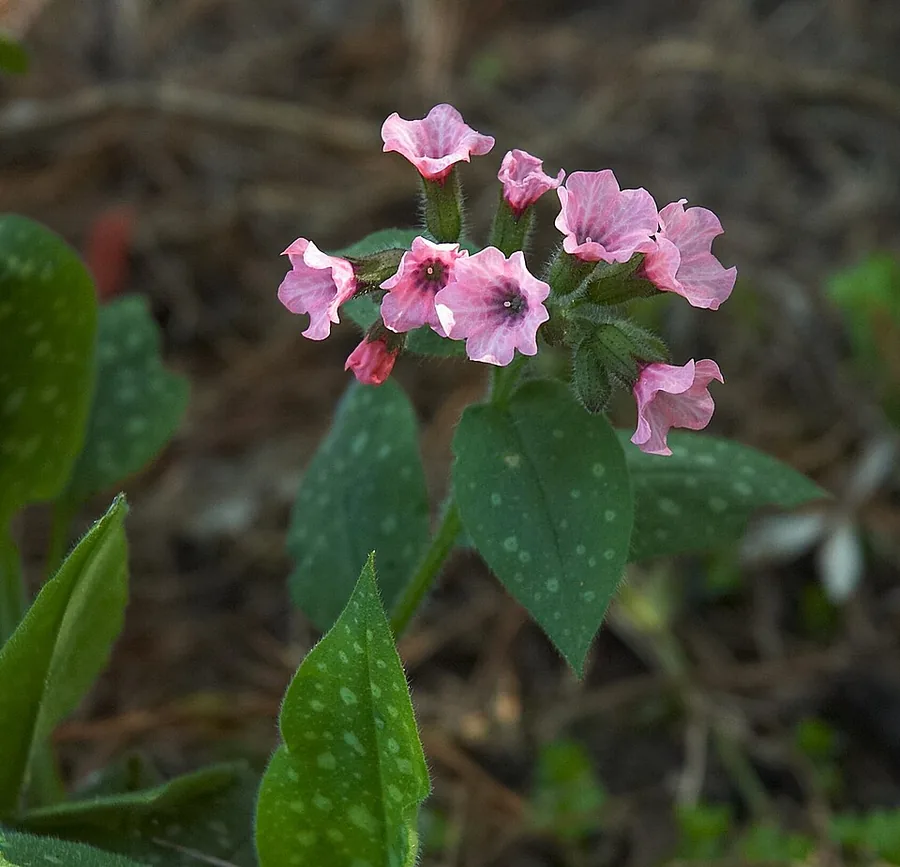
Lungwort is a low, clumping perennial that delivers two payoffs at once: its silver-spotted leaves and its early flowers that open pink and switch to blue on one and the same stem. It belongs to the borage family, and it grabbed its offbeat name from old herbalists who swore the speckled leaves looked like diseased lungs. The spots are just part of the foliage, but the name stuck around for good.
This one is a shade plant to its core, and that is where it shines. It leaps to life in the dim ground under trees and along a wall's north side, spots where most flowers sulk, and it bursts into bloom in late winter to spring while the rest of the garden is barely stirring. Those early flowers fuel the first bees, and the marked leaves keep the show rolling long after the blooms drop.
Once it grabs hold, lungwort demands almost nothing from you. Keep the soil cool and evenly moist in real shade and it races into a slow, tidy ground cover that fills the gaps. The one move it will not forgive is hot, dry sun, which scorches the leaves and drops the plant into a sulky dormancy, so keep it in the shade and it powers on.
Care
The short version: drop lungwort into part to full shade, keep the soil cool, rich, and evenly moist, hand it a light feed each season, and split the clumps in fall once they crowd.
Light
Lungwort craves part to full shade, the deep, cool kind under trees or on a building's north side. Push it into full shade and it still flowers, but real sun scorches the leaves and slams the plant into early dormancy, so keep it shaded.
Water
Keep the soil cool and evenly moist but never waterlogged, and water about once a week through dry spells. Let it dry out and the leaves wilt and the plant drops into dormancy to save itself, so stay on top of it.
Soil
Load it into cool, humus-rich ground that grips moisture yet still drains. Dig in heaps of compost or leaf mold, exactly the soil it would meet on a woodland floor.
Humidity
Average
Feeding
A slow-release all-purpose fertilizer once a season is the whole job. Scatter it during the growing season and let the rich, organic soil do the rest.
Pruning
Strip off the older, tattered, or mildewed leaves as they crop up through the year. Cut the foliage back once the flowers fade and a fresh, clean flush of leaves surges in for summer.
Size & spacing
Plants stay low at 10 to 18 inches (25 to 46 cm) tall and sprawl wider than they stand, reaching 18 to 24 inches (46 to 61 cm) across. Hand each one that much room and it weaves into a slow ground cover.
When to plant
Lungwort runs hard on the cool end of the year. Plant it out in spring or fall into a shaded bed, and watch the flowers pop in late winter to spring, pink at first and ripening to blue, well before most perennials even budge.
Northern hemisphere
Southern hemisphere
Typical months for a temperate climate: start earlier in warm zones, later where spring frosts linger.
- Sow: Seldom grown from seed; if used, sow seed in early spring.
- Plant: Spring or fall in a shaded site.
- Harvest: Blooms late winter to spring (April to May), flowers opening pink and maturing to blue.
Hardiness
USDA hardiness zones: 3–9
Temperature: down to -40°C
Troubleshooting
Site lungwort right and it powers along in good health, so nearly every snag traces straight to too much sun or the wrong soil moisture. Scan the leaves and crown for the early signs below. Fix the spot and the plant charges right back.
A collapsing plant over a soft, rotting crown
When the plant caves in, crown and root rot is usually the culprit, striking where soggy soil refuses to drain and the roots turn dark and mushy. Dig organic matter in to bust the ground open and steer the plant clear of any dip where water pools. Then rescue the firm crowns, split them, and drive them back into soil that drains for a fresh start.
Fix:
- Improve drainage with organic matter
- Avoid waterlogged sites
- Divide and replant healthy crowns in well-drained soil
Browned leaf edges and a midday flop in the sun
Browned edges and a midday flop signal leaf scorch, the fallout from too much sun and dry soil. Shift the plant into part to full shade, keep the soil evenly moist, and pile on mulch to trap water and cool the roots. Lungwort is a shade lover through and through, so the right spot flips the whole thing around fast.
Fix:
- Move or transplant to part to full shade
- Water to keep soil evenly moist
- Mulch to keep roots cool and reduce moisture loss
White powdery dust creeping across the leaves
Spotted a chalky dust on the leaves? That is powdery mildew, and it jumps in when the soil dries out and stale air lingers around packed leaves. Snap off the worst leaves, open the clump so air rushes through, and keep the soil evenly moist. Chop it back hard and a wave of clean new growth charges right back.
Fix:
- Remove and discard affected leaves
- Improve air circulation and keep soil evenly moist
- Cut back foliage to promote clean new growth
Ragged holes and glossy trails raked across the leaves
Ragged holes and glossy trails mean slugs and snails have moved in, chewing overnight and hitting hardest after a soaking. Grab a flashlight, head out at dusk, and pluck them off, then rake away the leaf litter they hide under all day. Keep coming under fire? Drop a bait or a barrier and turn the tide.
Fix:
- Hand-pick slugs in the evening
- Remove leaf litter and debris that shelter them
- Use slug baits or barriers if damage is heavy
Toxicity
Great news for pet owners and parents: lungwort is not toxic. The ASPCA does not list Pulmonaria as poisonous to cats or dogs, and no reports flag harm to other animals or people. Let a curious nibble slide, it is nothing to fret over.
Safe for
People · Cats · Dogs · Horses · Rabbits · Livestock · Birds
Cats None
Cats can roam right up to lungwort with zero worry, since it holds no toxic compounds even if one takes a nibble.
Dogs None
Dogs can barrel through the foliage or chew a leaf and stay perfectly fine, and the ASPCA does not list it as poisonous.
Horses Safe
Horses have nothing to fear here, because the plant packs nothing that would trouble a grazing animal that size.
Rabbits Safe
Rabbits can dash straight through a planting safely, though the fuzzy leaves tend to wave them off before they bite.
Livestock Safe
Cattle, goats, and sheep can graze alongside it with no worry, and no reports tie the foliage to any poisoning.
Birds Safe
Garden birds run no risk at all from the leaves or the flowers.
People Safe
People can grow and handle lungwort freely, so kids can dig right in beside it in the garden.
Varieties
Lungwort earns its keep for its leaves as much as its flowers, and the named cultivars below break down mainly by how silvered the foliage runs and what color the blooms turn.
Mrs. Moon
The beloved classic that shows off heavily silver-spotted leaves and pink buds bursting open into soft blue flowers.
Raspberry Splash
An upright grower that shoots up with silver-spotted leaves and flowers blazing in raspberry-pink to violet.
Spot On
A vigorous silver-spotted selection that pumps out coral-pink blooms shifting to blue as they age.
How to propagate
Lungwort multiplies with real ease, and splitting a settled clump beats seed hands down for a fast, reliable win.
DivisionEasy
Fall, when clumps become overcrowded · One growing season
Dividing is the fast, sure-fire way to pump out more lungwort. Once a clump packs itself tight in fall, lift it, split the crown into pieces, and trim the older leaves as you drop each one back in. Every division digs in over a single growing season.
SeedModerate
Early spring · Seedlings reach blooming size in about a year
Seed is the slower play, and since the named cultivars refuse to come true, the seedlings rarely echo the parent. Sow in early spring to chase the challenge, and expect the young plants to rocket to blooming size in about a year.
Myths
The spotted leaves mean lungwort cures lung disease.
The old doctrine of signatures grabbed those leaf spots as proof the plant heals the lungs, but the spots are just a natural foliage pattern. The name and the herbal lore spring straight from that resemblance, not from any proven effect on the lungs.
Lungwort spreads fast and turns invasive.
Forget the rumor, it inches outward slowly on its roots and never bolts wild the way invasive plants do. When a clump swells too wide, just dig it up and split it.