Ornamental · Boraginaceae
Virginia Bluebells
Mertensia virginica
Plant it in rich, moist shade and watch Virginia bluebells wash the spring woodland in sky-blue.
Partial shade
Every 3–7 days
USDA 3–9
18–24 in · 46–61 cm
Overview
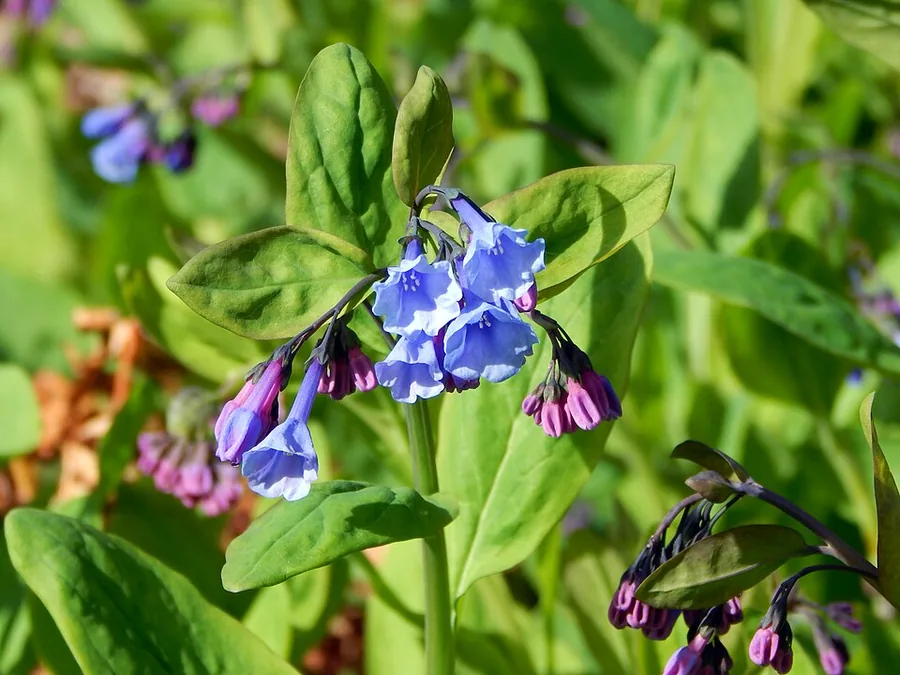
Virginia bluebells put on one of the finest spring performances in the eastern woodland, and they do it early. Pink buds swell and pop open into nodding, sky-blue trumpets on arching stems while the trees overhead stand bare, pulling in the first bees of the year before the rest of the garden even wakes. The plant runs in the borage family and thrives wild across rich, damp forests and floodplains.
The big surprise is how fast it comes and goes. As a spring ephemeral, it packs all its growing, flowering, and seeding into a few electric weeks, then yellows and melts back to the ground by mid-summer. Down below the rhizomes just recharge through the heat, ready to launch fresh growth again next spring.
Hand them a forest-floor setup and they take off with almost no fuss. Give them cool part-to-full shade, keep the soil moist and rich with leaf mold, and let them roam into a slow-building colony. Plant them once where they are happy and they keep coming back and self-sowing for years, spreading the fun.
Care
The short version: part-to-full shade plus rich, humusy soil kept evenly moist through spring gets them going. Topdress with leaf mold, leave those deep roots be, and let the foliage die back on its own once the flowers wrap up.
Light
Set them in part-to-full shade, the dappled light a woodland floor soaks up in spring. They will take a touch more sun where the soil stays reliably moist, but park them in a hot, dry, sunny spot and they turn weak and stingy with flowers, so aim for the shadier side.
Water
Keep the soil consistently moist through spring growth and bloom, and reach for the hose every few days in dry spells. Once the foliage dies back by mid-summer, ease right off, since the dormant rhizomes want next to nothing and hate sitting wet.
Soil
Load them into rich, humusy, well-drained woodland soil brimming with organic matter, just like the leaf litter of a forest floor. They roll happily anywhere from 6.0 to 7.5 on the pH scale, so most beds boosted with compost will do the job.
Temperature
This plant is seriously tough, brushing off winters down to -40°F (-40°C) and taking summer heat up to about 86°F (30°C). It dodges the worst of the heat by going dormant the moment the weather turns.
Humidity
Everyday outdoor air suits them just fine, so skip chasing a number. What really drives them is steady soil moisture through the spring growing season.
Feeding
A light spring topdressing of leaf mold or compost worked into the soil fuels them nicely. Leave the heavy synthetic fertilizer on the shelf, since it does a woodland native like this more harm than good.
Pruning
Pruning? None required, and that is a win. Let the yellowing foliage die back on its own after bloom so the plant banks energy for next year, and hold off on cutting green leaves early.
Repotting
Established clumps power along best when left alone and rarely need lifting. Divide only when an old planting jams up or its bloom drops off, and even then, go easy on that deep taproot.
Size & spacing
Plants shoot up to about 18 to 24 inches (46 to 61 cm) tall and spread 12 to 18 inches (30 to 46 cm) wide. Hand each one that much room and they knit into a sweeping drift over the years.
When to plant
Virginia bluebells sprint through an early, tight schedule, so timing pays off. Get dormant rhizomes in the ground in fall or young plants out in early spring, soak up the flowers from roughly March to May, then watch the foliage fade as the plant powers down into summer dormancy.
Northern hemisphere
Southern hemisphere
Typical months for a temperate climate: start earlier in warm zones, later where spring frosts linger.
- Sow: Not typical; seed needs cold-moist stratification. Sow fresh seed outdoors or stratify 6 weeks before spring planting.
- Plant: Plant dormant rhizomes or bare roots in fall, or set out plants in early spring.
- Harvest: Blooms early to mid-spring, roughly March to May
Hardiness
USDA hardiness zones: 3–9
Temperature: down to -40°C
Troubleshooting
Here is the encouraging part: most bluebell scares are just the plant doing its thing. The headliner is the summer die-back, which looks dramatic but only means it is resting up. Match what you spot below before you jump to a fix.
Barely any blooms and a clump that won't get going
Shy flowering almost always traces to too much sun or soil gone dry, since these woodland plants run on cool, moist shade. A freshly moved or split clump will sulk too, because that deep taproot cannot stand disturbance. Shift it to part-to-full shade with rich, evenly moist soil, feed in some leaf mold, then leave it alone to hit its stride.
Fix:
- Relocate to part-to-full shade with consistently moist, humus-rich soil
- Leave established clumps undisturbed to recover
- Topdress with leaf mold or compost
Leaves turning yellow and vanishing as summer kicks in
Relax and read this as summer dormancy, not disease. Virginia bluebells is a spring ephemeral, so once it flowers and sets seed the leaves yellow and drop back to the ground while the rhizomes recharge below. It bounces back on its own next spring, so leave it be and stake a marker so you never dig into it by accident.
Fix:
- Do nothing; allow foliage to die back naturally
- Mark the clump location so it is not dug up or damaged while dormant
- Interplant with ferns, hostas, or other shade perennials to fill the gap
Ragged holes torn through the leaves and flowers
Spot silvery slime trails and you have nailed the culprits: slugs and snails, out feeding at night in the cool, damp shade these plants love. Pick them off after dark and rake away the damp debris and mulch where they hole up. If the chewing keeps spreading, scatter an iron-phosphate bait to beat back the pressure without harming pets.
Fix:
- Hand-pick slugs and snails in the evening
- Remove damp debris and mulch that harbor them
- Use iron-phosphate slug bait if pressure is heavy
Toxicity
Great news on the safety front. Virginia bluebells is not toxic to people or pets, carries no poison warning on extension references, and people have even foraged its young growth as a wild green. Still, keep a pet from grazing it habitually, since a big mouthful of nearly any plant can leave a mild stomach ache.
Safe for
People · Cats · Dogs · Horses · Rabbits · Livestock · Birds
Cats None
Grow it around cats with confidence, since it packs no known toxin. A curious nibble might spark a little mild stomach upset at most.
Dogs None
No poisoning risk for dogs here. The worst a dog that gulps a mouthful of leaves faces is a quick, passing bellyache.
Horses Safe
Safe for horses, with nothing in the foliage that can do them harm.
Rabbits Safe
Rabbits can graze it freely, and since it often lands on rabbit-resistant lists, they usually skip right past it.
Livestock Safe
Grazing cattle, goats, and sheep face zero toxicity from this native wildflower.
Birds Safe
No danger to birds whatsoever, and they swing by the spring blooms for nectar.
People Safe
Non-toxic to people, and its tender young growth carries a long history of being foraged and eaten.
Generally safe around pets and children; as with any plant, discourage habitual ingestion to avoid mild stomach upset.
Varieties
No cultivar rabbit hole to fall down here, because the wild species itself is the one Virginia bluebells worth growing.
Mertensia virginica (straight species)
Just about everyone grows the wild species, its pink buds bursting open into nodding, sky-blue trumpets, since named cultivars barely turn up for sale at all.
Companions
Virginia bluebells pair best with later-rising shade plants that fill the gap when the foliage dies back, keeping the bed from looking bare for the rest of the season.
How to propagate
Ready to make more? You can split dormant clumps or sow fresh seed, and both pay off handsomely if you bring a little patience.
DivisionModerate
Summer after foliage die-back, while the rhizomes are dormant · 1-2 growing seasons
Hold off until mid-summer, when the foliage has died back and the rhizomes are dormant, then lift and split the clump. This spring ephemeral packs a deep, touchy taproot, so move fast, keep root disturbance minimal, and get the pieces replanted right away. Fresh divisions take 1 to 2 growing seasons to settle in and bloom strong.
SeedModerate
Sow fresh seed in early summer right after it ripens, or cold-moist stratify 6 weeks before spring sowing · 2-3 years to first bloom
Sow seed fresh in early summer the instant it ripens, since it fires up best when it never dries out; if you have to hold it, hand it 6 weeks of cold-moist stratification before a spring sowing. Seedlings take 2 to 3 years to reach flowering size, so play the long game, and in a prime woodland spot the plant self-sows and spreads all by itself.
Myths
Leaves that yellow and vanish in summer must mean the plant is dead.
Not even close, it is thriving. Virginia bluebells is a spring ephemeral, so its foliage naturally yellows and drops back to the ground by mid-summer while the plant recharges underground. The clump re-emerges every spring, year after year, all on its own.
Virginia bluebells is toxic to cats and dogs.
Put that one to rest. It never lands on the ASPCA toxic plant list, and extension references flag no poison warning. It is a non-toxic native wildflower, and people have long foraged its young growth as a wild green.