Shrub · Grossulariaceae
Currant
Ribes rubrum
Tough as nails and bursting with tart berries, the currant earns a spot in any cool-climate garden.
Full sun
Every 5–7 days
USDA 3–7
3–6 ft · 0.9–1.8 m
Overview
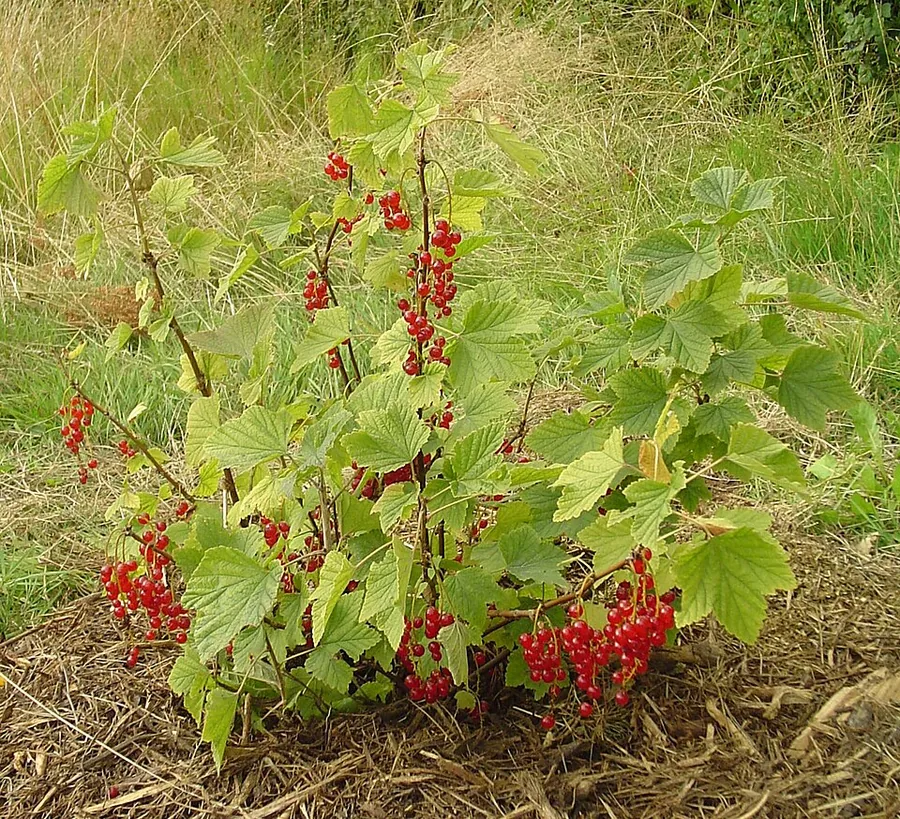
The currant is a small deciduous shrub that loads up with clusters of glossy berries in early summer, and it delivers them year after year. It belongs to the genus Ribes, the same crew as the gooseberry, and the garden kinds split into the bright red and pale white forms of Ribes rubrum and the darker, muskier black currant, Ribes nigrum. Fresh off the bush the fruit packs a sharp, tart punch, which is exactly why so much of it turns into jam, jelly, juice, or a pie.
Cold weather brings out the best in this plant. It powers through winters down to -40°F (-40°C) and crops well in the cool, short summers of USDA zones 3 to 7, right where fussier fruit gives up. The bush stays compact at 3 to 6 feet (90 to 180 cm) tall, handles a fair amount of shade, and keeps producing for years once it digs in.
One thing decides where it goes. Currants are an alternate host for white pine blister rust, a disease that needs both a currant and a five-needle white pine to complete its cycle, so some states still restrict planting, black currant most of all. Check the local rules, keep the bushes clear of white pines, and you have got one of the most rewarding fruits a beginner can grow.
Care
The short version: give it full sun to part shade, rich well-drained soil kept evenly moist at about an inch of water a week, and one late-winter prune a year to keep the canes young and the berries piling up.
Light
Currants ripen their biggest, best crop in full sun, so aim for an open spot, though they take partial sun and even partial shade better than most fruit. In hot-summer gardens, a touch of afternoon shade keeps those shallow roots from cooking.
Water
Pour on about 1 inch of water a week and never let the bush run dry while the fruit is setting. The roots stay shallow and fibrous, so a good layer of mulch pulls its weight, locking in moisture and keeping the soil cool.
Soil
Plant it in rich, well-drained loam packed with organic matter and it takes off. A slightly acidic pH of 6.0 to 6.5 is the target.
Temperature
This shrub laughs at cold, taking winters as low as -40°F (-40°C) and shrugging off summer heat up to about 86°F (30°C). It cranks out its best fruit where summers stay cool.
Humidity
Average humidity around 40% to 60% is all it needs, so skip the fuss. The real win is air moving freely through the bush, because stagnant, damp growth is exactly where mildew and rust dig in.
Feeding
Feed it once a year, in late fall or early spring, with a few shovelfuls of composted manure or a balanced nitrogen source per plant. Spread it around the bush instead of dumping it in the planting hole, where it can burn the roots.
Pruning
Get in there every year in late winter while the bush is dormant. Fruit forms on 1-, 2-, and 3-year-old wood, so keep 3 to 4 canes of each age and clear out anything older than 3 years to keep the bush charging ahead.
Repotting
Currants almost always grow in the ground, so repotting barely comes up. For a container plant, bump it up every 2 to 3 years while dormant, sooner if the roots start circling or the pot dries out fast.
Size & spacing
A mature bush shoots up to 3 to 6 feet (90 to 180 cm) tall and spreads 3 to 5 feet (90 to 150 cm) wide, so hand it that much room. With space to breathe, air moves through and disease stays down.
When to plant
Currants run on a cool-season clock, and the payoff comes quickly once you learn it. Plant dormant stock in late fall or early spring, catch the greenish flowers opening in April and May, and start picking ripe berries through June and July.
Northern hemisphere
Southern hemisphere
Typical months for a temperate climate: start earlier in warm zones, later where spring frosts linger.
- Plant: Late fall or early spring while plants are dormant, using 1- or 2-year-old stock
- Harvest: Greenish flowers in spring (April to May); berries ripen June to July
Hardiness
USDA hardiness zones: 3–7
Temperature: down to -40°C
Troubleshooting
Most currant trouble lands on the leaves and canes, and the bush usually flags it early, which puts you firmly in control. Learn the handful of common problems below and you can jump in before any of them spreads. Spot what you see, then act fast while it still does real good.
Orange pustules firing up the leaves before they drop
Yellow-orange pustules and leaves bailing out early point straight to white pine blister rust, and the currant plays only half the part. The fungus has to reach a five-needle white pine to wrap up its life cycle, so a sick bush hands the disease to nearby pines. Yank out badly infected plants, keep currants well clear of white pines, and grab resistant or immune cultivars to stay ahead of it.
Fix:
- Remove and destroy heavily infected Ribes plants
- Plant rust-resistant or immune cultivars
- Keep currants away from white pines
White powdery dust coating leaves and shoot tips
A pale, powdery film spreading over the leaves and twisting the new shoots is powdery mildew, a fungus that pounces on crowded, shaded growth. Open the bush up with some pruning to get air flowing through it, and snip off the worst-coated tips. Save a labeled fungicide for the rare moment the infection truly breaks loose.
Fix:
- Prune to open the canopy for airflow
- Remove and destroy infected shoot tips
- Apply a labeled fungicide only if infection is severe
A cane wilting fast from a hollowed-out core
When one cane wilts and crashes while the rest of the bush powers on, point the finger at the currant borer, a clearwing moth larva tunneling through the center. Slice a dying cane open and the hollow channel gives it away. Cut the infested canes right to the ground and burn them, then renew the bush every year by clearing the old wood the borers love.
Fix:
- Prune out and destroy infested canes to the ground
Red, puckered blisters bubbling up on spring leaves
Those red welts riding the top of the leaf trace right back to the currant aphid feeding underneath. Flip a leaf and you will catch the colonies packed along the veins. Blast the undersides with insecticidal soap or horticultural oil, then let ladybugs and other predators mop up whatever is left.
Fix:
- Spray insecticidal soap or horticultural oil on undersides
- Encourage beneficial predators such as ladybugs
Toxicity
Here is the part that makes growing it even easier: the true garden currant is safe all round. The berries are a food crop you can eat straight off the bush, and neither the fruit nor the foliage poisons pets, livestock, or people. One warning sits off to the side, though, because the dried 'currants' sold for baking are really small raisins, and grapes and raisins do harm dogs, so keep those off the floor.
Safe for
People · Cats · Dogs · Horses · Rabbits · Livestock · Birds
Cats Safe
The true Ribes currant is no threat to cats. Most cats stroll right past the shrub anyway, and a nibbled leaf does no harm.
Dogs Safe
The living plant and its fresh berries are safe for dogs. A dog that goes overboard on the fruit might get a passing bout of loose stool, but nothing worse.
Horses Safe
Horses can browse the foliage without trouble, since nothing in the currant bush is poisonous to them.
Rabbits Safe
Rabbits can nibble the leaves and fruit safely. Keep treats modest, since too much sweet fruit can unsettle a small gut.
Livestock Safe
Cattle, goats, and sheep take no harm from the plant and can graze around it with zero risk.
Birds Safe
Birds zero in on ripe currants, and the berries are good for them, so net the bush if you want any of the crop left for yourself.
People Safe
For people the berries are a real food crop, eaten fresh or cooked into jams, jellies, and juice. There is nothing here to worry about.
No special handling needed for the living Ribes shrub or its fresh berries.
Varieties
Currants come in red, white, and black, plus a few standout cultivars worth chasing down. These are the ones you will run into most often.
Black currant (Ribes nigrum)
A close cousin grown for its aromatic, musky black berries, it catches white pine blister rust far more readily than red currant, so some US states restrict or ban it outright.
White currant
A pale, see-through form of Ribes rubrum that brings a sweeter, milder flavor than the red type.
Red Lake
A heavy-cropping red currant that dangles its bright fruit in long clusters called strigs, and it pops up in more gardens than almost any other.
Titania
A vigorous black-currant type that rockets to around 6 feet and shrugs off disease better than most.
Companions
Currants get along with their fellow Ribes but should be kept clear of white pines, which they trade a serious disease with.
Plant near
Gooseberry (Ribes uva-crispa): A fellow Ribes with the same cool-climate, partial-shade-tolerant culture, so it grows easily alongside currants under matching care.
Keep apart
Eastern white pine (Pinus strobus): Ribes is the alternate host for white pine blister rust; planting currants near 5-needle white pines spreads the disease to the pines.
How to propagate
Currants multiply fast and easily, and the best part is that both common methods hand you new plants that match the parent exactly.
Stem cuttingsEasy
Take dormant hardwood cuttings in late winter; semi-hardwood cuttings can be taken mid-July to first freeze · Roots form within one growing season; a transplantable plant in 1 to 2 years
Cuttings are the go-to way to crank out more currants, and they grow true to the parent. Snip 8 to 10 inch lengths of mature, dormant wood in late winter, or grab softer semi-hardwood pieces from mid-July to the first freeze. They root over a single growing season and stand ready to move on as plants in 1 to 2 years.
LayeringEasy
Spring through summer · Rooted layers ready to sever the following dormant season
Layering is even quicker to pull off. Bend a low outer branch down and pin it to the soil any time from spring through summer, and it fires out roots right where it touches the ground. Cut the new plant loose from its parent the following dormant season and you have a fresh currant to plant.
Myths
Currants are dangerous to dogs because dried currants are toxic.
This one rides on a shared name, so shake it off. The dried 'Zante currants' on the baking shelf are really raisins made from tiny Corinth grapes, and yes, raisins do harm dogs. True garden currants in the genus Ribes, red, white, and black, are a completely different plant, and they are safe.
Growing any currant is illegal in the United States.
Great news for growers: the old federal ban that once aimed to slow white pine blister rust got scrapped way back in 1966. Now it comes down to your own state, and it is black currant (Ribes nigrum) that draws the most restrictions, since it carries the rust more readily than the red or white kinds.