Herb · Asteraceae
Curry Plant
Helichrysum italicum
A silver, curry-scented subshrub that rewards full sun and lean soil and asks almost nothing in return.
Full sun
Every 7–14 days
USDA 8–11
16–24 in · 40–60 cm
Overview
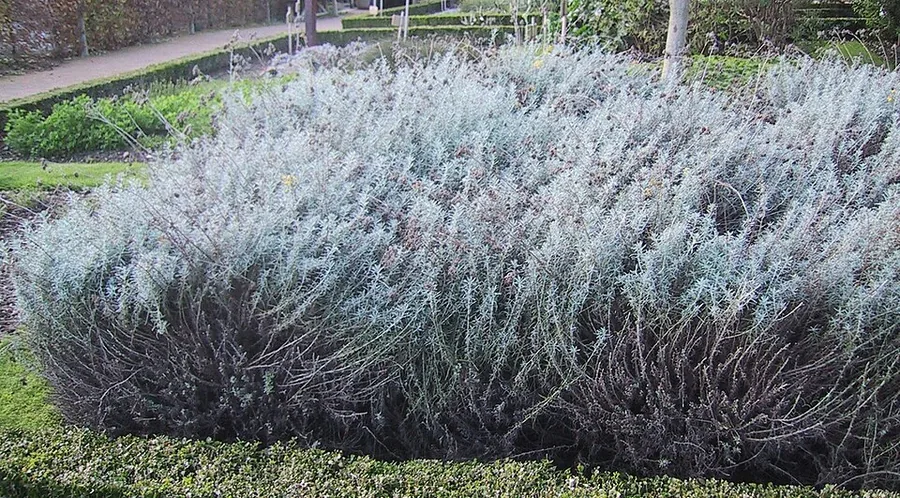
Curry Plant earns its name from one thing alone, its warm, curry-like scent, which lifts off the silvery foliage the moment you brush past it. It is not the source of curry powder, and it is not the curry leaf that flavors Indian cooking. Helichrysum italicum belongs to the daisy family, Asteraceae, and grows as a low woody mound of narrow silver leaves topped with small yellow everlasting flowers through summer.
This is a plant shaped by dry, sunny Mediterranean hillsides, so it thrives where many herbs sulk. Give it full sun and sharp, gritty drainage and it powers along on neglect, shrugging off heat and going drought-tolerant once its roots take hold. The flip side is simple to remember: soggy soil is its one real enemy, and waterlogged roots will rot from below.
Rated easy, it suits new growers and busy ones alike, and it pays back a light spring shear by holding a tidy, compact mound year after year. Grow it in the ground in warmer zones or keep it in a movable pot where winters bite hard, and you get fragrant silver foliage, cheerful summer flowers, and a tough constitution all in one keen little subshrub.
Care
The short version: give Curry Plant full sun, lean gritty soil that drains fast, and water only when the top half has dried, roughly every 7 to 14 days. Keep it in the warmth, between 23°F to 86°F (-5°C to 30°C), feed little or not at all, and shear lightly each spring to hold that dense silver mound.
Light
Aim for full sun and this plant truly takes off, holding its silver color and packing in the curry scent. It will get by in partial sun, but push it into shade and it stretches, flops, and loses both the bright foliage and the aroma, so chase the brightest spot you can offer.
Water
Go easy here, because dry roots beat wet ones every time. Wait until the top half of the soil has dried, which usually lands somewhere around every 7 to 14 days, then water well. Once established it shrugs off drought, but soggy soil triggers rot, the single biggest threat to the plant.
Soil
Drainage is the whole game. Plant it in sharp, gritty, well-drained sandy loam at a pH of 6.0 to 7.5, and it happily handles poor ground that would starve fussier herbs. Steer well clear of heavy clay, which holds water and rots the roots fast.
Temperature
It runs warm and sunny by nature, sitting comfortably from 23°F to 86°F (-5°C to 30°C) and matching hardiness zones 8 to 11. Hard frost marks the limit, so in colder spots give it shelter or grow it in a pot you can wheel to safety when the cold rolls in.
Humidity
Keep the air on the dry side, in the low 30% to 50% range, and let it breathe. Muggy, still air is what brings on gray mold, so good airflow does far more for this plant than any amount of misting, which it simply does not want.
Feeding
Hold back on the fertilizer, since lean soil is exactly where this one shines. A light feed in spring is plenty, and skipping it entirely works fine too. Overfeeding backfires, pushing soft, leggy growth and flattening the curry scent you grew it for.
Pruning
A light spring shear is your best move, keeping the mound compact and heading off woody, leggy, bare-in-the-middle growth before it starts. Just resist cutting hard into old bare wood, because it is slow to break and regenerate from the oldest stems.
Repotting
Plants in pots want fresh soil and a roomier home every 2 to 3 years to stay happy. Watch for the telltale signs: roots circling the pot, roots poking out the drainage holes, and soil that dries almost as fast as you can water it.
Size & spacing
Expect a low mound 16 to 24 inches (40 to 60 cm) tall that spreads wider than it stands, reaching 2 to 3 feet (60 to 100 cm) across. Give it that full width when you plant, since the open space keeps air moving and the foliage healthy.
When to plant
Curry Plant is tender, sun-loving, and quick to resent frost while it is young, so let the calendar work in your favor. Start seed indoors 6 to 8 weeks before your last frost, then move plants out after the last spring frost once the soil has warmed, and look forward to clusters of small yellow everlasting flowers running right through summer.
Northern hemisphere
Southern hemisphere
Typical months for a temperate climate: start earlier in warm zones, later where spring frosts linger.
- Sow: 6-8 weeks before last frost
- Plant: after the last spring frost when soil has warmed
- Harvest: clusters of small yellow everlasting flowers in summer
Hardiness
USDA hardiness zones: 8–11
Temperature: down to -12°C
Troubleshooting
Most trouble with this subshrub traces back to too much water or too little light, and the good news is each problem turns around fast. Spot the symptom early, match it to the cause below, and a few quick adjustments put the plant back on track.
Wilting plant with a dark, mushy base
When the whole plant slumps and the base goes dark and squishy, root rot is the culprit, driven by overwatering or heavy soil that traps moisture against the crown. Probe and you will find brown, soft, sour-smelling roots sitting in wet ground. The quick win: stop watering, let everything dry out, mix in grit or sand for drainage, shift container plants to a sunnier breezier spot, and pull a few healthy stem cuttings now as insurance if the crown looks far gone.
Fix:
- Stop watering and allow soil to dry
- Improve drainage with grit or sand
- Move container plants to a sunnier, airier spot
- Take healthy stem cuttings to salvage the plant if the crown is failing
Open woody center with growth only at the tips
A plant that goes leggy turns woody and thin in the middle, flops open, and bares its lower stems while all the fresh growth bunches at the tips. It happens when the subshrub never gets sheared, and too little light makes it reach and stretch. Snap it back fast: shear lightly in spring, move it into full sun, and start fresh cuttings to replace any plant that has gone too far into old wood.
Fix:
- Shear lightly in spring to encourage compact growth
- Provide full sun
- Replace very old woody plants with fresh cuttings
Fuzzy patches and browning leaves in still, damp air
Crowded, damp, stagnant conditions invite gray mold, which shows up as fuzzy gray growth and browning leaves, especially when overhead watering leaves the foliage wet. You will spot the fuzz or the brown blotches during humid, windless spells. The fix is easy and quick: open up the spacing for better airflow, water down at the base instead of over the top, and pinch off any leaves already affected.
Fix:
- Improve spacing and airflow
- Water at the base rather than overhead
- Remove affected foliage
Toxicity
Here is the easy part: Curry Plant is non-toxic right across the board. It is grown for show, not for the table, and it does not turn up as a notable pet toxin. The strong scent does most of the guarding on its own, steering curious mouths away long before anyone takes a real bite.
Safe for
People · Cats · Dogs · Horses · Rabbits · Livestock · Birds
Cats None
Safe to keep around cats. A cat that sniffs the silvery leaves usually backs off from the strong scent, and even a taste does no harm.
Dogs None
Safe for dogs. The aroma tends to put a stop to a second bite, and a curious chew leads to no real trouble.
Horses Safe
Safe near horses. The foliage carries no listed toxin, so a grazing mouthful passes without harm.
Rabbits Safe
Safe with rabbits, who rarely fancy the pungent leaves in the first place.
Livestock Safe
Safe around livestock. Cattle, goats, and sheep can graze nearby, though the strong scent usually keeps them browsing elsewhere.
Birds Safe
Safe for backyard birds and poultry, with no toxin in either the leaves or the flowers.
People Safe
Harmless to handle and to grow around children. The leaves go in only in tiny amounts for their curry-like scent, never as a true cooking herb.
The aromatic foliage is used only very sparingly for scent; the plant is not a culinary herb in the way kitchen curry is.
Varieties
A couple of named forms are worth tracking down if you want the scent in a smaller, neater package. Both keep the silver foliage and curry aroma while bringing a more compact shape to beds, borders, and tight corners.
Helichrysum italicum subsp. serotinum
A compact, strongly curry-scented form grown for ornament, often sold under the name dwarf curry plant.
'Nana'
A low, dense dwarf pick that slots neatly into rock gardens and runs along path edges.
How to propagate
Making more Curry Plants is genuinely fun, and one route is far easier than the other. Cuttings give you fast, true-to-type copies, while seed is the slower, less predictable path for anyone who enjoys the wait.
Stem cuttingsEasy
Late spring to summer · 4-8 weeks to root
Reach for stem cuttings first, because they are easy and reliable. Take semi-ripe cuttings from late spring through summer, set them in a gritty, well-drained mix, and they root over the next 4 to 8 weeks into plants that match the parent exactly.
SeedModerate
Spring · Several weeks to germinate and establish
Seed is moderate and slower. Sow in spring and expect germination and early growth to take several weeks, with seedlings coming up less uniform than cuttings, which is why most gardeners pass on it.
Myths
The curry plant is where curry powder and the curry leaf used in Indian cooking come from.
It is the source of neither one; it simply smells curry-like. Curry powder is a blend of ground spices, and the real curry leaf grows on the unrelated tree Murraya koenigii. The scent is the only connection.
Curry plant leaves work as a free cooking herb, the way rosemary does.
The foliage runs far too strong for that. You drop in a single sprig in tiny amounts while cooking and lift it straight back out. It earns its place as an ornamental, not a kitchen herb you reach for by the handful.