Herb · Asteraceae
German Chamomile
Matricaria chamomilla
Hand German chamomile a sun-drenched, fast-draining bed and it races to crowd the space with apple-scented daisies right through the season.
Full sun
Every 3–7 days
41–86°F · 5–30°C
60–65 days
Overview
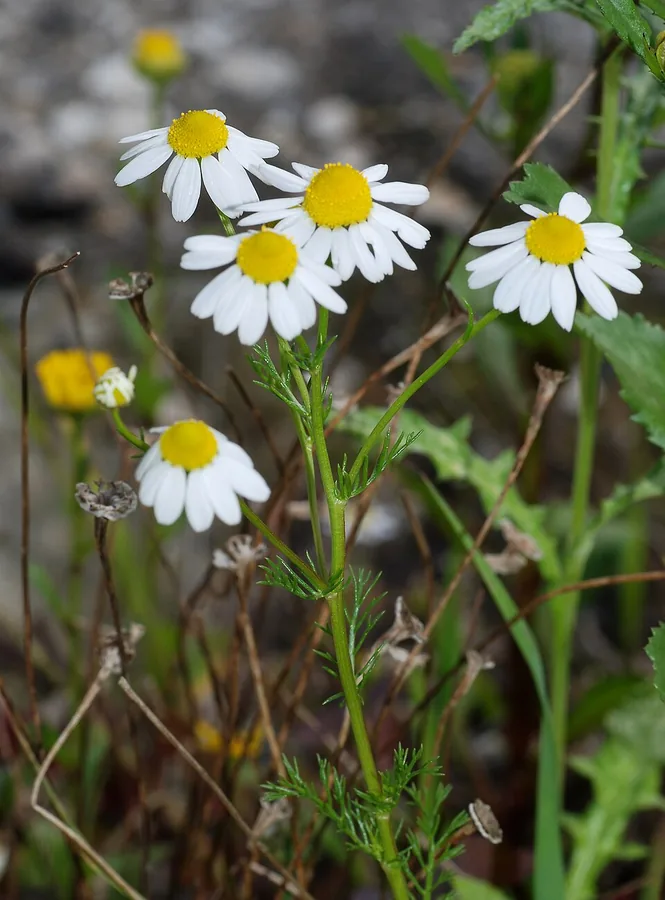
German chamomile is the upright, fast-growing annual that powers most chamomile tea, and it earns its keep in a sunny bed. It runs in the daisy family, tossing up small white-and-yellow flowers on feathery stems, and it throws off a sweet, apple-like scent that hits you long before the blooms come into view. Grow it for the flower heads, picked at their peak and dried for a calming cup.
The payoff comes for almost no effort. Hand it a sunny spot and well-drained soil and it takes off, powering through poor, low-fertility ground that stops fussier herbs dead. It self-seeds like a champion too, so one season's flowers plant the next, and a small patch keeps a bed going for years as long as a few heads ripen.
Just plan around one thing. The dried flowers make a tea safe for most people, but the fresh plant is mildly toxic to cats, dogs, and horses, and handling the foliage can flare up skin in anyone sensitive to ragweed. It slots into the garden with ease, just steer it away from a spot where a curious pet grazes.
Care
The short version: full sun, light well-drained soil, and steady moisture while young, with barely any feeding and regular deadheading to keep the flowers coming.
Light
Chamomile flowers hardest in full sun, six or more hours a day. It takes a little afternoon shade in stride, but drop it anywhere dim and you get stretched stems with just a scatter of bloom.
Water
Keep seedlings and young plants evenly moist as they dig in. Once established it powers through a short dry spell, though steady moisture and good drainage crank up the heaviest flowering.
Soil
Drop it into well-drained sandy to loamy ground and let it run. It thrives even in poor, low-fertility soil, and it takes a wide pH band from 5.6 to 7.5 without missing a beat.
Temperature
This cool-season herb hums along from 41°F to 86°F (5°C to 30°C). The seedlings shrug off a light frost, which is exactly why an early start pays off so well.
Humidity
Average humidity around 40% to 60% is all it asks. Outdoors that sorts itself out, so pour your energy into airflow rather than chasing a number.
Feeding
Feed it light. A little compost or a dilute balanced feed at planting does the job, and too much nitrogen trades flowers for leaves, which torpedoes the whole reason you grew it.
Pruning
Deadhead and harvest the open flower heads often to push the bloom longer and rein in self-seeding. Snip back any leggy growth as it pops up to keep the plant sharp.
Repotting
Chamomile skips the whole repotting routine. It grows as a direct-sown or transplanted annual and gets refreshed each season, so you start fresh rather than potting it on.
Size & spacing
Plants shoot up 12 to 24 inches (30 to 60 cm) tall with a spread of 8 to 12 inches (20 to 30 cm). Give each one a hand's width of room so air rips freely between them.
When to plant
German chamomile is a cool-season annual that leaps out of the gate early. Sow indoors in late winter or fling seed straight into the ground in early spring, since the seedlings take a light frost in stride. The daisy-like flowers burst open in early to midsummer, and that is your cue to pick the heads for drying.
Northern hemisphere
Southern hemisphere
Typical months for a temperate climate: start earlier in warm zones, later where spring frosts linger.
- Sow: Late winter to early spring, about 4-6 weeks before the last frost
- Plant: Early spring; cool-season annual whose seedlings tolerate a light frost
- Harvest: White-and-yellow daisy flowers in early to mid summer; harvest flower heads when fully open with petals reflexed
Hardiness
USDA hardiness zones: 2–8
Temperature: down to -46°C
Troubleshooting
Chamomile is an easy herb, but a few issues crop up around seedlings, sunlight, and its habit of seeding everywhere. Most show up early and shut down fast once you act. Match what you see below and jump on it before it spreads.
Seedlings keel over at the soil line
Seedlings pinching off and dropping at the base means damping-off has moved in, a soil fungus that pounces when the surface sits cold and soggy. The stems go thin and water-soaked, and the seedling folds. Beat it by sowing thinly into a clean, free-draining mix, dialing back the water, and getting air moving across the surface so it never gets a grip.
Fix:
- Reduce watering
- Improve drainage and airflow
- Sow thinly in a sterile, well-drained seed mix
Tiny sap-suckers swarming sticky buds and crumpled fresh shoots
Spot those green or black clusters on the buds and the shine around them, and you have found aphids and their honeydew. They swarm the soft, sappy growth that heavy feeding pumps out, so pull back on the feed and blast them off with a strong jet of water. Insecticidal soap wipes out a bigger crowd fast, and inviting ladybugs in turns the whole thing into a self-cleaning system.
Fix:
- Dislodge aphids with a strong spray of water
- Apply insecticidal soap
- Encourage beneficial insects such as ladybugs
Leggy stems and barely any flowers
When chamomile shoots up tall and skips the flowers, it is chasing more sun, and less than six hours a day leaves it stretched and bare. Get it into a full-sun spot and watch it bounce back. Cut the fertilizer that pumps out leaf instead of flower, snap off the faded heads, and fresh buds pour out.
Fix:
- Relocate to a full-sun site
- Reduce fertilizing
- Deadhead to encourage more flowers
A fresh wave of chamomile volunteers blanketing the bed by spring
Chamomile throws itself around the garden with real gusto, a champion self-seeder that scatters dozens of volunteers from every head left to ripen. Get ahead of it by harvesting or deadheading the flowers before they drop their seed. Anything that still sprouts yanks out in a second while the seedlings are small.
Fix:
- Deadhead before seed set
- Pull unwanted volunteer seedlings
Toxicity
Chamomile is gentle in the cup but has a bit more bite out on the lawn. The dried flowers brew a tea that is safe for most people to drink, yet the living plant is mildly toxic to cats, dogs, and horses, and its oils can irritate skin on contact. Keep pets from grazing it, and pull on gloves if plant allergies tend to get you.
Toxic to
Cats · Dogs · Horses · Rabbits · Livestock · Birds
Safe for
People
Cats Mild
A cat that chews the foliage may drool, throw up, and lose interest in food, and the volatile oils can leave the skin irritated. Keep a grazing cat away from it, since steady chewing over time has been tied to a tendency toward easy bleeding.
Dogs Mild
A dog that raids the plant usually picks up an upset stomach, loose stools, and a flat appetite. Repeated contact can redden the skin, and long-term nibbling drags along the same bleeding concern, so head it off early.
Horses Mild
Grazing horses can walk away with a sour stomach and mild diarrhea, and the oils sometimes fire up irritation on the muzzle and skin where they touch.
Rabbits Mild
The volatile oils that hit cats and dogs churn up a rabbit's gut just as fast, so keep them clear of the leaves and steer them toward safer greens to browse.
Livestock Mild
Goats, sheep, and cattle that graze chamomile can pick up digestive upset and skin irritation, though most walk right past the bitter, aromatic foliage.
Birds Caution
Firm data on birds is thin on the ground, so play it safe and keep pet birds from pecking at the oily foliage and pollen.
People Edible as tea
Dry the flowers and steep them, and you get a soothing tea that most people can enjoy with no trouble at all. The one thing to watch is your skin, since handling the foliage or pollen can spark contact dermatitis, especially if ragweed and its Asteraceae cousins already set you off.
Wear gloves when handling; the foliage and pollen can cause contact dermatitis, especially in people sensitive to ragweed and other Asteraceae.
Helpline numbers

United States
ASPCA Animal Poison Control: (888) 426-4435 (fee applies)

United Kingdom
Animal PoisonLine: 01202 509000 (fee applies)

Australia
Animal Poisons Helpline: 1300 869 738
Varieties
A handful of named cultivars really stand out, most of them bred for tea growers chasing bigger heads or richer oil. These are the ones worth tracking down.
Bodegold
A German tea cultivar bred to pump out big flower heads and a hefty yield of essential oil.
Bona
A Czech cultivar that trials have clocked as the first to burst into flower each year, perfect for an early harvest.
Zloty Lan
A Polish cultivar picked for its rich bisabolol and a heavy essential oil yield.
How to propagate
SeedEasy
Early spring; sow indoors in late winter or direct-sow once soil is workable, as seedlings tolerate light frost · Germinates in about 7-14 days and flowers in roughly 60-65 days
Chamomile takes off from seed with almost no fuss, whether you kick it off indoors in late winter or fling it straight onto worked spring soil, since the seedlings brush off a light frost. Just press the seed onto the surface and leave it bare, because it needs light to germinate. Sprouts break through in about 7 to 14 days, flowers race in by roughly 60 to 65 days, and any heads you leave will reseed the bed for a whole new round next year.
Myths
Chamomile is chamomile: the German and Roman versions are the very same plant.
They run in the same family and pull the same duty in the kitchen, but they are two separate species. German chamomile is the upright, self-seeding annual Matricaria chamomilla, while Roman chamomile is the low, mat-forming perennial Chamaemelum nobile. Both fill a teapot, yet they grow differently and carry different chemistry.
The plant behind such a mellow brew surely holds nothing harmful.
The tea plays it gentle, but the living plant packs a bit more punch. The ASPCA lists chamomile as toxic to cats, dogs, and horses, and its volatile oils and acids can kick off dermatitis, an upset stomach, and allergic reactions. If ragweed lights you up, chamomile may do the very same thing.