Herb · Asteraceae
Stevia
Stevia rebaudiana
Grow a no-calorie sweetener and snap off a leaf to chew whenever the craving hits.
Full sun
Every 2–4 days
50–90°F · 10–32°C
90–110 days
Overview
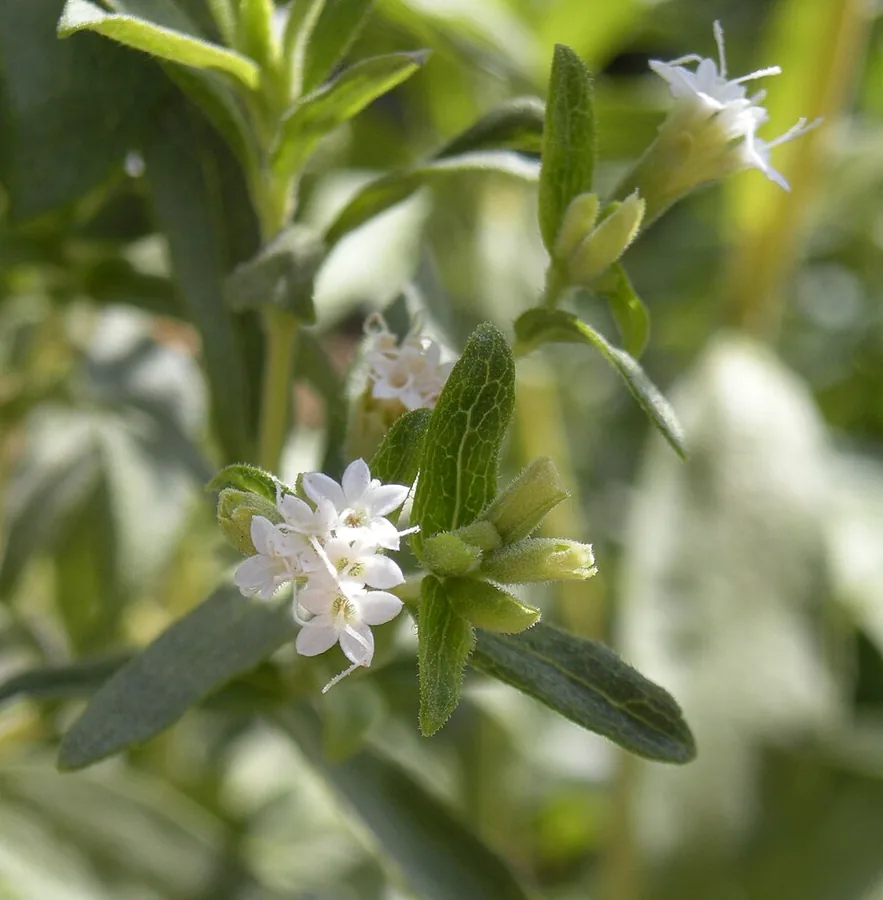
Stevia is a plant worth getting excited about. This tender herb traces back to the Paraguayan highlands, where its leaves have sweetened food and drink for generations. The magic sits in the steviol glycosides packed into every leaf, many times sweeter than sugar with none of the calories. Snap off a fresh leaf, chew it, and the sweetness lands instantly.
It grows into a neat, bushy little plant that tops out around 18 to 30 inches (45 to 75 cm), so it fits almost anywhere. Warm climates let it run as a perennial, but since it is frost-tender, most growers race it through as a warm-season annual or whisk a potted one indoors before winter. Plant it in a sunny bed or pot it on the balcony and it takes off either way.
Here is where the fun starts, because a bit of hands-on care pays off fast. Keep pinching those tips to drive a thick, branching plant, and pop off flower buds the second they appear, since the leaves shed their sweet punch once bloom takes over. Stay on it and one plant keeps cranking out sweet leaves all season.
Care
The short version: load stevia up with full sun and steady moisture in well-drained soil, then keep pinching the flower buds and tips to drive fresh, sweet leaves all season long.
Light
Stevia thrives on full sun, so hand it six or more hours a day and watch the leaves come in thick and sweet. A little afternoon shade works fine in scorching summers, but light-starve it and the plant stretches thin and floppy fast.
Water
Those roots stay shallow and drink up quickly, so keep the soil evenly moist without ever drowning it. A splash every 2 to 4 days does the job, ramped up when it is hot or potted, and a good mulch layer locks the moisture right in.
Soil
Set stevia into a well-drained loam rich in organic matter and it powers along, fed by the organic matter while spare water drains straight through. It shrugs off pH swings across 6.0 to 7.5, so most garden soil is ready to go as is.
Temperature
Stevia hits its stride in warmth, 50°F to 90°F (10°C to 32°C). Cold is its weak spot, and a freeze wipes it out, so sweep potted plants indoors well before the first frost lands.
Humidity
Everyday humidity in the 40% to 70% band keeps stevia cruising, and that covers just about any room or garden. Chase airflow over the exact number, because leaves packed close and damp are just what pests and rot love.
Feeding
Feed stevia every month across spring and summer with a balanced, low-nitrogen organic mix. Keep that nitrogen in check on purpose, since a heavy hand drives leafy growth and drains off the sweetness you planted it for.
Pruning
Pinch, pinch, pinch, that is the trick to a dense, well-branched plant, so keep taking those tips back. Knock off flower buds the instant they show, too, because leaves pack the most sweetness and grow fastest in the run-up to bloom.
Repotting
Give stevia a repot once a year, plus any time it comes in to overwinter, bumping it into a slightly bigger pot with fresh mix. Roots spiraling the pot, growth grinding to a crawl, or soil that drains bone-dry right after a watering all shout that it is time.
Size & spacing
Grown out, stevia shoots up to 18 to 30 inches (45 to 75 cm) tall and spreads 12 to 24 inches (30 to 60 cm) wide. Hand each plant that much room and air rushes freely around it, keeping the leaves dry and the plant charging along.
When to plant
Stevia lives for warmth and flat-out refuses frost, so the timing is half the game. Kick off seeds or cuttings indoors during late winter, hold the plants back until the cold clears and the soil warms, then harvest leaves all summer until frost calls time. Nail the schedule and the payoff runs for months.
Northern hemisphere
Southern hemisphere
Typical months for a temperate climate: start earlier in warm zones, later where spring frosts linger.
- Sow: 8-10 weeks before the last spring frost
- Plant: after all danger of frost has passed and soil has warmed to at least 50°F (10°C)
- Harvest: Harvest leaves through summer; pinch flowers as leaves are sweetest before bloom. Main leaf harvest before flowering in late summer/early fall.
Hardiness
USDA hardiness zones: 9–11
Temperature: down to -7°C
Troubleshooting
Stevia is a rewarding grow, and most of its hiccups play out right on the leaves, whether from pests, waterlogged roots, or the plant sliding into bloom. Jump on the early signs and you stop trouble before it dents the harvest. Match what you spot below, then get to work.
Wilting in soggy soil with rotting roots
Wilting while the soil sits soaked is the classic tell of root rot setting in from waterlogged ground. Brown, mushy roots are goners, so slam the brakes on watering, fix the drainage or repot into a mix that races water through, and never park a pot in a water-filled saucer.
Fix:
- Reduce watering immediately
- Improve soil drainage or repot into well-drained mix
- Remove and discard severely affected plants
Foliage blackened overnight in the cold
Stevia is frost-tender, so one hard freeze can black out the whole plant by morning. Beat it to the punch and haul potted plants inside before the cold rolls in. If frost strikes first, trim the wrecked growth and overwinter the plant indoors, ready to bounce back in spring.
Fix:
- Move container plants indoors before frost
- Cut back damaged growth and overwinter the plant indoors
Curled, sticky leaves with bugs clinging underneath
Curled, sticky leaves usually mean aphids or whiteflies have crashed the party, sap-suckers massing under the foliage and slicking it with honeydew. Blast them off with a punchy jet of water first, then hit them with insecticidal soap the moment they dare come back. Rip off any leaf that is completely swamped.
Fix:
- Spray plants with a strong jet of water to dislodge insects
- Apply insecticidal soap to affected foliage
- Remove and destroy heavily infested leaves
Ragged holes chomped low on the plant
Ragged holes plus shiny trails scream slugs and snails, which feast overnight and whenever the weather turns wet. Grab a flashlight, head out after dark, and pick the culprits off by hand. Sweep away nearby mulch and debris so they lose the cozy daytime hideout, and set traps or barriers to shut them down.
Fix:
- Hand-pick slugs in the evening
- Remove debris and mulch that harbor them
- Use slug traps or barriers around plants
Sweetness dropping off as buds break
When the leaves slow down and lose their zip, the plant has kicked into flower and is pouring effort into blooms. Snap off those buds the moment they break at the shoot tips to keep it on track. Bag the main harvest before bloom, while the leaves are still loaded with sugar.
Fix:
- Pinch out flower buds as they form
- Harvest leaves before full bloom
Toxicity
Even better, stevia ranks among the safest plants going. The leaf is an edible, no-calorie sweetener that kitchens everywhere reach for, and it lands on no toxic list for cats, dogs, or the rest of the household. Let a curious pet grab a taste and shrug it off, because nothing here will harm them.
Safe for
People · Cats · Dogs · Horses · Rabbits · Livestock · Birds
Cats None
Cats are in the clear with stevia, which never shows up on the ASPCA toxic list. A quick nibble does zero damage, though a cat that scarfs a whole heap of leaves might wind up with a short, passing bout of stomach upset.
Dogs None
Dogs have nothing to sweat here, since the leaves pack no toxin whatsoever. At worst, a greedy gulp brings a spot of short-lived gas or a loose stool, and that clears fast.
Horses Safe
Horses face zero danger from stevia. A stray sprig grabbed on the go does nothing, since the leaf is the exact sweetener people spoon into their tea.
Rabbits Safe
Rabbits do great with a bit of stevia, the sweet leaf making a fun occasional treat. Just keep the servings small so hay and greens still headline their menu.
Livestock Safe
Goats, sheep, and cattle tear into stevia with no worries. Farmers raise it as an edible crop, so nothing in those leaves is going to bother a browsing animal.
Birds Safe
Backyard hens and pet birds can peck away all they like. There is no toxin lurking here, just a leaf with a surprisingly sweet punch.
People Safe
People plant stevia for one exciting reason: to eat it. The leaves double as a no-calorie sweetener to munch fresh or dried, and they are safe for everybody at home.
Leaves are edible and used as a natural sweetener; no special handling precautions are required.
Varieties
Grab stevia off the shelf and it is usually just stevia, plain and simple. Hunt a little, though, and a couple of standout selections turn up, ready to deliver sweeter leaves or thrive in a pot.
Sweet Sugar Leaf
A go-to favorite loaded with steviol glycosides, the compounds that give its leaves such a bold, sweet kick.
Candy
A compact powerhouse of a cultivar, built for pot growing and still churning out heaps of sweet leaves.
How to propagate
Two routes make more stevia, and one clearly wins for speed. Seed drags along unreliably, while cuttings strike fast and copy a favorite plant right down to the leaf.
SeedDemanding
Start indoors 8-10 weeks before the last spring frost · Germination in 1-3 weeks, but often poor and erratic
Seed is the challenging route, no sugarcoating it. Get it started indoors a solid 8 to 10 weeks ahead of the last frost, but brace for low viability and ragged germination stretched over 1 to 3 weeks. So much seed flops that most growers ditch it for cuttings.
Stem cuttingsModerate
Spring through summer from healthy non-flowering shoots · Roots in 2-4 weeks
Cuttings are where stevia really rewards you. Anytime from spring through summer, snip a softwood tip off a healthy, non-flowering shoot, sink it into moist media, and it strikes roots in about 2 to 4 weeks, cloning the parent exactly.
Myths
Stevia leaves are said to taste bitter right off the plant.
Chew a fresh leaf and it hits with clean, bold sweetness, zero bitterness in sight. That punchy sweetness runs highest before it flowers, so grab the big harvest before those buds crack open.
Stevia is a tough perennial that powers through winter outside.
It really does live on as a perennial where it stays warm, but it is also frost-tender and drops the moment frost bites. In chilly regions, most growers run it as a one-season annual or scoot a potted plant inside to ride out the winter.