Herb · Apiaceae
Dill
Anethum graveolens
Feathery, fast, and full of flavor: dill rewards every gardener who sows it.
Full sun
Every 3–7 days
50–77°F · 10–25°C
40–90 days
Overview
Dill runs on cool weather, so plan around the calendar. Spring and early fall give the best leafy growth, while summer heat flips a switch and drives the plant to flower, a move gardeners call bolting. Drought and root stress only hurry that along. Sow a fresh handful of seed every couple of weeks and you keep a steady run of young, tender plants coming.
Get the placement right the first time, because dill sends down a deep taproot and dislikes being moved. Start it straight in the ground where it will grow rather than fussing with transplants. That same root wants loose, open soil so it can drive down and anchor the tall, hollow stems above.
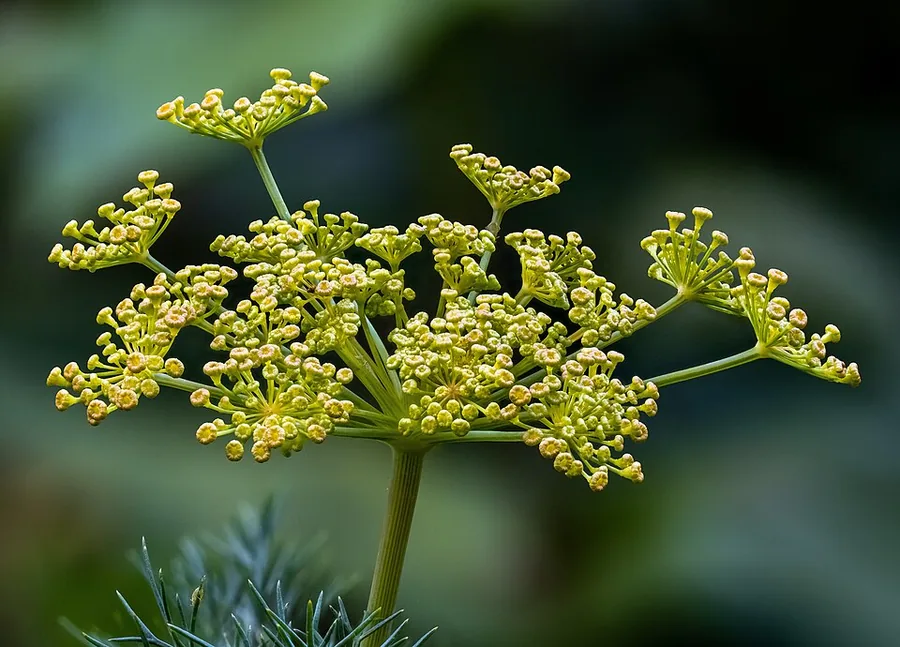
Set it in full sun, keep the moisture even, and dill asks for little else. It feeds lightly, grows fast, and pulls double duty: pinch the foliage for the kitchen, or let the umbels mature and gather the seed for pickling. The same flowers that you might cut also draw butterflies, so a row of dill earns its spot many times over.
Care
The short version: dill is a cool-season annual that wants full sun for six or more hours, even moisture, and well-drained fertile loam at pH 5.5 to 6.5. Direct-sow it where it grows, keep it between 50°F to 77°F (10°C to 25°C), and pinch the leaves often to hold off bolting. Feed lightly, space plants close so the hollow stems brace each other, and let a few umbels ripen if you want it to come back.
Light
Give dill full sun, six or more hours of direct light, and it grows sturdy and full. In a hot summer it shrugs off a little afternoon shade, but pile on too much and the plants turn thin and floppy, bolt early, and hand you far less leaf for the trouble.
Water
Keep the soil evenly moist, roughly an inch of water a week. Moisture matters most while seeds germinate and seedlings find their feet, since a dry spell at that stage trips the plant into early flowering. Steady watering keeps the leaves coming.
Soil
Plant into well-drained fertile loam with plenty of organic matter and a pH of 5.5 to 6.5. Loose, open ground is the real prize here: it lets that taproot run straight down and gives the plant a solid footing.
Temperature
Dill hits its stride between 50°F to 77°F (10°C to 25°C). Push past that upper end and the plant changes gears, shifting energy from leaf to flower and bolting in short order, which is why cool-season timing pays off.
Humidity
Average outdoor humidity of 40% to 70% suits dill fine, and frankly the moisture in the air matters less than the air moving through it. Good airflow keeps trouble away. Crowd the plants too tightly and the damp that lingers among them invites problems.
Feeding
Dill is a light feeder. One balanced feed or a helping of compost at planting carries it through. Resist piling on nitrogen: an excess pushes soft leggy stems that flop over instead of standing tall.
Pruning
Pinch and cut the foliage often. Regular trimming keeps the plant bushy and slows bolting, buying you more leaf. When the time comes, snip flower heads to steer energy back into leaves, or leave the umbels to mature and harvest the seed instead.
Repotting
Skip repotting altogether. Dill is a direct-sown annual with a taproot that resents being moved, so it never needs potting on. Confine it to a container and you risk stunting and fast bolting, so give it open ground when you can.
Size & spacing
Expect dill to reach 2 to 4 feet (60 to 120 cm) tall with a spread of 12 to 18 inches (30 to 45 cm), all riding on tall hollow stems. Set plants close together on purpose so they lean on one another and stand firm against the wind.
When to plant
Timing makes or breaks a dill crop. Lean into the cool stretches of spring and early fall, sidestep the peak of summer heat, and keep sowing in waves so a young, leafy plant is always coming up just as the last one starts to stretch toward flower.
Northern hemisphere
Southern hemisphere
Typical months for a temperate climate: start earlier in warm zones, later where spring frosts linger.
- Plant: Direct-sow in early spring after danger of hard frost; cool-season crop that bolts quickly in summer heat. Succession-sow every 2-3 weeks for continuous leaf harvest.
- Harvest: Cut leaves anytime once plants are established; yellow flower umbels form in summer, followed by seeds harvested as they ripen and turn brown.
Hardiness
USDA hardiness zones: 2–11
Temperature: down to -46°C
Troubleshooting
Dill is forgiving, but a handful of issues crop up often enough to know the signs. Most trace back to heat, water, or a spot that catches too much wind. Spot them early and a quick course correction usually sets things right.
Bolting in the heat
When heat and long days arrive, dill races to flower: the central stalk shoots up and forms umbels while leaf growth stalls, and drought or root stress only speeds it. Stay ahead of it by harvesting leaves early, sowing in succession, holding moisture steady, and offering light afternoon shade when it turns hot.
Fix:
- Harvest leaves promptly before flowering
- Succession-sow new plantings
- Provide consistent moisture and light afternoon shade in heat
Black swallowtail caterpillars
Spot green caterpillars banded with black and dotted yellow and you have found black swallowtail (Papilio polyxenes) larvae, with dill among their favorite host plants. The chewing looks alarming, yet it rarely sets a healthy plant back. Relocate them or plant a little extra, and watch them turn into butterflies.
Fix:
- Hand-pick and relocate caterpillars if foliage loss is a concern
- Plant extra dill to share with larvae as a pollinator host
Aphids on the shoots
Small green or gray soft-bodied insects that cluster on new shoots and leave a sticky honeydew are aphids. Blast them off with a strong jet of water, reach for insecticidal soap only if the problem turns severe, go easy on the nitrogen, and welcome ladybugs and other beneficials to do the patrolling.
Fix:
- Spray with a strong jet of water
- Apply insecticidal soap if severe
Lodging in the wind
A tall plant on hollow stems in an open, windy spot can bend or snap near the base, and rich soil makes it worse by pushing soft leggy growth. Stake the tallest plants, tuck them into a sheltered corner, and space them close so they brace each other.
Fix:
- Stake taller plants
- Plant in a sheltered location
Toxicity
Good news for shared gardens: dill is a culinary herb that is safe for people and pets. The ASPCA does not list it among plants that poison animals, and the only caution worth flagging applies to livestock that graze the foliage very heavily.
Safe for
People · Cats · Dogs · Horses · Rabbits · Livestock · Birds
Cats None
Cats are safe around dill: the ASPCA does not list it as a toxin, and a curious nibble does no harm.
Dogs None
Dogs are safe too, and the soft leaves are gentle enough that some owners add a little to treats.
Horses Safe
Horses are safe with dill, which sometimes turns up in herbal feed blends.
Rabbits Safe
Rabbits are safe and tend to relish fresh dill as a treat, feathery leaves and all.
Livestock Mild
Livestock face only a mild caution: dill is safe to eat, but very heavy grazing of the furanocoumarin foliage may bring on mild photosensitivity.
Birds Safe
Birds are safe, and pet birds along with backyard hens will happily peck at the leaves and ripe seeds.
People Safe
People are safe, of course, since this is a kitchen herb grown for its leaves and seeds. Just rinse before use.
Edible herb safe to handle and consume; wash before use. Sap and furanocoumarins can rarely cause mild skin photosensitivity in sensitive individuals.
Varieties
Reach for the variety that matches your goal, whether that is heaps of seed heads, a steady supply of leaves, or a compact plant that settles into a container. A few standbys cover most growing situations.
Bouquet
Bouquet is the popular compact pick, cranking out a heavy crop of seed heads with strong, classic dill flavor.
Fernleaf
Fernleaf is a slow-to-bolt dwarf that fits happily in a container and keeps producing leaves longer than most.
Mammoth (Long Island Mammoth)
Mammoth, or Long Island Mammoth, is the tall heirloom to grow for the biggest yields of both foliage and seed.
Dukat
Dukat is a slow-bolting type prized for sweet, aromatic leaves, making it a favorite for fresh use.
Companions
Dill earns its keep near other crops by drawing in pollinators and the predatory insects that hunt garden pests.
How to propagate
Dill comes from seed and seed alone, and the method could not be simpler. Sow it where it will stand, give it light cover, and let the taproot do its thing undisturbed.
SeedEasy
Direct-sow in early spring and succession-sow through the cool season · 7 to 21 days to germinate; harvestable leaves in about 40 to 60 days
Sow seed straight into the garden where it will grow, press it shallowly into the soil, and leave the taproot undisturbed. Expect germination in 7 to 21 days and harvestable leaves in about 40 to 60 days. Drop a fresh row every couple of weeks through the cool season, and let a few plants flower so they self-seed for next year.
Myths
Dill transplants easily like any other seedling.
Not so. That deep taproot resents being moved, and the disturbance often shocks the plant straight into bolting. Direct-sow dill where it will grow rather than starting it in cells, and it settles in without a fuss.
Dill is toxic to cats and dogs.
It is not. This culinary herb is regarded as safe, and the ASPCA does not list it among plants that poison cats or dogs. A nibble is nothing to worry about.