Tree · Fabaceae
Eastern Redbud
Cercis canadensis
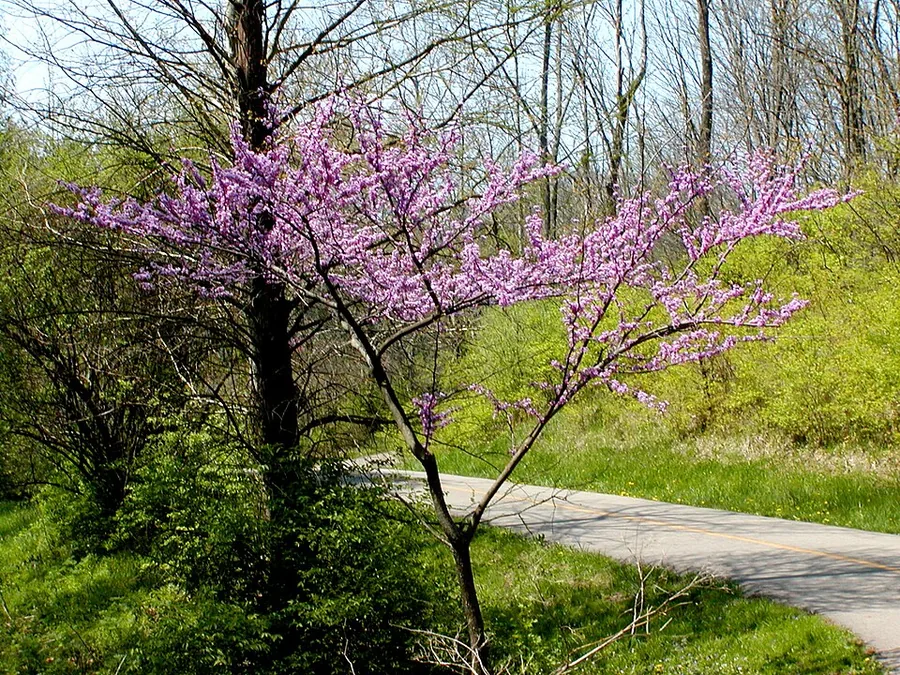
Watch it set the bare spring woods alight with rose-pink flowers studding the branches before one leaf has stirred.
Full sun
Every 7–14 days
USDA 4–9
20–30 ft · 6.1–9.1 m
Overview
Eastern redbud kicks off spring with a real flourish, firing rose-pink to magenta flowers straight from naked branches and even the trunk well before any leaf shows up. It sits in the legume family alongside peas and beans, and that kinship explains why each bloom mimics a little pea flower and why flat seed pods trail along afterward.
Once the bloom drops, broad heart-shaped leaves fill in and the tree relaxes into an easy rounded crown. Growth stays compact at 20 to 30 feet (6 to 9 m) tall, which slots it into a yard where a hulking shade tree would muscle everything else aside. It also takes light across the whole spread, from open sun down to fairly deep shade, so it earns its keep at a woodland edge or beneath taller neighbors.
Settled in, redbud proves tough and forgiving, powering through zones 4 through 9 with barely a fuss. Two things deserve your attention: root disturbance, since it balks at being relocated, and a handful of fungal diseases that pounce on a stressed specimen. Keep it thriving and it gives back plenty while asking for next to nothing.
Care
The short version: set it in full sun to part shade in average, well-drained ground, keep the water coming while it's young, and save pruning for after the bloom finishes. It rolls with most soils and laughs off cold, yet it loathes waterlogged ground and resents a move once it has dug in.
Light
Redbud takes light in stride, growing in everything from full sun to full shade. Push it toward full sun to part shade and it blooms hardest and packs a tighter crown, which is why it slots right into a woodland edge that catches sun for part of the day.
Water
Keep the ground evenly moist with steady watering through the first year or two as the roots dig in. A grown tree rides out brief dry runs, yet it won't survive a long drought and goes sulky in soggy, waterlogged dirt. Soak it deeply any time a dry stretch drags past a few weeks.
Soil
This tree rolls with loam, clay, or sand so long as it drains, and it copes across a broad pH band from 5.5 to 8.0. Average, medium-moisture ground keeps it happy. The one thing it flat-out rejects is dirt that stays wet.
Temperature
Redbud is built tough, shrugging off winters as low as -29°F (-34°C) and summer scorch up to 95°F (35°C). That cold grit is exactly what stretches its range clear across the country.
Humidity
Plain outdoor air does the job, so skip chasing any number. Air movement counts for more than moisture aloft, because still, packed quarters are what invite leaf spot and the rest of the fungal crowd.
Feeding
Feed in early spring as growth wakes back up, reaching for a balanced slow-release tree fertilizer. Good feeding does more than fuel growth, since a well-nourished tree stands up far stronger to canker and wilt.
Pruning
Cut in late spring, just after the bloom, clearing out dead, broken, or cankered wood and shaping along the way. Strip off any cankered or wilting branch the second you catch it to choke back the spread of disease. Steer lawn weedkillers far clear, because redbud reacts badly to herbicide drift.
Repotting
Redbud lands in a pot only rarely and hardly ever calls for repotting. Should you keep a young one potted, look for roots looping or breaking out, water shooting straight through, or skimpy new growth, each a flag that it craves more room or a place in the open ground.
Size & spacing
Count on a mature tree hitting 20 to 30 feet (6 to 9 m) tall over a broad, reaching crown of 25 to 35 feet (7.5 to 10.5 m). Hand it that kind of open space, since the canopy fans out wide and the tree won't forgive a move after planting.
When to plant
Plant a young redbud out in early spring, while it's still small enough to slip into its forever spot, because it bristles at any later relocation. Wait out the season and the payoff lands the next spring, when bare branches erupt into pink bloom from March through May, jumping the gun on almost everything else around.
Northern hemisphere
Southern hemisphere
Typical months for a temperate climate: start earlier in warm zones, later where spring frosts linger.
- Plant: early spring while young, in a permanent protected site (does not transplant well)
- Harvest: early spring (March to May), pea-like rose-pink to magenta flowers on bare branches and trunk before leaves emerge
Hardiness
USDA hardiness zones: 4–9
Temperature: down to -34°C
Troubleshooting
Nearly every redbud setback comes down to fungal disease grabbing hold of a wounded or run-down tree. Once you can tell a real canker or wilt apart from cosmetic leaf spots, you'll know when to jump in and when to stand back. Find the match below, then move fast on the ones that count.
Dark, sunken lesions on the bark as whole branches give out
What you're seeing is Botryosphaeria canker, a fungus that sneaks in through wounds and tired wood and then chokes off everything above it. Slice the branch off well beneath the lesion, burn or bag what you cut, and wipe the blades clean before the next pass. A strong tree almost never gets hit, so steady watering and good upkeep keep it at bay.
Fix:
- Prune out and destroy all dead, dying, and cankered branches well below the lesion
- Disinfect pruning tools between cuts
- Improve vigor with proper watering, mulching, and correct fertilization
One side flagging with shrunken leaves while the rest looks fine
That lopsided collapse points to Verticillium wilt, which climbs up from the roots and plugs the sapwood, so trouble usually breaks out on a single side first. Strip the bark from a flagging branch and dark streaks run through the wood beneath. Nothing cures it, so push the tree's vigor, take out dead wood, and never set a susceptible species back into that same ground. The cultivar 'Forest Pansy' suffers worst of all.
Fix:
- Prune out dead wood and dispose of it
- Improve host vigor with light mulching and watering during dry periods of more than a few weeks
- Fertilize when appropriate and manage other stresses
Speckled brown and black blotches scattered over the foliage
Those marks are fungal leaf spot and anthracnose, and they break out whenever leaves stay damp and air sits dead in a packed canopy. Ugly as the spotting looks, a settled tree throws it off and keeps right on going. Rake the dropped leaves and destroy them, keep the watering off the foliage, and open up the air around the branches.
Fix:
- Rake up and destroy fallen infected leaves
- Improve air circulation and avoid overhead wetting of foliage
- Maintain tree vigor with proper watering and fertilization
Toxicity
Pet owners and parents can relax: eastern redbud reads as safe straight through. The ASPCA toxic list passes right over it, nothing on the tree puts an animal at real risk, and folks gladly fold the flowers and young pods into salads. Not one part of this tree needs fencing off.
Safe for
People · Cats · Dogs · Horses · Rabbits · Livestock · Birds
Cats None
The ASPCA leaves redbud off its toxic roster, so let a curious cat tug at a leaf or a dropped flower and nothing comes of it.
Dogs None
There's no toxin in play here. Let a dog crunch a pod or two and all is well, though wolfing down a whole jaw of bulky pods may bring a brief run of loose stool.
Horses Safe
Grazing horses face no threat from redbud, and they sometimes browse it freely with no fallout at all.
Rabbits Safe
Both the leaves and the flowers sit well with rabbits, which routinely nip back young redbud growth out in the wild.
Livestock Safe
Cattle, goats, and sheep can graze the leaves and pods freely with not a thing to dread.
Birds Safe
Birds tuck into the seeds and flock to the spring blooms, and every bit of it sits harmless.
People Safe
Those pink spring flowers and the tender young pods are good to eat, landing in salads and fritters.
No special handling required for pet safety; as with any plant, discourage pets from gorging on fallen pods, which can cause mild non-specific stomach upset from the bulk.
Varieties
Past the wild species, breeders have chased redbuds for foliage tone, flower punch, and trimmer stature. Here are the named picks most likely waiting on a nursery bench.
'Forest Pansy'
Fresh leaves unfurl a rich scarlet purple and ease toward green over the season, a payoff that costs it dearly since it ranks as the most verticillium-wilt prone of the bunch.
'Appalachian Red'
No redbud blooms brighter, throwing a punchy magenta that edges right up to neon pink.
'The Rising Sun'
Young growth flushes apricot and gold, then mellows into lime and green, leaving the canopy decked in a handful of shades all at once.
'Hearts of Gold'
Golden-yellow leaves make it stand out, traced back to a lucky discovery in a Greensboro, North Carolina garden in 2002.
'Ace of Hearts'
Built as a compact dwarf with little heart-shaped leaves, it slips neatly into a snug corner that a full-size redbud would swamp.
How to propagate
Growers reach for seed or grafting with redbud, because it balks at moving as a grown tree and strikes grudgingly from cuttings. Speed isn't on offer with any route, so patience counts for far more than technique.
SeedModerate
Collect mature pods in fall; sow after pretreatment · 1-2 years to a transplantable seedling
Pull the ripe pods in fall, then prep the seed twice over: nick or scratch through the hard coat and follow it with a cold, moist rest, since one without the other leaves germination stubbornly slow. After it finally breaks ground, plan on 1 to 2 years before the seedling bulks up enough to shift somewhere new.
GraftingDemanding
Late winter to spring (budding in summer) · 1-2 seasons
Named picks like 'Forest Pansy' refuse to breed true from seed, so growers bud or graft them onto seedling rootstock to lock in the look. The push runs from late winter on through spring, with budding handled in summer, and the union wants a season or two to knit firmly. Precise work like this rewards an experienced hand.
Stem cuttingsDemanding
Early summer from softwood · Several months to a season
Snip softwood cuttings in early summer for a go at it, but brace for letdown: redbud strikes patchily and grudgingly from cuttings, and the few that catch still want several months to a full season to settle in. Plenty of growers skip straight past it for seed or grafting.
Myths
Eastern redbud pods and seeds are dangerously poisonous to dogs and cats.
Redbud never shows up on the ASPCA toxic roster, and it's reckoned safe for cats and dogs alike. People happily eat the flowers and young pods, so this tree is not the poisonous legume some growers dread and deserves a clear pass rather than a spot beside the truly hazardous ones.