Ornamental · Orchidaceae
Ground Orchid
Bletilla striata
A hardy orchid that grows right in the garden soil and fires up pink blooms every spring.
Partial shade
Every 3–7 days
USDA 5–9
12–24 in · 30–60 cm
Overview
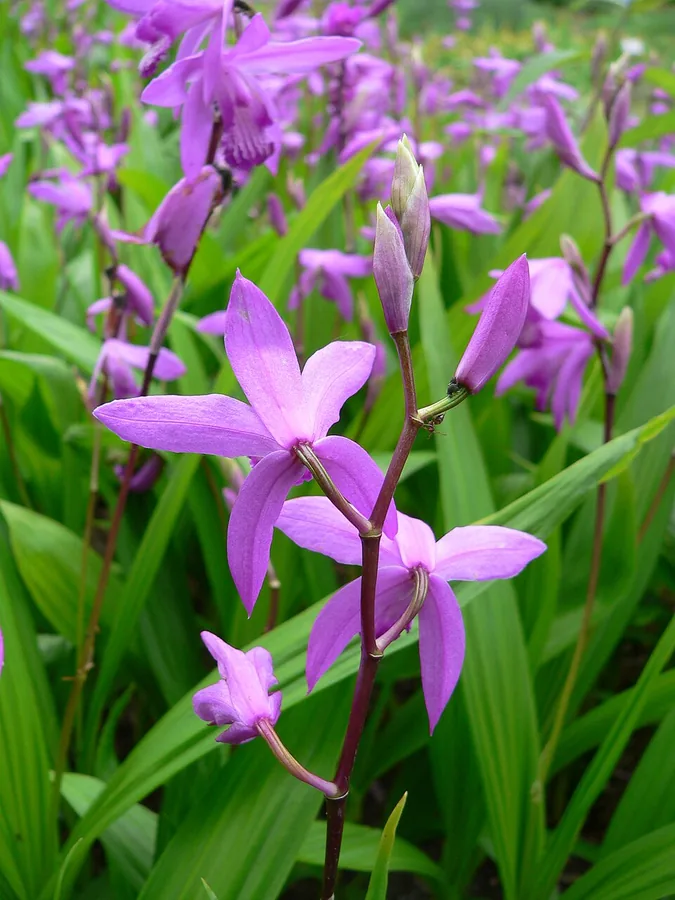
The ground orchid smashes the idea that orchids belong to experts only. It grows in plain garden soil from small underground corms, storms back on its own every year, and asks for next to nothing. Each spring it throws up pleated, almost bamboo-like leaves and then a slim stem of magenta-pink flowers that go toe to toe with any tropical orchid for looks.
Better still, it hits far above what those delicate flowers suggest. The plant is hardy to roughly USDA zone 5, dropping back to the ground each fall and driving up again the moment the soil warms. Feed it humus-rich, well-drained soil and a spot in dappled shade or morning sun, and one clump spreads into a generous patch over just a few seasons.
Once it settles, it practically runs itself. Water it through the growing season, let it dry off and go dormant over winter, and split the clump every few years to keep those flowers rolling in.
Care
The short version: drop it into rich, well-drained soil in partial shade, keep it moist through spring and summer, and let the corms rest dry over winter. Split the clump every few years and it pays you back with pink blooms each spring.
Light
Ground orchids come alive in partial shade, the dappled light or soft morning sun of a woodland edge. They will take more sun, even full sun, as long as you keep the soil moist. The one spot that stalls their flowers is deep, heavy shade.
Water
Keep the soil evenly moist through spring and summer while the plant is charging along, checking it every 3 to 7 days. Once the foliage yellows and dies back, back right off and let the dormant corms coast through winter on the dry side. Soggy winter soil is the fastest way to rot them, so stay ahead of it.
Soil
Plant into humus-rich, well-drained loam with plenty of organic matter worked in. Any pH from 5.5 to 7.0 suits them, so most garden soil is already in the zone. Sharp drainage is the piece that really counts, above all as the cold months close in.
Temperature
This is a tough, cold-hardy orchid, happy across a wide swing from about -13°F to 86°F (-25°C to 30°C). The top growth drops with the first hard frosts, then the corms ride out winter underground and rocket up again in spring.
Humidity
Average humidity, somewhere around 40% to 60%, is all they want, and outdoor air delivers that on its own. Skip the misting and fussing entirely.
Feeding
Feed them monthly through spring and summer while they are growing hard, using a balanced general-purpose fertilizer. Cut it off once the foliage starts fading in fall, since a dormant plant has no use for it.
Pruning
There is barely any pruning to bother with. Snip off the spent flower stalks once the blooms fade, then cut the dead foliage back in late fall after it yellows, and that wraps it up.
Repotting
A clump can rip along for 3 to 4 years before it needs a hand. When the pseudobulbs start crowding above the soil, flowering slows, or the center of the clump goes bare, it is time to lift and divide. Best part? That reset doubles as your shot at making more plants.
Size & spacing
Plants shoot to 12 to 24 inches (30 to 60 cm) tall and spread 12 to 18 inches (30 to 45 cm) wide. Set divisions about that far apart so each clump has room to fill out without crowding its neighbors.
When to plant
Plant ground orchids out in early spring, right as the soil warms and the corms leap out of dormancy. The flowers roll in during late spring, usually across May and June, and the foliage powers through summer before dying back for winter.
Northern hemisphere
Southern hemisphere
Typical months for a temperate climate: start earlier in warm zones, later where spring frosts linger.
- Plant: early spring
- Harvest: late spring (May to June)
Hardiness
USDA hardiness zones: 5–9
Temperature: down to -29°C
Troubleshooting
Ground orchids barely put a foot wrong, and the few snags they hit are quick to read. Nearly all of them trace to wet winter soil, a slug or two, or a clump that has crowded itself out. Match what you spot below and jump on it while the fix is still small.
Shoots that fail to appear in spring or rot at the base
Shoots that skip spring, or come up and buckle at the base, spell pseudobulb rot, and it nearly always traces back to soil that sat wet around the corms all winter. Cold can pile on too, taking bare corms in the chilliest zones. Grab a corm and check it: firm pale flesh keeps going, soft brown mush does not. Replant the good ones in fast-draining soil, tuck a mulch over the bed before the next freeze, and the clump charges back the following spring.
Fix:
- Lift and discard rotted corms, replant healthy firm pseudobulbs in fast-draining amended soil
- Improve drainage by incorporating grit or planting in a raised bed
Healthy leaves but few or no flowers
Lush leaves and no blooms almost always mean an overcrowded clump or a spot buried in too much shade. Dig down and you will hit pseudobulbs jammed shoulder to shoulder. Split that clump in early spring to fire it back into flower, then move it somewhere it can grab morning sun or dappled light and watch the blooms return.
Fix:
- Divide congested clumps in early spring to reinvigorate flowering
- Relocate to a site with morning sun or dappled light
Ragged holes chewed through leaves and flowers
Ragged holes across the leaves and flowers put slugs and snails at the top of the suspect list, and they make a beeline for the soft new growth shooting up in spring. Head out at dusk or right after rain and catch them red-handed, slime trails and all. Pluck them off by hand, then ring the fresh shoots with a barrier or bait and keep the next round from moving in.
Fix:
- Hand-pick slugs and snails in the evening
- Use barriers or appropriate slug controls around emerging shoots
Toxicity
Great news for homes with pets and kids: the ground orchid is non-toxic and safe. Orchids as a group carry nothing harmful, and there is no poison anywhere in the leaves, flowers, or corms. The worst a nibble can do is a mild, passing stomach upset, exactly like overdoing it on any plant.
Safe for
People · Cats · Dogs · Horses · Rabbits · Livestock · Birds
Cats None
Cats can roam right past it. A curious one that chews a leaf might drool a bit or feel briefly queasy, but that goes for nearly any houseplant, and this orchid packs no poison at all.
Dogs None
Dogs get the all-clear too. No toxin lurks here, though a dog that gobbles a big mouthful of leaves might feel briefly off from the roughage.
Horses Safe
Horses can graze on by without a worry. The plant holds nothing harmful, so a nibble causes zero trouble.
Rabbits Safe
Rabbits are in the clear. Leaves and corms carry no toxin, so a stray bite does nothing at all.
Livestock Safe
Cattle, goats, and sheep can browse near it freely. Nothing in the foliage poses a poisoning risk to grazing animals.
Birds Safe
Birds face no danger beside it. A pet or backyard bird can share a room with this orchid and stay perfectly fine.
People Safe
People, kids included, have nothing to fear. It earns its spot for the flowers, not the plate, but a stray taste harms no one.
No special handling precautions are needed, though as with any plant, ingestion of large amounts may cause mild stomach upset.
Varieties
Beyond the everyday pink form, a handful of named selections are well worth chasing down for their color or sheer vigor. These are the ones you will keep running into.
'Alba'
It ditches the usual magenta-pink and blooms in crisp, pure white instead.
var. albostriata
Creamy white edges and stripes run through its leaves, so the foliage pulls its weight even between flowering spells.
'Big Bob'
A powerhouse pick that shoots up taller and stockier and throws noticeably larger flowers.
How to propagate
Multiplying ground orchids is a genuine thrill, and it takes no seed and no special skill. A mature clump hands you fresh plants every spring, either by splitting it apart or lifting off its offset corms.
DivisionEasy
Early spring before or as new growth emerges · One growing season
Division is the go-to move for making more, and early spring is the moment, right as the new shoots break ground. Dig up the whole clump and split it so every piece keeps at least one healthy pseudobulb with a live growth eye, then plant them back fast. One growing season later, each division has dug in and taken hold.
Bulbs & cormsEasy
Early spring · One growing season
Want to spread the planting even further? Work off the offset corms. In early spring, pop the offset pseudobulbs free of the parent clump and replant them at the depth they sat before. Give them one growing season and they build into brand-new clumps of their own.
Myths
Every orchid is a fussy tropical that must live indoors.
Plenty of orchids are tender, but this one thrives right out in the garden as a hardy terrestrial. It powers through winters down to about USDA zone 5, dying back to the ground in fall and bursting up fresh again in spring.
Orchids are parasites that feed off trees and harm them.
Not this grower. A ground orchid digs into the soil and makes all its own food through its leaves. It takes nothing from other plants, driving up instead from pseudobulb-like corms just under the surface.