Tree · Myrtaceae
Guava
Psidium guajava
Give it full sun, warmth, and frost protection, and a guava tree keeps handing you fragrant fruit for years.
Full sun
Every 5–10 days
90–150 days
USDA 9–11
Overview
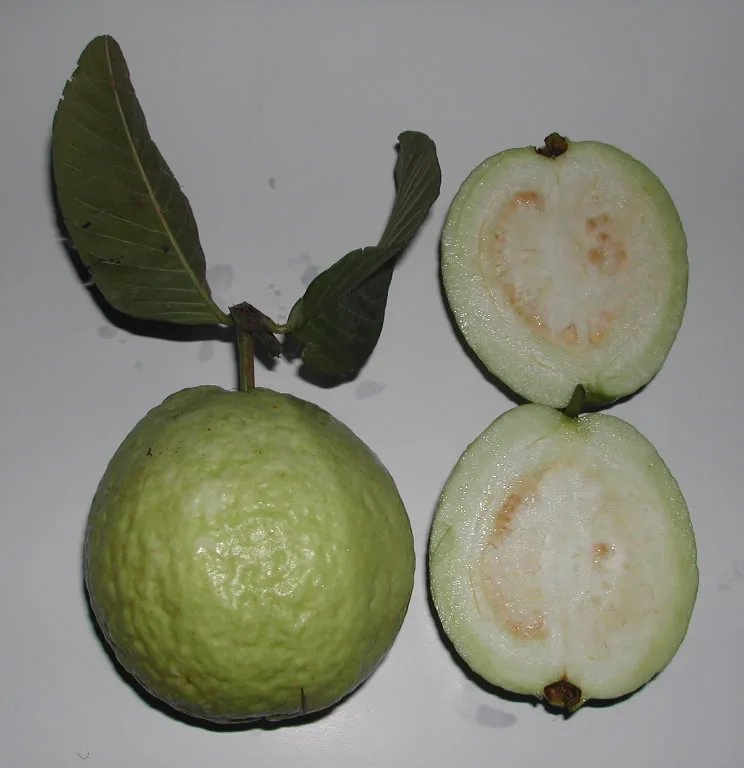
Guava is a fast-growing tropical tree from the myrtle family, sprung from the American tropics and now thriving across the warm parts of the world. It shoots up 10 to 30 feet (3 to 9 m) when it wants to, though most growers keep it pruned low so the fragrant, vitamin-rich fruit stays right at picking height.
Here is what makes it so rewarding to grow: it is forgiving and it fruits fast. It digs into all kinds of soil, from sand to limestone, and once it is established it laughs off a short dry spell. Cold is the one thing that stops it cold, since a night near freezing burns back the tender growth.
Where winters stay mild, a guava drops into the garden and starts cropping within a few years, which is quick for a fruit tree. In cooler regions, growers raise it in a big pot and roll it under cover when frost threatens. Either way, full sun and steady warmth load the tree with the heaviest, sweetest fruit.
Care
The short version: chase full sun and warmth first, water deeply through flowering and fruiting, then ease off once the fruit colors up. Feed lightly across the growing season, prune after harvest to keep fresh fruiting wood firing, and never let the tree catch a whiff of frost.
Light
Guava chases full sun for the best fruit, though it will scrape by in partial sun. Too much shade drives the tree into leaves instead of flowers, so hand it the brightest spot in the yard.
Water
Water deeply and often while the tree digs in and right through flowering and fruiting. Grown trees ride out drought, but steady moisture pumps out better fruit, and backing off just before harvest sharpens the flavor.
Soil
This unfussy tree grabs onto well-drained loam, sand, even limestone. It rolls across a wide pH band of 4.5 to 7.0, so most garden soils work fine as long as water drains away fast.
Temperature
Guava powers along from 32°F to 95°F (0°C to 35°C) but has zero tolerance for frost. A night near freezing burns back the tender growth, so warmth is the single biggest lever on how productive a tree gets.
Humidity
Everyday humidity in the 40% to 70% range keeps guava happy, matching the warm, moderately humid tropics it sprang from. Outdoors, there is no number to fuss over.
Feeding
Feed monthly through spring and summer with a balanced fruit-tree fertilizer that packs micronutrients. Young trees fly on light, frequent feeding rather than heavy doses, and overloading nitrogen robs you of fruit.
Pruning
Prune after harvest to strip out deadwood, hold the height down for easy picking, and open the canopy to light and air. Because guava fruits on new growth, a quick tip prune keeps fresh fruiting shoots pushing out.
Repotting
A potted guava wants bumping up every 2 to 3 years, best done in spring. Watch for roots circling the pot or shooting through the drainage holes, water racing straight through, and growth or fruiting that has stalled out.
Size & spacing
Left to run, a guava climbs 10 to 30 feet (3 to 9 m) tall and spreads 10 to 20 feet (3 to 6 m) wide. Most growers prune well below that to keep the fruit in easy reach.
When to plant
Guava is a warm-climate tree that flat out refuses frost, so timing is all about dodging the cold. Start seed in late winter under warm conditions, plant young trees out in spring once frost has passed, and chase fruit from late summer through fall, with year-round bearing in truly frost-free spots.
Northern hemisphere
Southern hemisphere
Typical months for a temperate climate: start earlier in warm zones, later where spring frosts linger.
- Sow: late winter to early spring in warm conditions
- Plant: spring after all danger of frost has passed
- Harvest: flowers in spring; fruit ripens late summer through fall, with some bearing year-round in frost-free climates
Hardiness
USDA hardiness zones: 9–11
Temperature: down to -7°C
Troubleshooting
Nearly every guava problem circles back to cold, pests in the fruit, or a tree that pumps out leaves instead of flowers. Match what you see below and pounce early, before a setback swallows a whole season's crop.
Frost-struck shoots that blacken and flag
Wake up to blackened, slumping shoots after a cold night and you are looking at frost damage, the one thing guava truly can't handle. Near freezing, the soft tips and leaves burn back, but the trunk usually powers through, so hope stays alive. Hold your cuts until spring, when fresh growth points out exactly where the living wood starts, and get ahead of the next cold snap by draping frost cloth over the tree or wrapping the trunk.
Fix:
- Wait until spring to prune out clearly dead wood once new growth shows the live boundary
- Protect with frost cloth, mulch, or trunk wraps during cold snaps
- Grow in a container that can be moved indoors in marginal climates
Wriggling larvae in fruit that softens fast and drops
Split a guava open, spot tiny larvae, and you have met the fruit fly, which zeroes right in on this tree. Stung fruit turns soft, discolors, and drops way ahead of schedule. Beat the pest by picking the crop the second it starts to ripen instead of letting it soften on the branch, slipping bags over developing fruit to lock out egg-laying females, and sweeping up every dropped fruit so the breeding cycle grinds to a stop.
Fix:
- Harvest fruit early as it begins to ripen rather than leaving it to fully soften on the tree
- Bag developing fruit to exclude egg-laying females
- Collect and destroy fallen and infested fruit promptly to break the breeding cycle
Plenty of leaves but little or no fruit
A guava bursting with leaves but skipping the fruit is almost always running on too much nitrogen or too little sun, and both push it to grow foliage instead of flowers. Unpruned old wood piles on the problem, because the fruit springs from fresh growth. Turn it around fast: park it in full sun, switch to a balanced fruiting feed, and prune lightly to fire up new fruiting shoots.
Fix:
- Move to or maintain full-sun exposure
- Reduce high-nitrogen fertilizer and use a balanced fruiting formula
- Lightly prune to stimulate fresh fruiting shoots
Toxicity
Guava is one of the truly easy ones. The fruit is a well-loved food you eat skin, flesh, and seeds and all, and no part of the plant is listed as poisonous to cats, dogs, or other animals. Share the ripe fruit freely, and just keep portions sensible the way you would with any treat.
Safe for
People · Cats · Dogs · Horses · Rabbits · Livestock · Birds
Cats None
Let a cat sniff around and taste guava, since not a scrap of the plant is poisonous to them.
Dogs None
Dogs can grab a little ripe guava with zero harm. Keep the helping small, because too much of any fruit can loosen the stomach.
Horses Safe
Horses stay in the clear with guava, and a graze on the leaves or fruit does them no harm at all.
Rabbits Safe
Rabbits can nibble a small bit of fruit safely, as long as hay keeps carrying the diet ahead of sweet treats.
Livestock Safe
Cattle, goats, and sheep browse guava trouble-free, and the fallen fruit has fed grazing animals across the tropics for ages.
Birds Safe
Birds dive on ripe guava and fling the seeds far and wide, which is exactly how the tree breaks loose into the wild.
People Safe
People devour guava fresh or cooked, and the whole fruit, skin and seeds included, is good eating.
The ripe fruit is safe; as with any new food, offer pets only small amounts and avoid letting them swallow large seeds or pits of other fruits.
Varieties
Guava rolls out in loads of named cultivars, sorted mostly by flesh color, sweetness, and tree size. A handful keep showing up in home gardens.
Ruby Supreme
This Florida standout brings pink flesh, sweet aromatic fruit, and crops that just keep coming.
Mexican Cream (Tropical White)
It packs mild, sweet, creamy white flesh onto a fairly compact tree that slots neatly into a smaller garden.
Lucknow 49 (Sardar)
This popular Indian cultivar pumps out heavy crops of large, white-fleshed fruit.
How to propagate
Guava multiplies with ease, and the method you grab decides whether the new tree matches the parent. Seed is the simplest but a bit of a gamble, while cuttings, layering, and grafting all keep a cultivar true.
SeedEasy
Spring in warm conditions · Germinates in 2 to 8 weeks; bears fruit in 2 to 4 years
Kicking guava off from seed is about the easiest start there is. Sow it in warm spring weather and watch it pop up over 2 to 8 weeks, but keep in mind the tree won't copy its parent and takes 2 to 4 years to fruit, so seedlings shine as rootstock or a fun experiment.
Stem cuttingsModerate
Warm growing season · Several weeks to root under mist or high humidity
Snip semi-hardwood cuttings in the warm growing season and root them over bottom heat with a rooting hormone. Give them several weeks under mist or steady humidity to take hold, and the payoff is a plant that carries every trait of its parent tree.
Air layeringModerate
Warm growing season · Roots in about 6 to 10 weeks before severing
Air-layering is a rock-solid way to clone a cultivar true to type. Set it up in the warm season and the wrapped branch roots in around 6 to 10 weeks, and the moment those roots show, you cut it loose to grow as its own tree.
GraftingDemanding
Warm season onto vigorous seedling rootstock · Unions establish over several weeks
Grafting is the commercial powerhouse behind named cultivars and the surest lock on fruit quality. Fuse the scion onto vigorous seedling rootstock in the warm season, and the union knits together over several weeks into one strong tree.
Myths
A widespread claim says guava won't crop unless it is grafted or has a second tree for cross-pollination.
Forget the second tree, because guava is largely self-fertile and even seedlings crank out fruit solo. Grafting still pulls its weight for another reason, since it locks in a known cultivar and rushes the tree into fruit sooner. One tree fruits on its own, no partner required.